If your fourth graders can multiply 5 × 7 but freeze when you ask “How many times bigger is 35 than 7?” you’re not alone. Multiplication as comparison is where many students hit their first real algebra wall. The good news? With the right strategies, you can help students see the powerful connections between multiplication facts and comparative thinking that will serve them through middle school and beyond.
Key Takeaway
Teaching multiplication as comparison requires moving students from procedural thinking (“just multiply”) to relational thinking (“this many times as many as that”).
Why Multiplication Comparison Matters in 4th Grade
Standard CCSS.Math.Content.4.OA.A.1 asks students to interpret multiplication equations as comparisons and represent verbal statements as multiplication equations. This isn’t just about knowing that 6 × 4 = 24 — it’s about understanding that 24 is 6 times as many as 4, and 4 times as many as 6.
Research from the National Council of Teachers of Mathematics shows that students who master multiplicative comparison in 4th grade are 40% more likely to succeed in algebraic reasoning by 7th grade. This skill bridges the gap between arithmetic and algebra by introducing the concept that numbers can have relationships beyond just being added or subtracted.
Timing matters too. You’ll want to introduce this concept after students are fluent with basic multiplication facts (typically October-November) but before diving into multi-digit multiplication. Students need that foundation of automaticity to focus on the conceptual understanding.
Looking for a ready-to-go resource? I put together a differentiated multiplication comparison pack that covers everything below — but first, the teaching strategies that make it work.
Common Multiplication Comparison Misconceptions in 4th Grade
Common Misconception: Students think “5 times as many as 3” means 5 + 3.
Why it happens: They hear “times” and think addition because “times” sounds like “plus” in everyday language.
Quick fix: Use concrete objects to show 5 groups of 3, emphasizing the grouping structure.
Common Misconception: Students can’t identify which number is the “reference” in comparison statements.
Why it happens: The phrase “times as many as” is grammatically complex and doesn’t match how they naturally speak.
Quick fix: Teach them to circle the number after “as” — that’s always the reference amount.
Common Misconception: Students think 20 = 4 × 5 and 20 = 5 × 4 represent the same comparison relationship.
Why it happens: They know multiplication is commutative but don’t realize comparison statements are not.
Quick fix: Use different colored manipulatives to show 4 groups of 5 versus 5 groups of 4 visually.
Common Misconception: Students struggle to write equations from word problems with comparison language.
Why it happens: They focus on finding numbers to multiply rather than understanding the relationship being described.
Quick fix: Teach a consistent framework: identify the reference amount, identify the multiplier, then write the equation.
5 Research-Backed Strategies for Teaching Multiplication as Comparison
Strategy 1: The Reference Point Method
This strategy helps students identify the “base” amount in any comparison statement by teaching them to recognize language patterns and circle key words.
What you need:
- Comparison statement cards
- Colored pencils or highlighters
- Anchor chart with sentence frames
Steps:
- Write “Maria has 3 times as many stickers as Jake. Jake has 4 stickers.” on the board
- Teach students to circle the number after “as” (4) — this is the reference point
- Underline “3 times as many” — this tells us the multiplier
- Write the equation: 3 × 4 = 12 (Maria’s stickers)
- Practice with 5-6 similar examples, having students identify reference points first
Strategy 2: Concrete Grouping with Manipulatives
Using physical objects helps students visualize the “groups of” structure that underlies multiplicative comparison, making abstract relationships concrete and touchable.
What you need:
- Connecting cubes in two colors
- Small paper plates or circles
- Comparison recording sheets
Steps:
- Give students 4 red cubes and say “This represents what Sam has”
- Ask students to show “3 times as many” using blue cubes
- Have them arrange blue cubes in 3 groups of 4 on separate plates
- Count together: “4, 8, 12 — so 3 times as many as 4 is 12”
- Write the equation: 3 × 4 = 12
- Repeat with different numbers, alternating who builds which amount
Strategy 3: Bar Model Visualization
Bar models provide a bridge between concrete manipulatives and abstract equations by showing comparison relationships as proportional rectangles that students can draw and analyze.
What you need:
- Grid paper or bar model templates
- Colored pencils
- Rulers or straight edges
Steps:
- Draw a bar representing the reference amount (e.g., one unit for “Tom has 5 books”)
- Draw a longer bar showing the comparison amount using equal-sized units
- For “Lisa has 4 times as many books,” draw 4 units the same size as Tom’s bar
- Label each part and write the equation: 4 × 5 = 20
- Practice reading both directions: “20 is 4 times as many as 5” and “20 is 5 times as many as 4”
Strategy 4: Comparison Equation Sorting Game
This collaborative activity helps students practice identifying equivalent comparison statements while building fluency with the mathematical language of multiplicative relationships.
What you need:
- Equation cards (e.g., 6 × 3 = 18)
- Comparison statement cards (e.g., “18 is 6 times as many as 3”)
- Timer for partner rotations
Steps:
- Create card sets with equations and matching comparison statements
- Partners take turns drawing an equation card
- They must find all comparison statements that match (there should be two: “18 is 6 times as many as 3” and “18 is 3 times as many as 6”)
- Other partner checks their work using manipulatives or drawings
- Switch roles and continue until all cards are matched
Strategy 5: Real-World Problem Creation
Students create their own multiplication comparison problems using real classroom or school data, making the mathematical relationships personally meaningful and contextually relevant.
What you need:
- Data collection sheets
- Calculators for checking
- Problem-writing templates
Steps:
- Have students collect data around school (books in different classrooms, pencils in supply caddies, etc.)
- Guide them to find two related quantities where one is a multiple of the other
- Help them write comparison problems: “Room 12 has 24 books. Room 8 has 8 books. How many times as many books does Room 12 have?”
- Exchange problems with classmates to solve
- Check answers and discuss different solution strategies
How to Differentiate Multiplication Comparison for All Learners
For Students Who Need Extra Support
Start with small numbers (2-5) and clear multiplicative relationships. Use concrete manipulatives for every problem in the first few weeks. Provide sentence frames like “___ is ___ times as many as ___” and teach students to fill in the blanks systematically. Review skip counting and repeated addition as foundation skills. Give problems where the reference amount is stated first and clearly labeled.
For On-Level Students
Work with numbers up to 10 × 10 and include problems where students must identify the reference amount from context. Practice both writing equations from word problems and creating word problems from equations. Use bar models and arrays interchangeably. Include problems with real-world contexts that require interpretation of the comparison relationship.
For Students Ready for a Challenge
Introduce problems with larger numbers and fractional relationships (“1.5 times as many”). Have them create comparison problems with multiple steps or missing information. Connect to early division concepts by asking “If 24 is 4 times as many as something, what is that something?” Explore how comparison relationships change when you change the reference point.
A Ready-to-Use Multiplication Comparison Resource for Your Classroom
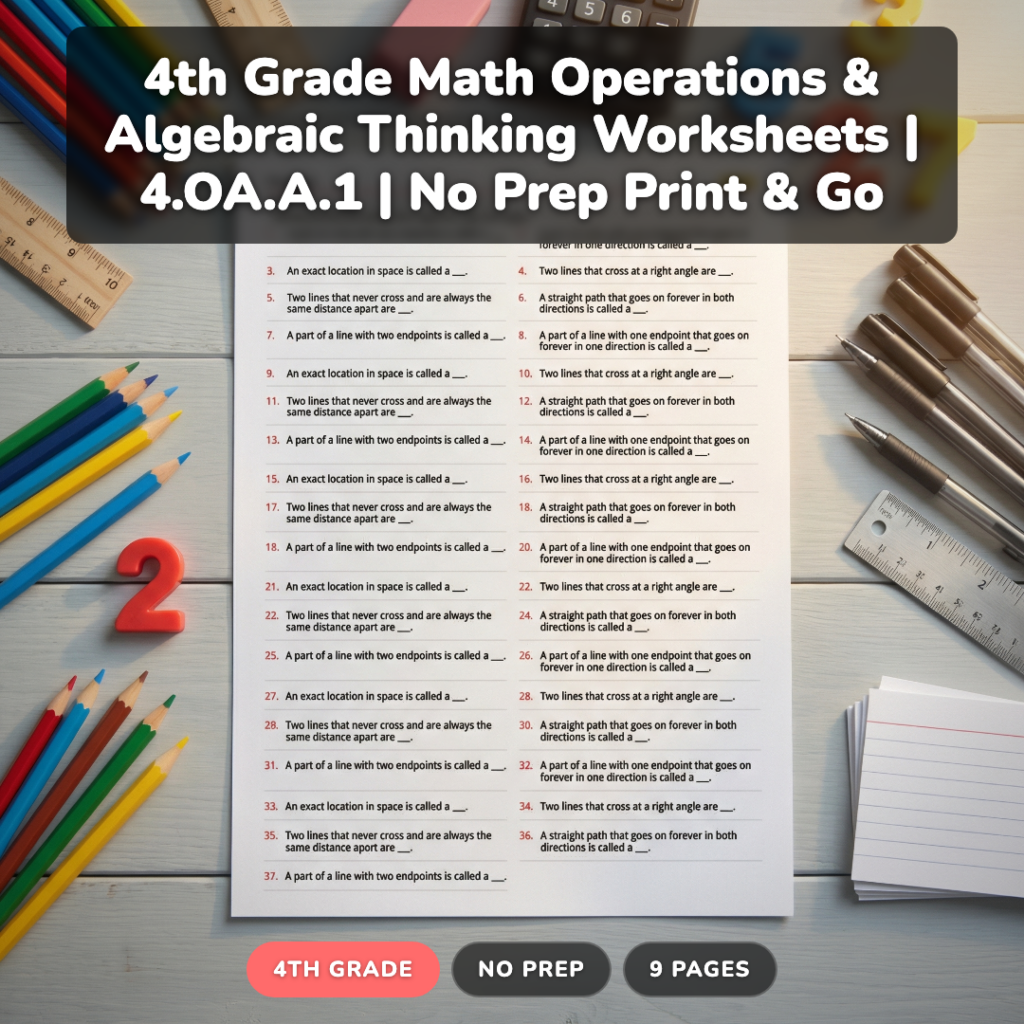
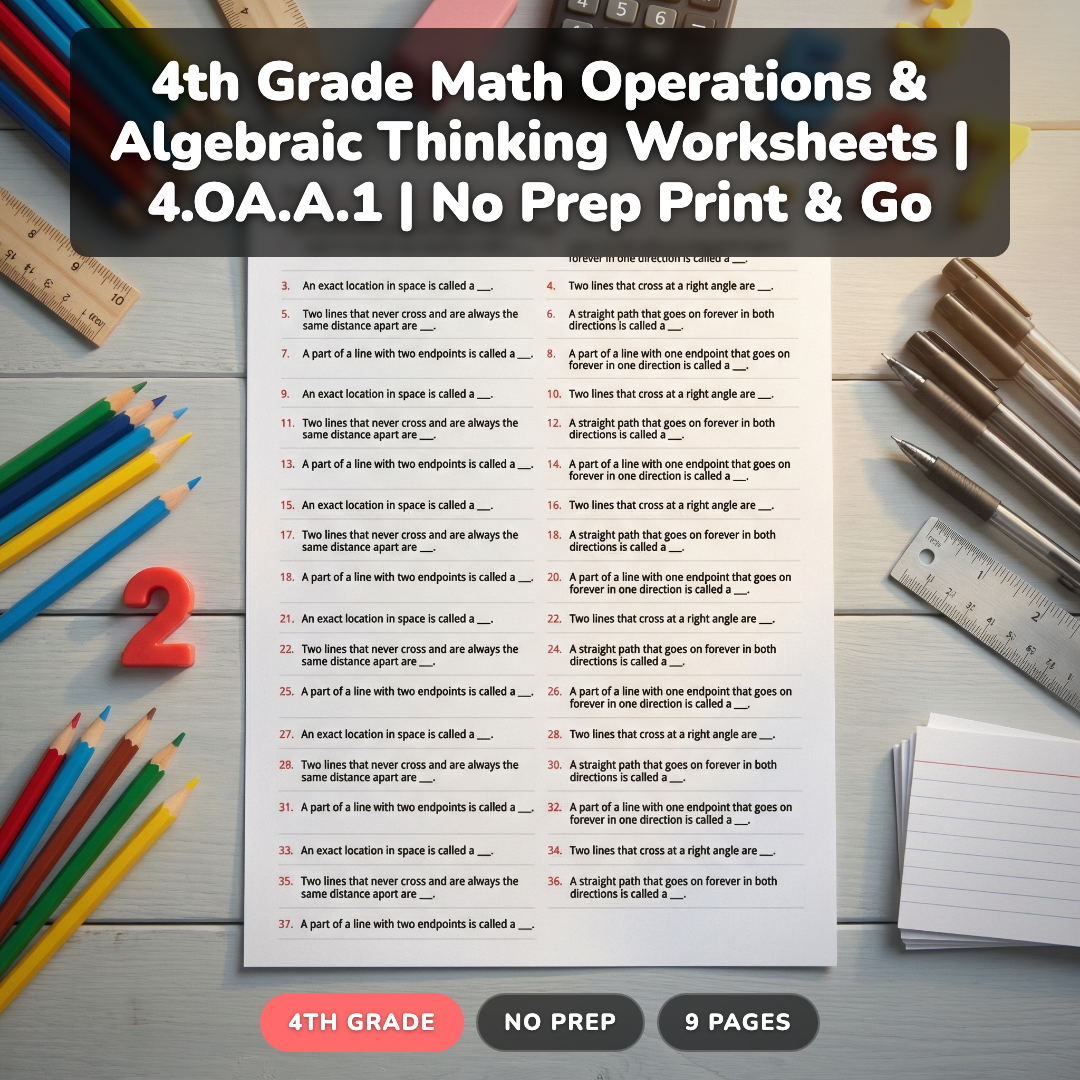
If you’re looking for differentiated practice that saves you hours of prep time, I’ve created a comprehensive multiplication comparison worksheet pack that covers all the strategies above. This 9-page resource includes 132 problems across three difficulty levels — 37 practice problems for students building foundational understanding, 50 on-level problems that align perfectly with CCSS.Math.Content.4.OA.A.1, and 45 challenge problems for students ready to extend their thinking.
What makes this different from other worksheets? Each level uses the same problem types but with scaffolded complexity. Practice problems include visual supports and sentence frames. On-level problems mirror what you’ll see on state assessments. Challenge problems connect to real-world applications and early algebraic thinking. Complete answer keys are included for easy grading.
You can grab this time-saving resource and have differentiated practice ready for tomorrow’s math block.
Grab a Free Multiplication Comparison Sample to Try
Want to see how these strategies work in practice? I’ll send you a free sample worksheet with 5 problems from each difficulty level, plus a teacher guide with step-by-step solutions. Perfect for trying out the approach before diving into the full resource.
Frequently Asked Questions About Teaching Multiplication Comparison
When should I introduce multiplication as comparison in 4th grade?
Introduce multiplication comparison after students demonstrate fluency with basic multiplication facts through 10 × 10, typically in October or November. Students need automatic recall of facts to focus on the conceptual understanding of comparison relationships without cognitive overload from computation.
How is multiplication comparison different from regular multiplication?
Regular multiplication focuses on finding products (5 × 3 = 15). Multiplication comparison focuses on relationships between quantities (15 is 5 times as many as 3). The computation is the same, but the conceptual understanding emphasizes proportional reasoning and sets the foundation for algebra.
What manipulatives work best for teaching multiplication comparison?
Connecting cubes in two colors work exceptionally well because students can build distinct groups and easily see the “times as many” relationship. Base-ten blocks, counters, and even classroom objects like pencils or books help students visualize the grouping structure essential to comparison understanding.
How do I help students who confuse “3 times as many” with “3 more”?
Use concrete objects to show the difference visually. For “3 more than 4,” show 4 objects plus 3 more (total: 7). For “3 times as many as 4,” show 3 groups of 4 objects (total: 12). Emphasize the language: “times as many” means groups, “more than” means addition.
Should students memorize comparison language patterns or understand them conceptually?
Both are important. Students need to recognize language patterns (“times as many as” signals multiplication) for efficiency, but they must understand the underlying concept through concrete experiences. Start with conceptual understanding using manipulatives, then build toward pattern recognition for fluency with word problems.
Teaching multiplication as comparison sets your students up for success in algebraic thinking and proportional reasoning. The key is helping them see that multiplication isn’t just about finding products — it’s about understanding relationships between quantities. What’s your go-to strategy for helping students make this conceptual leap? And don’t forget to grab that free sample worksheet to try these approaches in your classroom tomorrow.