If your fourth graders freeze when they see numbers like 45,672 or struggle to explain why 5,000 is greater than 4,999, you’re not alone. Place value with multi-digit numbers is where many students hit their first major math wall. You need strategies that make abstract concepts concrete and help students truly understand what those digits mean, not just memorize procedures.
Key Takeaway
Fourth grade place value success comes from connecting concrete manipulatives to abstract symbols through systematic, multi-sensory instruction.
Why Place Value Matters in Fourth Grade
Place value understanding in fourth grade sets the foundation for every math concept that follows. Students who master CCSS.Math.Content.4.NBT.A.2 — reading, writing, and comparing multi-digit numbers — are prepared for multiplication algorithms, decimal operations, and fraction concepts later in the year.
Research from the National Council of Teachers of Mathematics shows that 68% of fourth-grade math difficulties stem from weak place value understanding. Students need to move beyond counting by ones to truly grasp that each digit’s value depends on its position. This standard specifically requires students to read and write numbers using three different representations: base-ten numerals (45,672), number names (forty-five thousand, six hundred seventy-two), and expanded form (40,000 + 5,000 + 600 + 70 + 2).
The timing matters too. Most curricula introduce four and five-digit numbers in October, building from the three-digit work students mastered in third grade. By December, students should confidently compare numbers up to 100,000 using mathematical symbols.
Looking for a ready-to-go resource? I put together a differentiated place value pack that covers everything below — but first, the teaching strategies that make it work.
Common Place Value Misconceptions in Fourth Grade
Understanding where students go wrong helps you address confusion before it becomes entrenched. Here are the four misconceptions I see most often:
Common Misconception: Students think 5,000 has “more numbers” so it’s bigger than 50,000.
Why it happens: They count digits instead of analyzing place value positions.
Quick fix: Use place value charts with physical manipulation to show position matters more than quantity of digits.
Common Misconception: When comparing 4,567 and 4,576, students focus on the last digit (7 > 6) instead of working left to right.
Why it happens: They apply single-digit comparison strategies to multi-digit numbers.
Quick fix: Teach the “left-to-right rule” with explicit modeling using base-ten blocks.
Common Misconception: Students write expanded form as “4 + 5 + 6 + 7 + 2” instead of “40,000 + 5,000 + 600 + 70 + 2.”
Why it happens: They don’t connect digit position to actual value.
Quick fix: Always start expanded form practice with base-ten blocks, then transition to written form.
Common Misconception: Students read 30,045 as “thirty thousand, forty-five” instead of “thirty thousand, forty-five.”
Why it happens: They skip zeros instead of understanding zeros as placeholders.
Quick fix: Use place value charts with empty spaces to emphasize zero’s role as a placeholder.
5 Research-Backed Strategies for Teaching Place Value
Strategy 1: Base-Ten Block Building with Systematic Trading
This concrete approach helps students physically experience regrouping and place value relationships. Students build numbers with actual blocks, then systematically trade ten ones for one ten, ten tens for one hundred, and so on.
What you need:
- Base-ten blocks (units, rods, flats, cubes)
- Place value mats
- Number cards 1,000-99,999
Steps:
- Give students a four-digit number card (like 2,347)
- Have them build it with base-ten blocks on their place value mat
- Ask them to “trade up” — exchange ten units for one rod, etc.
- Record the number in standard form, word form, and expanded form
- Compare their number with a partner’s using blocks first, then symbols
Strategy 2: Place Value Auction Game
This engaging activity makes place value comparison competitive and fun while reinforcing the relative value of digits in different positions.
What you need:
- Play money (ones, tens, hundreds, thousands)
- Number cards to “auction”
- Auction recording sheet
Steps:
- Give each student $10,000 in play money
- Auction off number cards (like 45,672) one at a time
- Students bid based on the number’s actual value
- Winner pays their bid and keeps the card
- After five rounds, students add up their number cards’ values
- Highest total wins
Strategy 3: Digital Place Value with Interactive Modeling
Using digital tools helps students visualize place value transformations and see immediate feedback on their understanding.
What you need:
- Interactive whiteboard or tablets
- Base-ten block digital manipulatives
- Place value chart template
Steps:
- Display a number like 23,456 on the board
- Students use digital base-ten blocks to build it
- Drag blocks between place value columns to show trading
- Students write three forms: standard, word, expanded
- Use the comparison tool to order three numbers
- Students explain their reasoning to the class
Strategy 4: Mystery Number with Clue Analysis
This strategy develops logical reasoning while reinforcing place value concepts through process of elimination and clue interpretation.
What you need:
- Clue cards with place value hints
- Number charts 1,000-99,999
- Elimination worksheets
Steps:
- Give students clues like “My number has 4 in the thousands place”
- Students cross out impossible numbers on their chart
- Add clues: “My number is greater than 40,000 but less than 50,000”
- Continue until only one number remains
- Students write the answer in all three forms
- Create their own mystery number for a partner
Strategy 5: Real-World Data Comparison Projects
Connecting place value to authentic contexts helps students see why this skill matters beyond the classroom.
What you need:
- Population data for local cities
- School enrollment numbers
- Sports statistics or attendance figures
- Comparison recording sheets
Steps:
- Provide students with real data (city populations: 45,672 vs 54,267)
- Students write each number in expanded form
- Compare using place value reasoning, not just memorized rules
- Create visual representations (bar graphs, number lines)
- Write comparison statements using <, >, = symbols
- Present findings to explain which city is larger and why
How to Differentiate Place Value for All Learners
For Students Who Need Extra Support
Start with three-digit numbers and use physical manipulatives exclusively for the first two weeks. Provide place value charts with clearly labeled columns and use color-coding for each place (ones=red, tens=blue, hundreds=green, thousands=yellow). Focus on one representation at a time — master standard form before introducing word form or expanded form. Give these students numbers with fewer zeros to reduce confusion.
For On-Level Students
Use the full range of four and five-digit numbers as outlined in CCSS.Math.Content.4.NBT.A.2. Students should work fluently between all three number representations and compare numbers confidently using mathematical reasoning. Expect them to explain their thinking using place value vocabulary: “thousands place,” “expanded form,” “greater than.” These students should handle numbers up to 99,999 by mid-year.
For Students Ready for a Challenge
Extend to six-digit numbers and introduce decimal place value connections. Challenge these students to find patterns in place value (what happens when you multiply by 10?) and create their own comparison problems. Have them tutor struggling peers, which deepens their own understanding. Connect place value to scientific notation as a preview of middle school concepts.
A Ready-to-Use Place Value Resource for Your Classroom
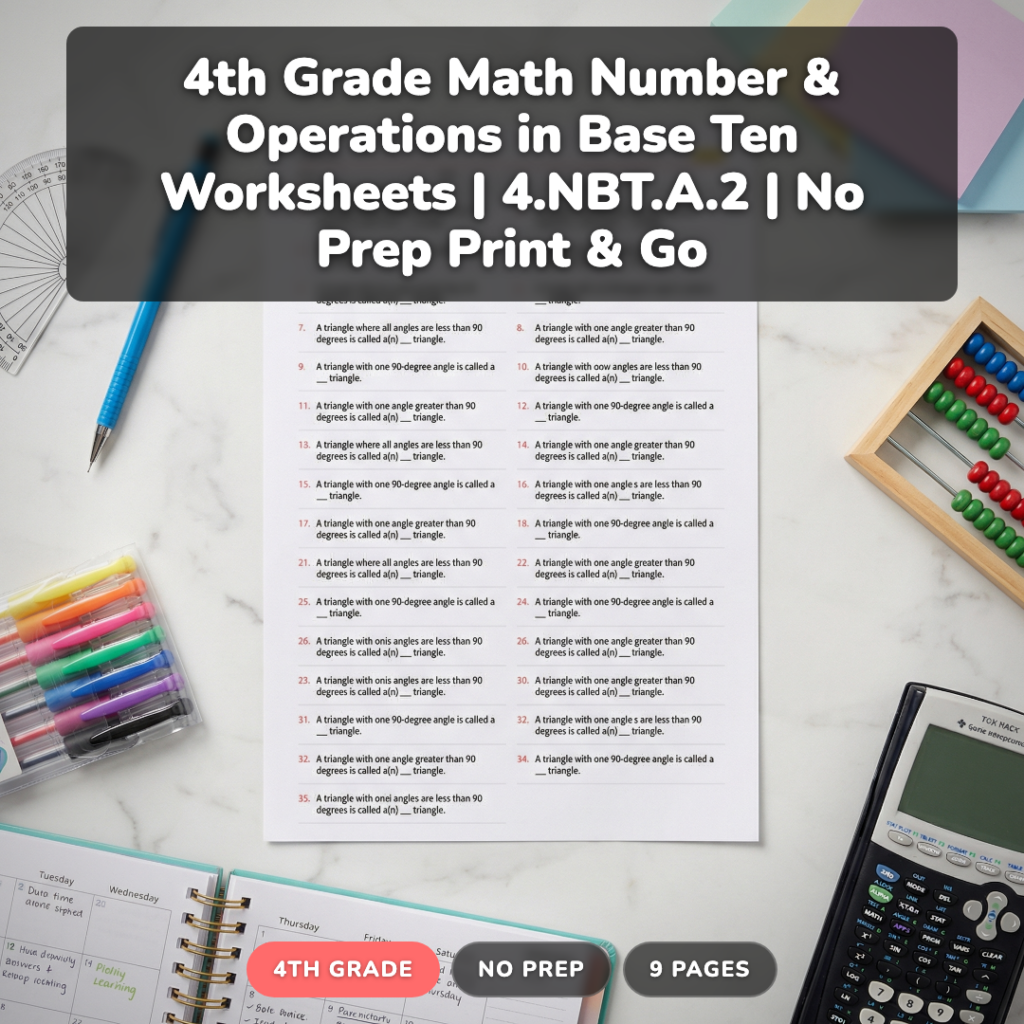
Teaching place value effectively requires tons of differentiated practice — more than most textbooks provide. That’s why I created this comprehensive 4th Grade Number & Operations in Base Ten worksheet pack that targets exactly what CCSS.Math.Content.4.NBT.A.2 requires.
This 9-page resource includes 132 carefully crafted problems across three difficulty levels: 37 practice problems for students needing extra support, 50 on-level problems for grade-level expectations, and 45 challenge problems for advanced learners. Each level focuses on reading, writing, and comparing multi-digit numbers using all three required forms: standard notation, word form, and expanded form.
What makes this different from generic worksheets? Every problem is designed to address the specific misconceptions fourth graders face. The practice level uses smaller numbers with clear place value patterns, the on-level section includes the full range of four and five-digit numbers, and the challenge level incorporates real-world contexts and multi-step reasoning.
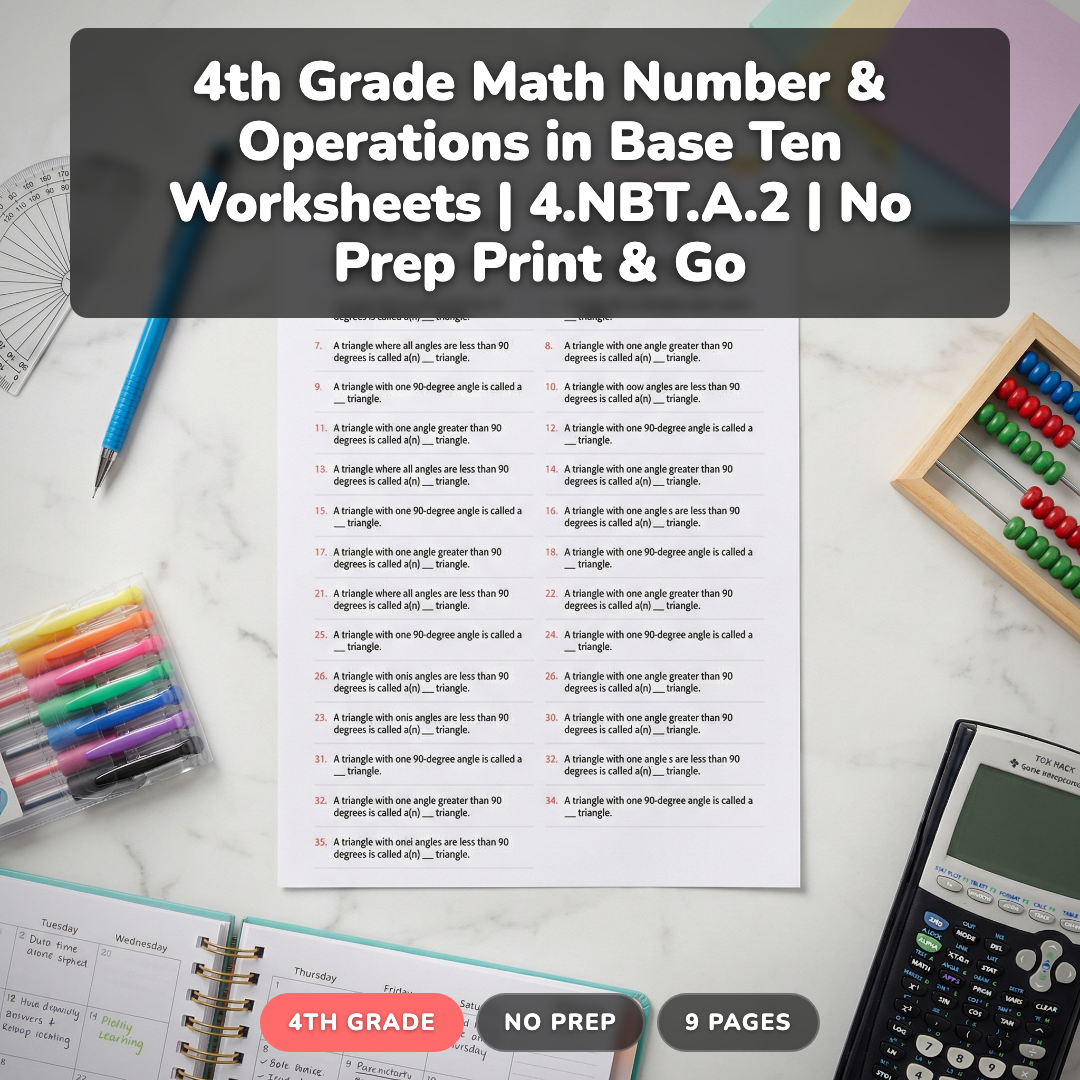
You get immediate access to print-ready PDFs with answer keys included. No prep time required — just print and teach.
Grab a Free Place Value Practice Sheet to Try
Want to see the quality before you commit? I’ll send you a free sample worksheet that includes problems from all three difficulty levels, plus the answer key. Perfect for testing these strategies with your students.
Frequently Asked Questions About Teaching Place Value
When should students master four-digit place value comparison?
Most students should confidently compare four-digit numbers by December of fourth grade. Start with three-digit review in September, introduce four-digit numbers in October, and add five-digit numbers by November. Mastery means explaining their reasoning, not just getting correct answers.
What’s the biggest mistake teachers make with place value instruction?
Rushing to abstract symbols without enough concrete foundation. Students need at least two weeks with physical manipulatives before transitioning to written work. The concrete-representational-abstract sequence is crucial for deep understanding, especially for students who struggled with place value in third grade.
How do I help students who confuse word form and expanded form?
Use color-coding and explicit comparison charts. Word form uses words only: “forty-five thousand, six hundred seventy-two.” Expanded form shows addition: “40,000 + 5,000 + 600 + 70 + 2.” Practice converting the same number between both forms daily until the distinction becomes automatic.
Should fourth graders learn place value with decimals?
Not until they master whole number place value completely. CCSS.Math.Content.4.NBT.A.2 focuses exclusively on whole numbers. Decimal place value comes later in fourth grade under different standards. Rushing to decimals before solid whole number understanding causes lasting confusion.
How can I assess place value understanding beyond worksheets?
Use exit tickets asking students to explain their thinking: “How do you know 23,456 is greater than 23,446?” Listen for place value vocabulary and logical reasoning. Also try number talks where students share different strategies for comparing numbers — this reveals depth of understanding.
Building Strong Place Value Foundations
Teaching place value in fourth grade requires patience, concrete experiences, and systematic progression from simple to complex. When students truly understand that digit position determines value, they’re ready for every math challenge that follows. Remember to start concrete, use multiple representations, and give students time to explain their thinking.
What’s your biggest challenge when teaching place value? Try the mystery number strategy this week and see how your students respond to the logical reasoning component.
Don’t forget to grab your free place value practice sheet above — it’s a great way to see these strategies in action with your students.