If your fourth graders freeze when they see 4,528 – 1,347 or make careless errors with multi-digit addition, you’re not alone. Teaching the standard algorithm for multi-digit operations is one of those skills that looks simple on paper but requires careful scaffolding in practice. You need strategies that build both computational fluency and number sense — not just rote memorization.
Key Takeaway
Fourth graders master multi-digit operations when they understand place value deeply, practice regrouping systematically, and connect the standard algorithm to concrete models.
Why Multi-Digit Operations Matter in Fourth Grade
Fourth grade marks a critical transition in mathematical thinking. Students move from primarily single-digit operations to fluently adding and subtracting multi-digit whole numbers using the standard algorithm, as outlined in CCSS.Math.Content.4.NBT.B.4. This standard expects students to demonstrate computational fluency — accuracy, efficiency, and flexibility in their calculations.
Research from the National Council of Teachers of Mathematics shows that students who master multi-digit operations with understanding perform 40% better on fifth-grade fraction work, since both skills rely on solid place value concepts. The timing is crucial: most curricula introduce this skill in October and expect mastery by December, giving you about 8-10 weeks to build fluency.
Multi-digit operations connect directly to real-world problem solving. Students use these skills for everything from calculating distances on field trips to determining how much money they need for fundraisers. When fourth graders struggle here, it impacts their confidence in all future math learning.
Looking for a ready-to-go resource? I put together a differentiated multi-digit operations pack that covers everything below — but first, the teaching strategies that make it work.
Common Multi-Digit Operations Misconceptions in 4th Grade
Common Misconception: Students subtract the smaller digit from the larger digit in each column, regardless of position.
Why it happens: They apply single-digit subtraction rules without understanding place value relationships.
Quick fix: Use base-ten blocks to show why we sometimes need to “borrow” from the next place value.
Common Misconception: Students forget to regroup when adding, writing two-digit sums in single columns.
Why it happens: They haven’t connected the algorithm to place value understanding.
Quick fix: Practice with expanded form first (23 + 19 = 20 + 3 + 10 + 9 = 30 + 12 = 42).
Common Misconception: Students line up digits incorrectly when problems aren’t already aligned vertically.
Why it happens: They focus on the visual appearance rather than place value positions.
Quick fix: Teach them to identify the ones place first, then align everything from there.
Common Misconception: Students think regrouping means “borrowing 1” rather than “borrowing 10, 100, or 1000.”
Why it happens: They memorize the procedure without understanding the mathematics.
Quick fix: Always state what you’re actually borrowing: “I’m borrowing 10 ones from the tens place.”
5 Research-Backed Strategies for Teaching Multi-Digit Operations
Strategy 1: Concrete-Representational-Abstract (CRA) Progression
Start with manipulatives before moving to drawings, then to abstract numbers. This research-backed approach helps students build conceptual understanding that supports procedural fluency.
What you need:
- Base-ten blocks (ones, tens, hundreds, thousands)
- Place value mats
- Grid paper for drawings
- Standard algorithm worksheets
Steps:
- Model the problem with base-ten blocks, talking through each regrouping step
- Have students draw the blocks and cross out/regroup as needed
- Connect the drawing to the standard algorithm, showing how each step matches
- Practice the algorithm independently with periodic returns to concrete models
Strategy 2: Expanded Form Bridge Method
Break multi-digit numbers into their place value components before applying the standard algorithm. This helps students see why regrouping works and builds number sense.
What you need:
- Place value charts
- Colored pencils or markers
- Expanded form templates
Steps:
- Write the problem in expanded form: 2,456 + 1,378 = 2,000 + 400 + 50 + 6 + 1,000 + 300 + 70 + 8
- Combine like place values: (2,000 + 1,000) + (400 + 300) + (50 + 70) + (6 + 8)
- Calculate each place value sum: 3,000 + 700 + 120 + 14
- Regroup as needed: 3,000 + 700 + 100 + 20 + 10 + 4 = 3,834
- Show how this connects to the standard algorithm
Strategy 3: Error Analysis and Mathematical Discourse
Present common student errors and have the class identify and correct them. This builds critical thinking skills and helps students avoid similar mistakes.
What you need:
- Sample student work with errors
- Document camera or chart paper
- Sentence starters for mathematical discussions
Steps:
- Show an incorrect solution: “Jamie solved 542 – 267 and got 325. What do you notice?”
- Give students 2 minutes to identify the error with a partner
- Facilitate whole-class discussion using sentence starters: “I disagree because…” or “Jamie’s mistake was…”
- Work together to solve correctly, emphasizing the conceptual understanding
- Have students explain why the correct method works
Strategy 4: Real-World Application Projects
Connect multi-digit operations to authentic contexts that fourth graders care about. This builds engagement and helps students see the purpose behind their learning.
What you need:
- School fundraiser data or field trip costs
- Population data for different cities
- Sports statistics or game scores
- Calculator for checking work
Steps:
- Present a real scenario: “Our school raised $3,247 last month and $2,895 this month for new playground equipment”
- Have students generate mathematical questions: “How much did we raise total?” “How much more last month?”
- Students solve using the standard algorithm, showing all work
- Check answers with calculators and discuss any discrepancies
- Connect back to the real-world meaning of their solutions
Strategy 5: Estimation and Reasonableness Checks
Teach students to estimate before calculating and check if their answers make sense. This builds number sense and helps catch computational errors.
What you need:
- Estimation anchor chart
- Number lines
- “Reasonable or Ridiculous?” sorting cards
Steps:
- Before solving, round each number to the nearest hundred or thousand
- Calculate the estimated answer mentally
- Solve using the standard algorithm
- Compare the exact answer to the estimate — they should be close
- If they’re very different, check the calculation for errors
How to Differentiate Multi-Digit Operations for All Learners
For Students Who Need Extra Support
Start with 2-digit addition and subtraction to build confidence. Use base-ten blocks for every problem initially, and provide place value mats with clear column headers. Give extra practice with regrouping in isolation — just tens and ones before adding hundreds. Create anchor charts showing each step of the algorithm with visual cues. Consider allowing these students to use a hundreds chart or number line for checking their work.
For On-Level Students
Focus on 3- and 4-digit problems as outlined in CCSS.Math.Content.4.NBT.B.4. Practice both addition and subtraction with multiple regrouping steps. Include word problems that require students to determine which operation to use. Emphasize estimation strategies and checking work for reasonableness. These students should be working toward automaticity while maintaining conceptual understanding.
For Students Ready for a Challenge
Extend to 5- and 6-digit numbers, including problems with zeros in various places. Introduce multi-step word problems that combine addition and subtraction. Have them explore different algorithms (like partial sums or compensation) and compare efficiency. Challenge them to create their own word problems for classmates to solve, or investigate patterns in multi-digit arithmetic.
A Ready-to-Use Multi-Digit Operations Resource for Your Classroom
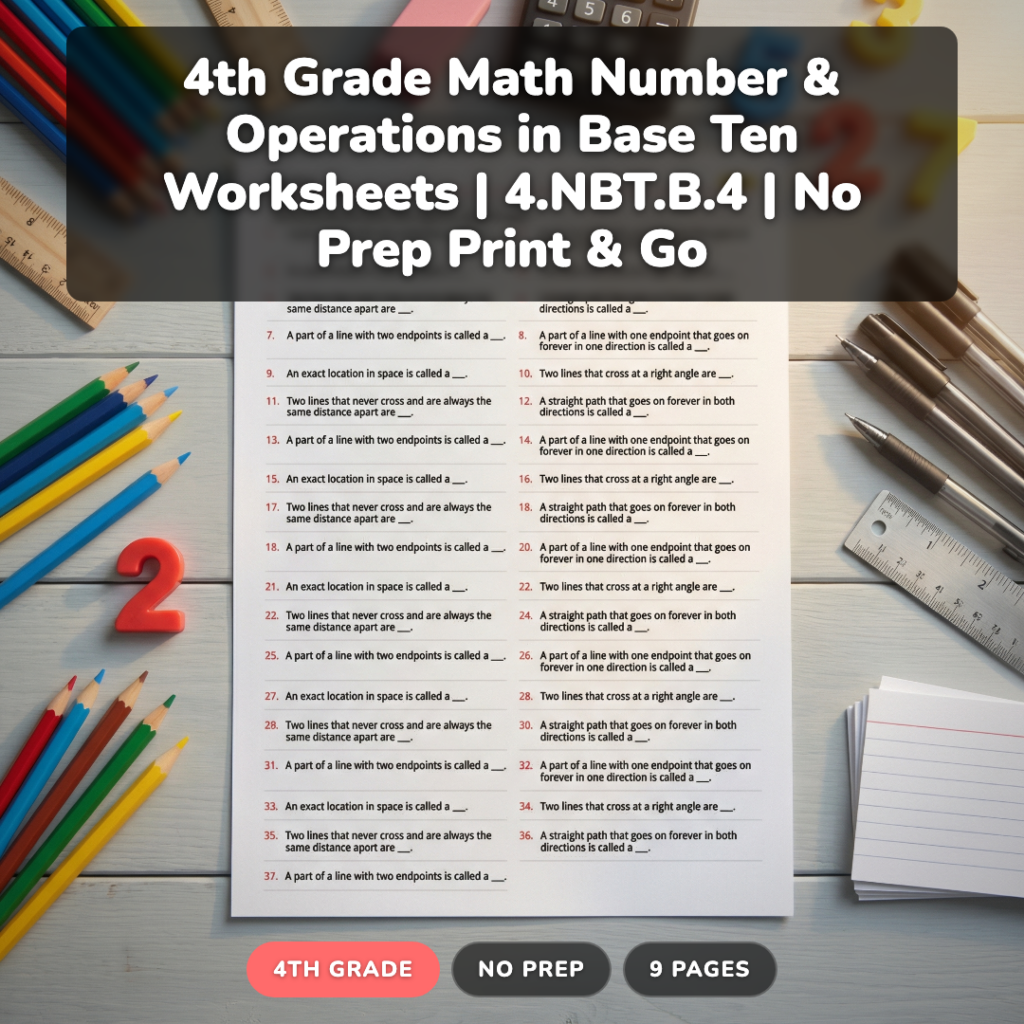
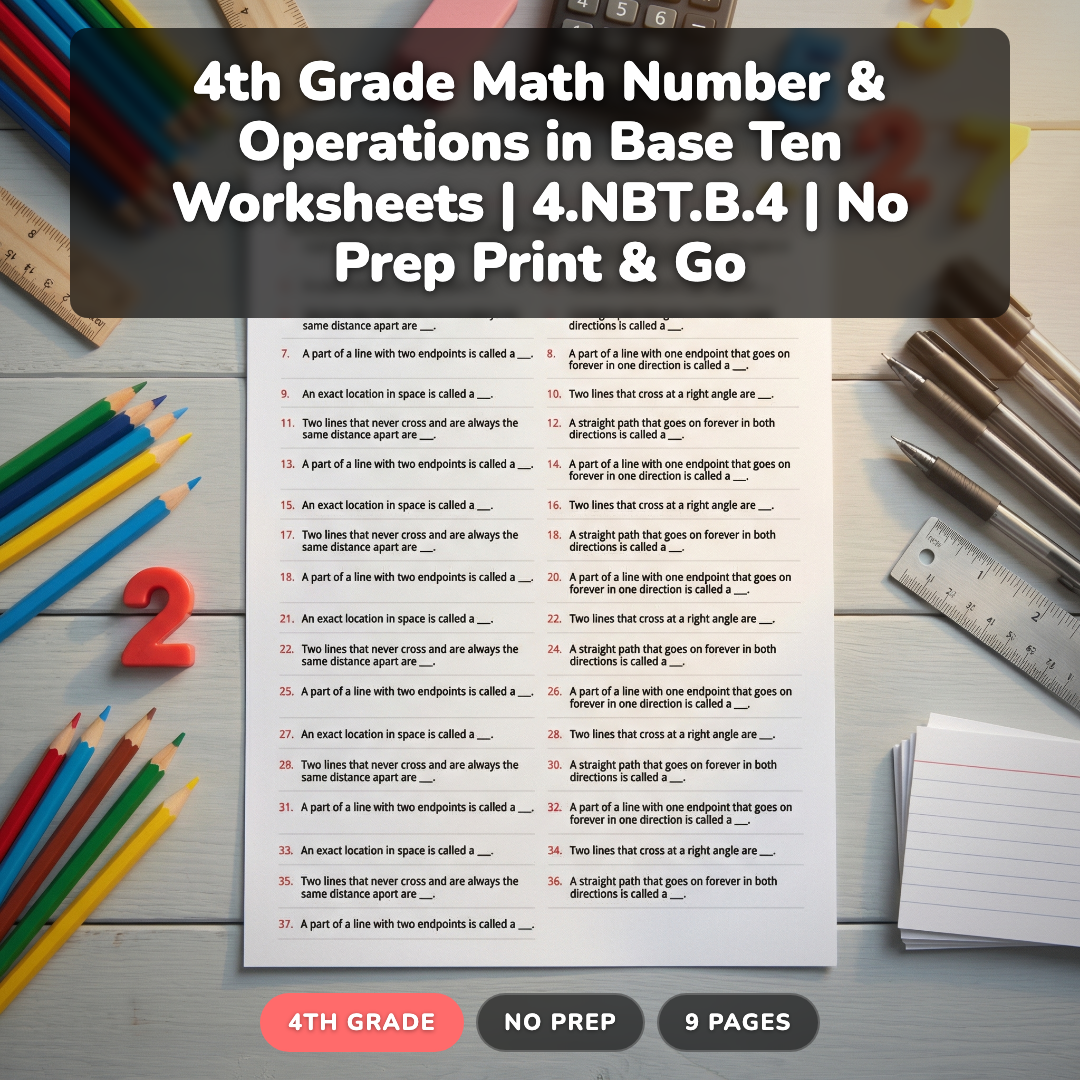
If you’re looking for differentiated practice that saves you prep time, I’ve created a comprehensive 4th grade multi-digit operations pack that addresses exactly what we’ve discussed. This 9-page resource includes 132 carefully crafted problems across three difficulty levels — perfect for meeting every student where they are.
The Practice level focuses on 2- and 3-digit problems with clear regrouping patterns, ideal for students building confidence. The On-Level section provides 4-digit problems that align directly with grade-level expectations, while the Challenge level extends to 5-digit numbers and multi-step applications. Each level includes both addition and subtraction with varying complexity, plus answer keys for quick checking.
What makes this resource different is the careful scaffolding within each level — problems progress from simple regrouping to complex multi-step operations, so students build skills systematically. You get immediate differentiation without the prep work.
Grab a Free Multi-Digit Practice Sheet to Try
Want to see how these strategies work in practice? I’ll send you a free sample worksheet with problems at all three levels, plus a quick reference guide for common regrouping errors. Perfect for trying out these techniques with your class.
Frequently Asked Questions About Teaching Multi-Digit Operations
When should students master multi-digit addition and subtraction?
According to CCSS.Math.Content.4.NBT.B.4, students should fluently add and subtract multi-digit whole numbers by the end of fourth grade. Most curricula expect basic mastery by mid-year, with continued practice for fluency building throughout the year.
What’s the difference between accuracy and fluency in multi-digit operations?
Accuracy means getting the right answer consistently. Fluency includes accuracy plus efficiency and flexibility — students can solve problems quickly, choose appropriate strategies, and explain their thinking. Fluency typically develops 2-3 months after initial accuracy.
Should I teach alternative algorithms or stick with the standard algorithm?
The standard algorithm should be the primary focus for CCSS.Math.Content.4.NBT.B.4, but exposing students to alternatives like partial sums can deepen understanding. Use alternatives as bridges to the standard algorithm, not replacements for it.
How can I help students who consistently make regrouping errors?
Return to concrete manipulatives and slow down the process. Have them verbalize each step: “I need 10 more ones, so I’ll trade 1 ten for 10 ones.” Practice regrouping in isolation before combining it with the full algorithm.
What prerequisite skills do students need for multi-digit operations?
Students need solid place value understanding through thousands, single-digit addition/subtraction fluency, and basic regrouping concepts with 2-digit numbers. If these aren’t secure, spend time building these foundations first before moving to larger numbers.
Teaching multi-digit operations successfully comes down to building strong place value understanding and connecting concrete experiences to abstract algorithms. When students see why the standard algorithm works — not just how to follow the steps — they develop the fluency and confidence needed for future math success.
What’s your biggest challenge when teaching multi-digit operations? I’d love to hear about the strategies that work best in your classroom. And don’t forget to grab that free practice sheet above — it’s a great way to try out these approaches with your students.