If your 5th graders look confused when you mention cubic units, you’re not alone. Teaching volume concepts requires students to think three-dimensionally — a major cognitive leap from the area work they mastered in 4th grade. The good news? With the right strategies, you can help every student visualize and calculate volume confidently.
Key Takeaway
Students master volume when they physically build with unit cubes before moving to formulas and abstract calculations.
Why Volume Matters in 5th Grade Math
Volume instruction in 5th grade bridges concrete spatial reasoning with abstract mathematical thinking. According to the National Council of Teachers of Mathematics, students who master volume concepts through hands-on exploration score 23% higher on standardized geometry assessments than those taught through formulas alone.
The CCSS.Math.Content.5.MD.C.3b standard requires students to understand that “a solid figure which can be packed without gaps or overlaps using n unit cubes is said to have a volume of n cubic units.” This foundational concept appears in mid-spring, typically after students have mastered multiplication of whole numbers and basic fraction operations.
Volume connects directly to real-world applications students encounter daily — from packing boxes to understanding container capacity. Research from the Journal of Mathematical Behavior shows that students who master volume concepts in 5th grade demonstrate stronger spatial reasoning skills throughout middle school mathematics.
Looking for a ready-to-go resource? I put together a differentiated volume practice pack that covers everything below — but first, the teaching strategies that make it work.
Common Volume Misconceptions in 5th Grade
Common Misconception: Students count only the visible faces of unit cubes in a rectangular prism.
Why it happens: They apply 2D thinking to 3D problems, focusing on surface area instead of interior space.
Quick fix: Use transparent containers with visible unit cubes inside to show hidden layers.
Common Misconception: Students think volume and area are the same thing.
Why it happens: Both involve multiplication, and students haven’t developed clear mental models for 3D vs. 2D measurement.
Quick fix: Compare filling a box (volume) with covering a table (area) using concrete examples.
Common Misconception: Students believe bigger shapes always have greater volume.
Why it happens: They rely on visual perception rather than systematic counting or calculation.
Quick fix: Show tall, thin containers versus short, wide containers with identical volumes.
Common Misconception: Students add length, width, and height instead of multiplying.
Why it happens: They confuse volume formulas with perimeter calculations from earlier grades.
Quick fix: Emphasize “layers” language — “How many cubes in one layer? How many layers total?”
6 Research-Backed Strategies for Teaching Volume
Strategy 1: Unit Cube Building Foundation
Students physically construct rectangular prisms using unit cubes, counting systematically to find volume. This concrete experience builds the conceptual foundation required by CCSS.Math.Content.5.MD.C.3b before introducing formulas.
What you need:
- Unit cubes (at least 50 per pair)
- Recording sheets with grid paper
- Small boxes or containers for reference
Steps:
- Give pairs specific dimensions: “Build a prism that’s 3 cubes long, 2 cubes wide, and 4 cubes tall.”
- Students build the structure, counting cubes as they place each one.
- Have them record the total number of cubes used.
- Repeat with different dimensions, looking for patterns in their counts.
- Introduce the term “cubic units” after students understand the counting process.
Strategy 2: Layer-by-Layer Visualization
Students break down volume calculation into manageable layers, making the multiplication concept concrete and visual. This approach directly supports the “packing without gaps” language in the standard.
What you need:
- Flat unit cube arrays (base layers)
- Transparent containers
- Colored paper for layer tracking
Steps:
- Show students a rectangular base made of unit cubes (example: 4×3 = 12 cubes).
- Ask: “How many cubes are in this bottom layer?”
- Stack identical layers on top, counting: “Layer 1 has 12 cubes, layer 2 has 12 cubes…”
- For 5 layers total: “5 layers × 12 cubes per layer = 60 cubic units.”
- Connect to length × width × height: 4 × 3 × 5 = 60.
Strategy 3: Container Packing Investigations
Students use real containers and unit cubes to explore how different arrangements affect volume measurement. This hands-on approach makes abstract concepts tangible.
What you need:
- Various small boxes (shoe boxes, cereal boxes)
- Unit cubes
- Measurement recording sheets
- Rulers for verification
Steps:
- Students estimate how many unit cubes will fit in their assigned container.
- They pack cubes systematically, creating organized layers without gaps.
- Count total cubes used and record as volume in cubic units.
- Measure container dimensions with rulers and calculate using length × width × height.
- Compare hands-on results with calculated results to verify understanding.
Strategy 4: Digital Volume Modeling
Students use online manipulatives or apps to build and visualize rectangular prisms, allowing for quick exploration of multiple examples without physical cube limitations.
What you need:
- Tablets or computers
- Online cube-building tools (Math Learning Center apps)
- Recording sheets for dimensions and volumes
Steps:
- Students access digital unit cube tools and build assigned rectangular prisms.
- They rotate their 3D models to see all sides and count total cubes.
- Record dimensions and calculated volume for each model built.
- Challenge: Build different prisms with the same volume (24 cubic units).
- Share discoveries about how different shapes can have identical volumes.
Strategy 5: Volume Comparison Games
Students play structured games comparing volumes of different rectangular prisms, building fluency with mental math and spatial reasoning simultaneously.
What you need:
- Dimension cards (length, width, height)
- Calculators for verification
- Score sheets
- Timer
Steps:
- Partners draw three dimension cards each (example: 3, 5, 2).
- Each calculates their prism’s volume: 3 × 5 × 2 = 30 cubic units.
- Player with greater volume wins both sets of cards.
- Continue for 10 rounds, keeping score.
- Debrief: Which dimensions create the largest volumes? Why?
Strategy 6: Real-World Volume Applications
Students solve authentic problems involving volume calculation, connecting mathematical concepts to practical situations they encounter outside school.
What you need:
- Real objects to measure (books, boxes, containers)
- Rulers and measuring tapes
- Problem scenario cards
- Calculators
Steps:
- Present real scenarios: “How many unit cubes fit in your desk storage box?”
- Students measure dimensions carefully and calculate volume.
- They estimate, then verify with actual unit cubes when possible.
- Discuss why precise measurement matters in real applications.
- Connect to careers that use volume: shipping, construction, cooking.
How to Differentiate Volume Instruction for All Learners
For Students Who Need Extra Support
Start with 2×2×2 cubes and smaller dimensions. Use different colored cubes for each layer to make the structure more visible. Provide pre-built base layers so students focus on understanding “layers of” rather than constructing from scratch. Review prerequisite skills like skip counting and basic multiplication facts. Offer calculators for computation while focusing on conceptual understanding. Use concrete materials longer before transitioning to abstract problems.
For On-Level Students
Work with standard rectangular prism dimensions (3-8 units per dimension). Practice both building with cubes and calculating with formulas. Include word problems with real-world contexts like storage boxes and swimming pools. Expect students to explain their thinking using proper vocabulary: cubic units, length, width, height, volume. Provide mixed practice combining volume with other measurement concepts.
For Students Ready for a Challenge
Explore composite figures made of multiple rectangular prisms. Investigate how changing one dimension affects total volume. Connect volume to capacity using liquid measurements. Solve multi-step problems involving volume comparisons. Research how volume formulas extend to other 3D shapes like cylinders and pyramids. Create their own volume word problems for classmates to solve.
A Ready-to-Use Volume Resource for Your Classroom
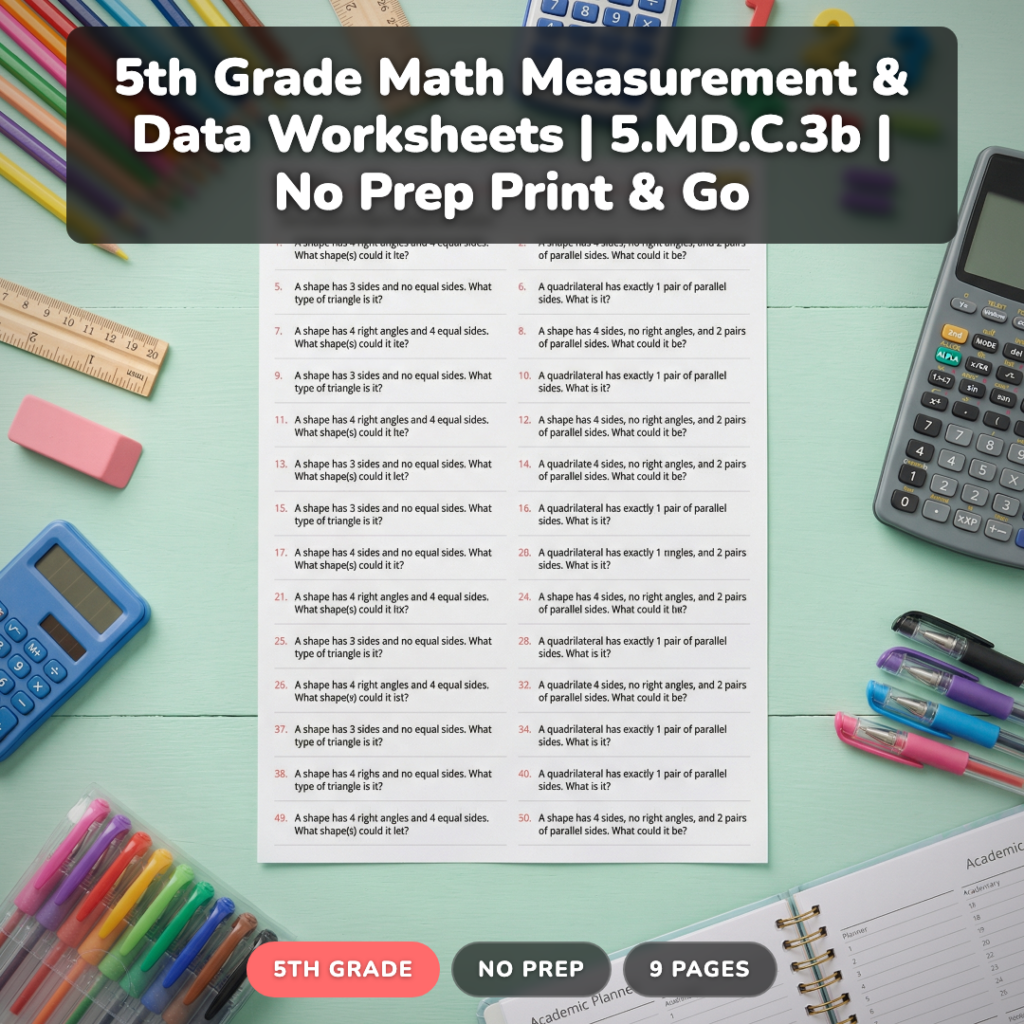
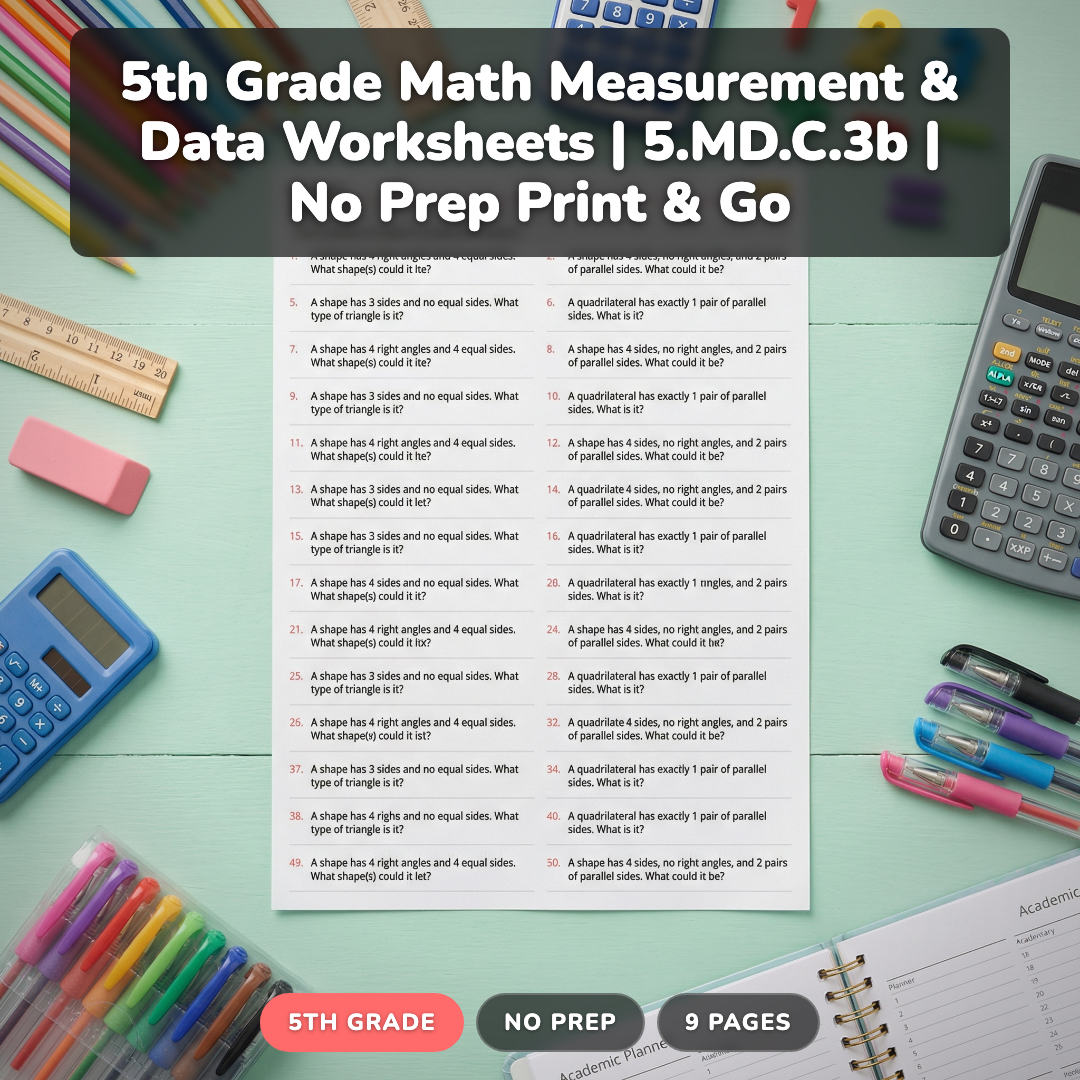
After years of teaching volume concepts, I created a comprehensive practice pack that addresses every learning level in your classroom. This 9-page resource includes 132 carefully scaffolded problems across three difficulty levels, saving you hours of prep time while ensuring every student gets appropriate practice.
The Practice level (37 problems) focuses on counting unit cubes in simple rectangular prisms with visual supports. On-Level problems (50 total) combine cube counting with formula application using realistic dimensions. Challenge problems (45 included) feature composite shapes, multi-step scenarios, and real-world applications that extend beyond basic calculation.
What makes this resource different is the systematic progression from concrete to abstract thinking, exactly matching how students develop volume understanding. Each level includes answer keys with step-by-step solutions, making it perfect for independent work, homework, or assessment preparation.
Ready to give your students the volume practice they need? This differentiated pack covers everything from basic cube counting to complex real-world applications.
Grab a Free Volume Practice Sheet to Try
Want to test-drive these strategies? I’ll send you a free sample worksheet with problems from each difficulty level, plus a quick reference guide for teaching volume step-by-step. Drop your email below and I’ll send it right over.
Frequently Asked Questions About Teaching Volume
When should I introduce the volume formula to 5th graders?
Introduce length × width × height after students have built multiple rectangular prisms with unit cubes and discovered the pattern themselves. This typically takes 3-4 lessons of hands-on exploration. The formula becomes meaningful when students connect it to their concrete experiences with layers and systematic counting.
How do I help students who confuse volume with surface area?
Use the “filling vs. wrapping” analogy consistently. Volume measures how much fits inside (filling a box with cubes), while surface area measures covering the outside (wrapping paper needed). Provide side-by-side examples using the same rectangular prism for both concepts, emphasizing the different purposes.
What’s the best way to assess volume understanding in 5th grade?
Combine three assessment types: building tasks with unit cubes, calculation problems with given dimensions, and word problems requiring students to identify relevant measurements. According to CCSS.Math.Content.5.MD.C.3b, students must demonstrate understanding of cubic units as the fundamental volume measure, not just formula application.
How many unit cubes do I need for a class of 25 students?
Plan for 30-40 cubes per pair of students, so approximately 400-500 total cubes for effective volume instruction. This allows students to build prisms up to 6×6×4 dimensions comfortably. Centimeter cubes work well and connect to metric measurement standards taught concurrently in 5th grade.
Should 5th graders learn volume formulas for shapes other than rectangular prisms?
Focus exclusively on rectangular prisms in 5th grade, as specified by Common Core standards. Students need deep understanding of cubic units and the rectangular prism formula before exploring cylinders, pyramids, or spheres in middle school. Mastery of rectangular prism volume provides the foundation for all future 3D measurement.
Building Strong Volume Foundations
Teaching volume successfully means balancing hands-on exploration with systematic calculation practice. When students understand that volume measures the space inside 3D shapes using cubic units, they’re ready for the geometric challenges ahead in middle school.
What’s your favorite strategy for helping students visualize cubic units? The hands-on building activities tend to be game-changers for most classes.
Don’t forget to grab your free volume practice sheet above — it’s a great way to see these strategies in action with your students.