If your second graders freeze when they see “400” and can’t explain what it means beyond “four hundred,” you’re not alone. Understanding that hundreds like 200, 500, and 800 represent groups of one hundred (with zero tens and zero ones) is a foundational skill that trips up many students. This post gives you five research-backed strategies to make hundreds place value click for every learner in your classroom.
Key Takeaway
Students master hundreds place value when they see, build, and verbalize the relationship between digit value and quantity using concrete manipulatives before moving to abstract numbers.
Why Hundreds Place Value Matters in Second Grade
Hundreds place value understanding directly impacts students’ ability to add and subtract three-digit numbers, compare larger numbers, and develop number sense for future math concepts. According to the National Council of Teachers of Mathematics, students who struggle with place value concepts in elementary grades show persistent difficulties with multi-digit operations throughout middle school.
CCSS.Math.Content.2.NBT.A.1b specifically requires students to understand that numbers like 100, 200, 300, 400, 500, 600, 700, 800, and 900 represent one, two, three, four, five, six, seven, eight, or nine hundreds with zero tens and zero ones. This standard typically appears in the second quarter of second grade, after students have mastered two-digit place value concepts.
Research from the Journal of Educational Psychology shows that students who receive explicit instruction in place value using the concrete-representational-abstract (CRA) model demonstrate 34% better performance on standardized assessments compared to traditional worksheet-based instruction.
Looking for a ready-to-go resource? I put together a differentiated hundreds place value pack that covers everything below — but first, the teaching strategies that make it work.
Common Hundreds Place Value Misconceptions in 2nd Grade
Common Misconception: Students think “400” means “4” instead of “four hundreds.”
Why it happens: They focus on the digit 4 without understanding its positional value.
Quick fix: Always pair numbers with concrete representations showing groups of 100.
Common Misconception: Students believe 300 has 3 tens instead of 3 hundreds and 0 tens.
Why it happens: They confuse the total count with place value positions.
Quick fix: Use place value charts and explicitly state “3 hundreds, 0 tens, 0 ones.”
Common Misconception: Students think 600 is bigger than 1000 because “6 is bigger than 1.”
Why it happens: They compare individual digits rather than understanding place value magnitude.
Quick fix: Build both numbers with base-ten blocks side by side for visual comparison.
Common Misconception: Students count by ones to reach hundreds (1, 2, 3… 99, 100) instead of recognizing hundreds as units.
Why it happens: They haven’t developed the concept of grouping by hundreds.
Quick fix: Practice skip-counting by hundreds with physical movements and chants.
5 Research-Backed Strategies for Teaching Hundreds Place Value
Strategy 1: Hundreds Flats Building
Students physically construct hundreds using base-ten blocks to understand that each hundreds flat represents exactly 100 units, making abstract numbers concrete and visual.
What you need:
- Base-ten blocks (hundreds flats, tens rods, unit cubes)
- Place value mats
- Number cards 100-900
Steps:
- Show students one hundreds flat and count the squares together (10 rows of 10 = 100)
- Have students build 200 using two hundreds flats on their place value mat
- Practice with 300, 400, 500 — always counting “one hundred, two hundred, three hundred”
- Show number cards and have students build the matching quantity
- Reverse the process: show built amounts and have students identify the number
Strategy 2: Hundreds Chant and Movement
Students use rhythmic chanting combined with physical movements to internalize the pattern of hundreds and develop automatic recall of hundreds sequences.
What you need:
- Hundreds chart
- Space for movement
- Optional: drums or rhythm sticks
Steps:
- Start with the chant: “One hundred, two hundred, three hundred, four!”
- Add clapping on each hundreds number
- Include jumping or marching for kinesthetic learners
- Practice forward (100-900) and backward (900-100)
- Play “Hundreds Freeze Dance” — stop music on a hundreds number, students show that many fingers
Strategy 3: Place Value Pocket Chart Sorting
Students categorize number cards into hundreds, tens, and ones columns using a visual organizer that reinforces the relationship between digits and their positional values.
What you need:
- Pocket chart with three columns labeled H-T-O
- Number cards: 100, 200, 300, 400, 500, 600, 700, 800, 900
- Mixed cards with tens (20, 30, 40) and ones (5, 7, 9) for comparison
Steps:
- Model placing 300 in the hundreds column while saying “3 hundreds, 0 tens, 0 ones”
- Have students take turns placing hundreds cards in the correct column
- Add tens and ones cards as distractors — students must identify why these don’t belong in hundreds
- Practice reading each placed card using place value language
- Create combinations like 200 + 30 + 5 = 235
Strategy 4: Hundreds Detective Game
Students analyze written numbers to identify which represent pure hundreds (like 400) versus mixed numbers (like 427), developing critical thinking about place value composition.
What you need:
- Number cards with pure hundreds and mixed numbers
- Detective badges or magnifying glasses (optional)
- Recording sheet for findings
Steps:
- Present mixed cards: 300, 325, 400, 456, 500, 578
- Students “investigate” each number to determine if it’s a pure hundreds number
- For each number, students state: “This is/isn’t a hundreds number because…”
- Sort cards into “Pure Hundreds” and “Mixed Numbers” piles
- Discuss patterns: pure hundreds always end in 00
Strategy 5: Hundreds Number Line Jumps
Students use a large floor number line to physically move between hundreds numbers, reinforcing the equal intervals and magnitude relationships between consecutive hundreds.
What you need:
- Floor number line marked in hundreds (100, 200, 300…900)
- Laminated number cards
- Bean bags or markers
Steps:
- Students start at 100 and jump to each subsequent hundred, counting aloud
- Call out a hundreds number — students jump to that position
- Practice “before and after” — if standing on 400, what comes before/after?
- Toss bean bags to random hundreds positions, students identify the number
- Advanced: give clues like “I’m thinking of the hundreds number between 300 and 500”
How to Differentiate Hundreds Place Value for All Learners
For Students Who Need Extra Support
Begin with numbers 100-300 only, using concrete manipulatives for every activity. Provide hundreds charts as reference tools and practice one-to-one correspondence by having students touch each hundreds flat while counting “one hundred, two hundred.” Use visual cues like color-coding hundreds digits in red. Review prerequisite skills like counting to 100 and understanding that 10 tens make 1 hundred. Offer extended time for building and verbalizing place value relationships.
For On-Level Students
Work with the full range of hundreds numbers (100-900) as specified in CCSS.Math.Content.2.NBT.A.1b. Students should demonstrate understanding through multiple representations: concrete blocks, drawings, and numerals. Practice both building numbers from verbal instructions and reading numbers aloud using place value language. Include problem-solving activities that require comparing hundreds numbers and explaining reasoning. Students should complete independent practice with minimal scaffolding.
For Students Ready for a Challenge
Extend learning to four-digit numbers including 1000, 2000, 3000. Introduce mixed numbers like 1200 or 2500, helping students identify the hundreds component. Create real-world connections using money (“How many dollar bills make $400?”) or measurement contexts. Challenge students to find patterns in hundreds sequences and make predictions. Include problem-solving scenarios that require multiple steps and mathematical reasoning about place value relationships.
A Ready-to-Use Hundreds Place Value Resource for Your Classroom
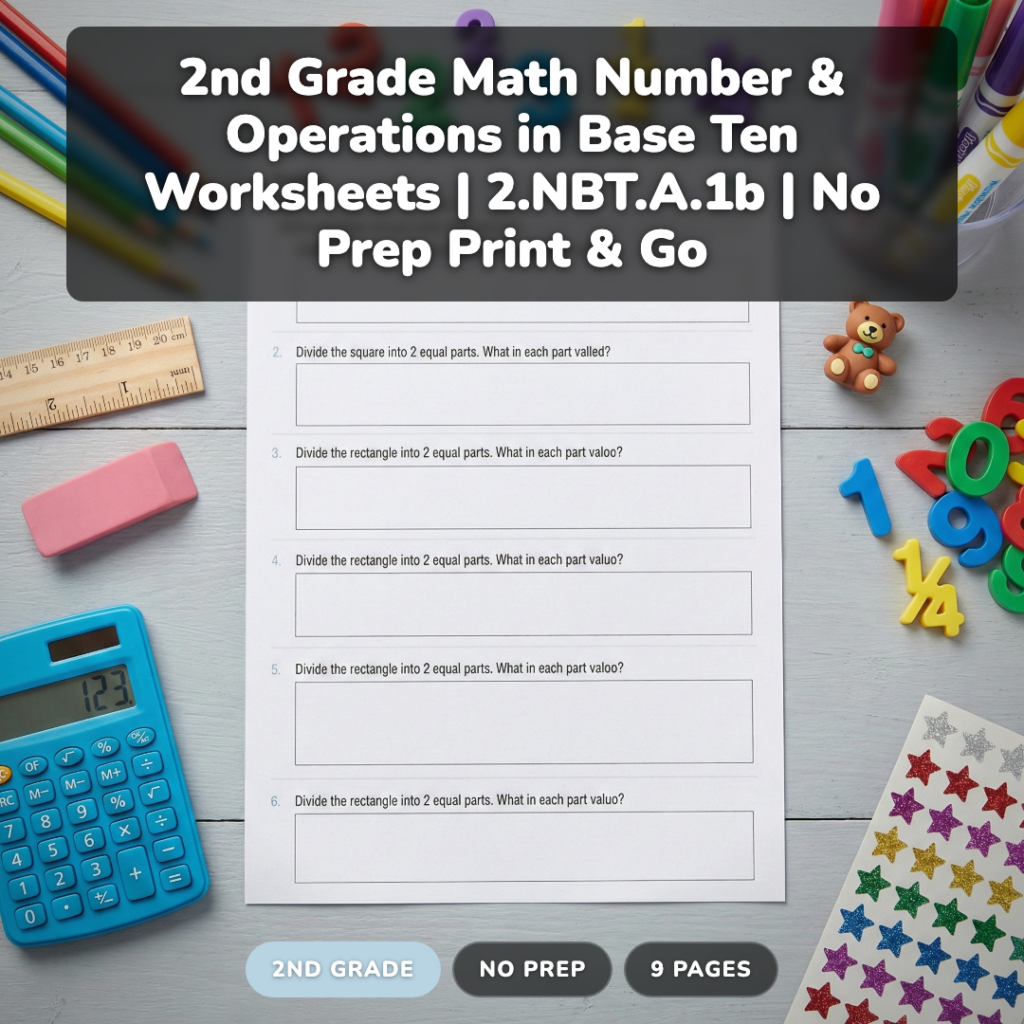
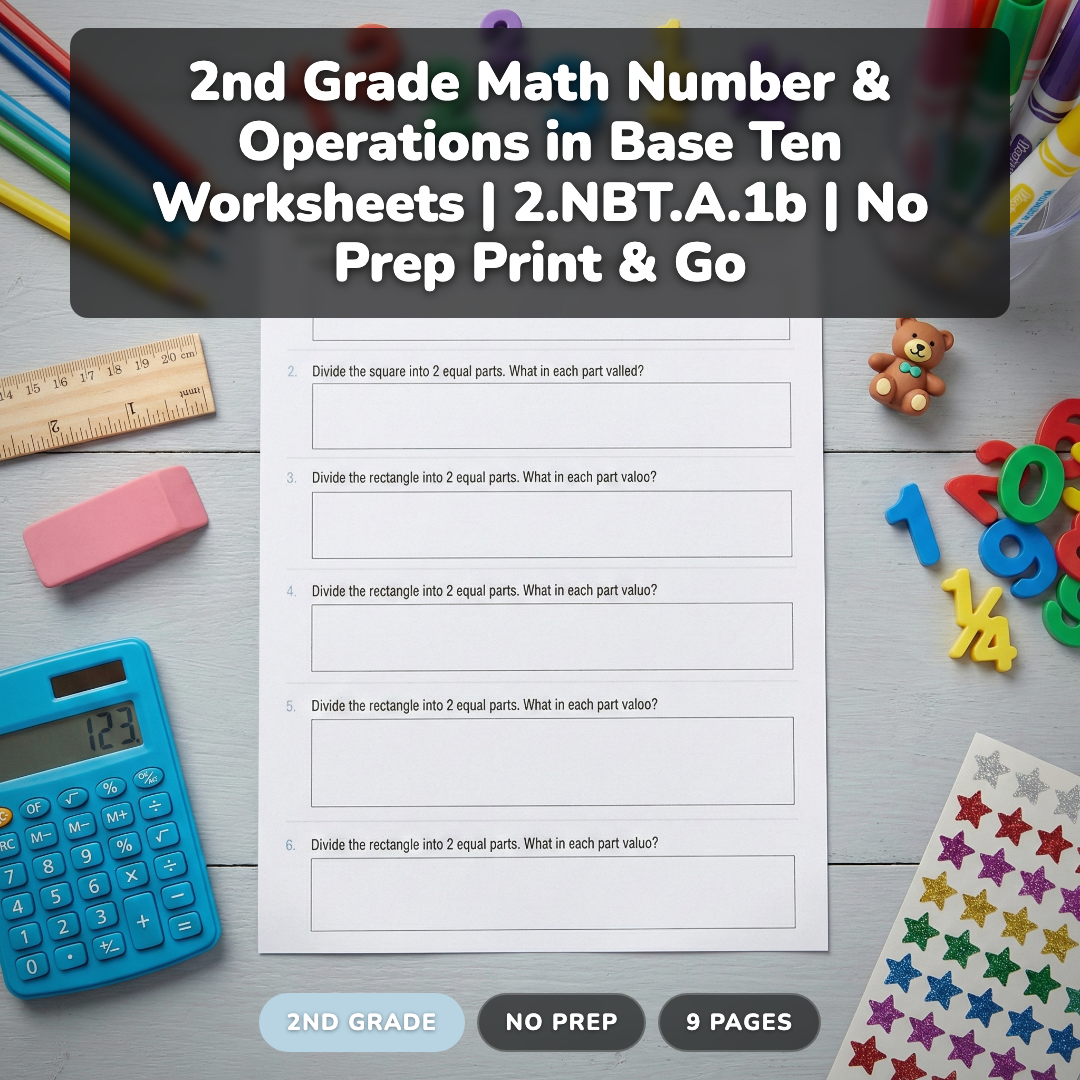
After years of creating place value activities from scratch, I designed a comprehensive resource that saves you hours of prep time while ensuring every student gets the practice they need. This hundreds place value pack includes 106 carefully crafted problems across three differentiation levels, making it perfect for whole-group instruction, small group work, or independent practice.
The Practice level (30 problems) focuses on basic hundreds recognition and building, ideal for students who need extra support with CCSS.Math.Content.2.NBT.A.1b. The On-Level section (40 problems) covers grade-level expectations with varied problem types including visual representations, number writing, and place value analysis. The Challenge level (36 problems) extends learning with complex comparisons and real-world applications.
What sets this resource apart is the systematic progression from concrete to abstract thinking, built-in answer keys for easy checking, and clear visual layouts that reduce cognitive load. Each page targets specific aspects of hundreds place value while spiraling in previously taught concepts.
The 9-page packet is completely no-prep — just print and go. Perfect for math centers, homework, or assessment preparation.
Grab a Free Hundreds Place Value Sample to Try
Want to see the quality and format before purchasing? I’ll send you a free sample page from each differentiation level, plus my hundreds place value assessment checklist that helps you identify exactly where each student needs support.
Frequently Asked Questions About Teaching Hundreds Place Value
When should I introduce hundreds place value in second grade?
Most curricula introduce hundreds place value in October or November, after students master two-digit place value concepts. Students need solid understanding of tens and ones before tackling hundreds. The timing aligns with CCSS.Math.Content.2.NBT.A.1b which typically appears in the second quarter.
What manipulatives work best for teaching hundreds place value?
Base-ten blocks are most effective because hundreds flats visually show 100 units in organized rows. Bundles of 100 straws or counting bears also work well. Avoid using money initially as it adds complexity. The key is using materials where students can see and count the 100 units within each hundred.
How do I help students who confuse hundreds with tens?
Use consistent language: always say “3 hundreds” not just “3” when referring to 300. Provide visual comparisons showing 3 tens (30 units) beside 3 hundreds (300 units). Practice with place value charts daily, having students physically point to the hundreds column while stating the value. Color-code hundreds digits differently from tens digits.
Should I teach expanded form with hundreds place value?
Yes, but start simple. Begin with pure hundreds like 400 = 4 hundreds + 0 tens + 0 ones before introducing mixed numbers. Expanded form reinforces the concept that 400 specifically means 4 groups of 100, not just the digit 4. This supports the standard’s emphasis on understanding positional value.
How can I assess hundreds place value understanding?
Use multiple formats: have students build numbers with manipulatives, write numbers from verbal descriptions, and explain what digits represent. Ask “What does the 5 in 500 mean?” rather than just “What number is this?” Look for students who can verbalize “5 hundreds, 0 tens, 0 ones” confidently.
Teaching hundreds place value doesn’t have to be overwhelming when you use concrete manipulatives, consistent language, and systematic practice. The key is helping students see that hundreds are groups of 100, just like tens are groups of 10. What’s your favorite strategy for making place value concepts stick with your second graders? Don’t forget to grab your free sample resource above to get started with differentiated hundreds practice right away.