If your second graders look puzzled when you ask them to estimate whether their desk is closer to 2 feet or 2 yards long, you’re not alone. Teaching estimation with standard units is one of those skills that seems simple until you’re actually in front of 25 seven-year-olds trying to explain the difference between inches and feet.
You’ll walk away from this post with five research-backed strategies that make estimation click for second graders, plus differentiation tips for every learner in your classroom.
Key Takeaway
Successful estimation instruction combines hands-on measurement experiences with visual benchmarks that students can reference independently.
Why Estimation Matters in Second Grade Math
Estimation builds number sense and spatial reasoning in ways that exact measurement simply can’t. When students estimate lengths using standard units, they’re developing mental models for CCSS.Math.Content.2.MD.A.3 that will support their understanding of measurement throughout elementary school.
Research from the National Council of Teachers of Mathematics shows that students who practice estimation alongside exact measurement develop stronger measurement sense and make fewer computational errors in later grades. Second grade is the perfect time to build these skills because students are naturally curious about the world around them and eager to make predictions.
The timing matters too. By second grade, most students have developed basic number sense through 100 and can handle the cognitive load of comparing different units. This standard typically appears in the spring semester, after students have mastered place value and basic addition and subtraction facts.
Looking for a ready-to-go resource? I put together a differentiated estimation pack that covers everything below — but first, the teaching strategies that make it work.
Common Estimation Misconceptions in Second Grade
Understanding where students typically struggle helps you anticipate and address confusion before it becomes entrenched.
Common Misconception: Students think longer units (like feet) should have bigger numbers than shorter units (like inches).
Why it happens: They apply their understanding that “bigger is more” without considering the relationship between unit size and quantity needed.
Quick fix: Use the same object measured in different units side-by-side to show the inverse relationship.
Common Misconception: Students confuse estimation with wild guessing.
Why it happens: They haven’t learned strategies for making reasonable estimates based on known benchmarks.
Quick fix: Teach specific benchmark references (paper clip = 1 inch, shoe = 1 foot) and model thinking aloud.
Common Misconception: Students think estimates must be exact or they’re “wrong.”
Why it happens: Previous math experiences emphasized finding the one correct answer.
Quick fix: Establish that good estimates fall within a reasonable range and celebrate “close enough” thinking.
Common Misconception: Students can’t visualize metric units because they lack real-world experience.
Why it happens: American students have limited exposure to centimeters and meters in daily life.
Quick fix: Create concrete connections (thumbnail = 1 cm, doorway = 2 meters) and post visual references.
5 Research-Backed Strategies for Teaching Estimation
Strategy 1: Benchmark Body Parts
Students use their own body measurements as portable reference tools for estimation. This strategy works because children always have their “measuring tools” with them and can relate abstract units to concrete, personal experiences.
What you need:
- Rulers and measuring tapes
- Benchmark recording sheet
- Various classroom objects to estimate
Steps:
- Have each student measure and record their personal benchmarks: thumb width (≈1 inch), foot length (≈1 foot), arm span (≈1 meter), pinky width (≈1 centimeter).
- Create a class chart with average measurements for reference.
- Practice using benchmarks to estimate classroom objects before measuring.
- Compare estimates to actual measurements and discuss reasonableness.
Strategy 2: Unit Comparison Stations
Students rotate through stations comparing the same objects measured in different units, building understanding of the inverse relationship between unit size and quantity needed.
What you need:
- 4 measuring stations with rulers, meter sticks, and measuring tapes
- Identical objects at each station (pencils, books, desk strips)
- Recording sheets for each unit type
Steps:
- Set up stations with the same objects but different measuring tools (inches, feet, centimeters, meters).
- Students estimate then measure the same object in multiple units.
- Gather data on a class chart showing how measurements change with different units.
- Discuss patterns: smaller units = bigger numbers, larger units = smaller numbers.
Strategy 3: Estimation Range Game
Students practice giving reasonable estimation ranges rather than exact guesses, developing the mathematical thinking that estimates should be “in the ballpark” rather than precise.
What you need:
- Mystery objects in bags or boxes
- Range recording sheets
- Measuring tools for verification
Steps:
- Show students an object briefly, then hide it.
- Students write an estimation range (“between ___ and ___ inches”) rather than an exact guess.
- Reveal and measure the object together.
- Celebrate estimates that “captured” the actual measurement within their range.
- Discuss what made some ranges more reasonable than others.
Strategy 4: Real-World Estimation Walks
Students apply estimation skills to authentic objects and distances around the school, connecting mathematical learning to their everyday environment and building spatial sense.
What you need:
- Clipboards and estimation sheets
- Measuring tools (rulers, measuring tapes, trundle wheels)
- Predetermined route with measurement opportunities
Steps:
- Plan a route including hallways, playground equipment, trees, and other measurable objects.
- At each stop, students estimate before measuring.
- Record both estimates and actual measurements.
- Back in class, analyze which estimates were most accurate and why.
- Create a school measurement map with student findings.
Strategy 5: Estimation Stories and Problems
Students solve word problems requiring estimation choices, developing the reasoning skills to select appropriate units and make sensible estimates in context.
What you need:
- Story problem cards with estimation scenarios
- Visual supports showing unit comparisons
- Discussion sentence frames
Steps:
- Present scenarios like “Emma wants to measure her bedroom. Should she use inches, feet, or meters?”
- Students discuss unit choices in pairs before sharing reasoning.
- Extend to estimation: “About how many feet long might Emma’s bedroom be?”
- Connect estimates to real experiences (“Think about our classroom…”).
- Validate multiple reasonable answers and focus on mathematical reasoning.
How to Differentiate Estimation for All Learners
For Students Who Need Extra Support
Start with concrete manipulation and single-unit focus. These students benefit from measuring actual objects with non-standard units first (paper clips, blocks) before transitioning to standard units. Provide visual benchmark charts they can reference independently, and allow them to use manipulatives during estimation activities. Focus on one unit at a time rather than comparing multiple units simultaneously.
For On-Level Students
These students can handle CCSS.Math.Content.2.MD.A.3 expectations of estimating with multiple standard units. They should practice comparing estimates across different units and explaining their reasoning. Provide opportunities to self-correct by measuring after estimating, and encourage them to refine their benchmark knowledge through repeated practice.
For Students Ready for a Challenge
Advanced students can work with fractional parts of units (“about 2 and a half feet”) and make connections between measurement systems. Challenge them to estimate very large distances (playground length in meters) or very small objects (paper thickness in centimeters). They can also create their own estimation problems for classmates and explain why certain units are more appropriate for specific objects.
A Ready-to-Use Estimation Resource for Your Classroom
Teaching estimation effectively requires the right balance of practice problems at different difficulty levels. You need problems that build from concrete experiences to abstract thinking, with enough variety to keep students engaged while hitting all the standard requirements.
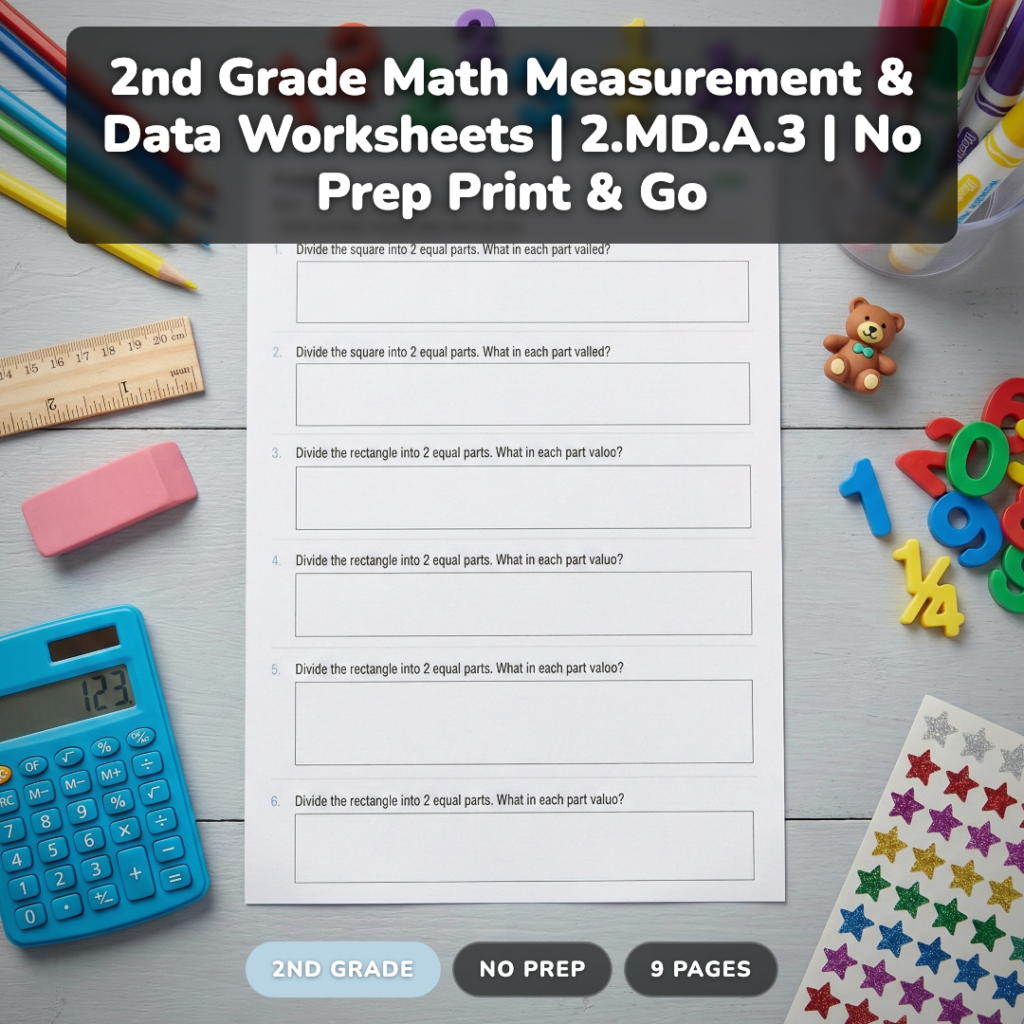
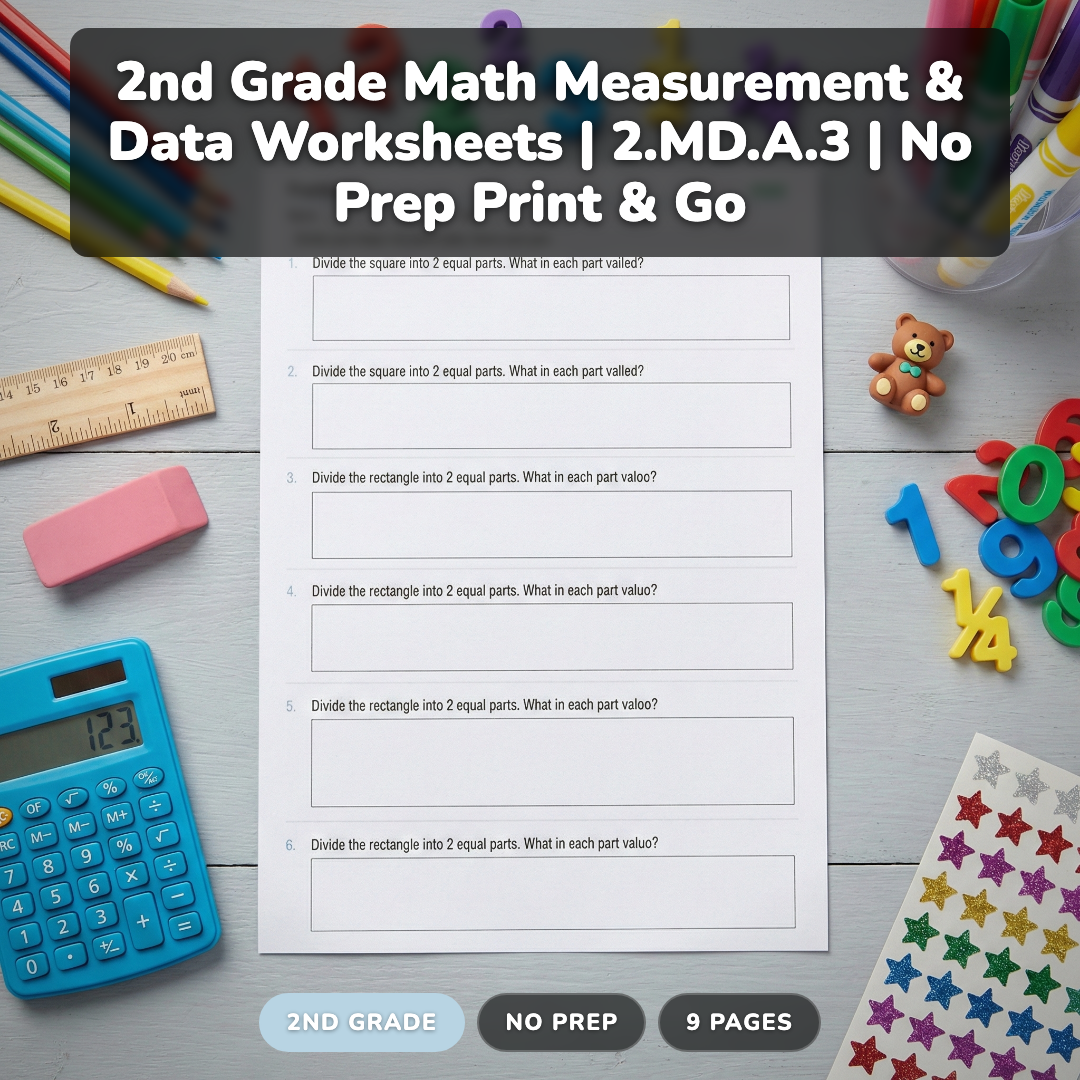
This differentiated measurement pack includes 106 estimation problems across three levels. The Practice level (30 problems) focuses on single-unit estimation with visual supports. The On-Level section (40 problems) includes multi-unit comparisons and reasoning questions. The Challenge level (36 problems) extends to real-world applications and fractional estimates.
What makes this resource different is the intentional scaffolding. Each level builds the same core skills but with appropriate supports or extensions. The answer keys include sample reasoning explanations, so you can model mathematical thinking during class discussions.
The 9-page pack covers everything from benchmark building to unit comparisons, saving you hours of prep time while ensuring your students get the practice they need.
Grab a Free Estimation Practice Sheet to Try
Want to see how differentiated estimation practice works? I’ll send you a free sample worksheet with problems at all three levels, plus teaching tips for each type of problem.
Frequently Asked Questions About Teaching Estimation
When should I introduce estimation versus exact measurement in 2nd grade?
Introduce estimation after students understand basic measurement concepts but before they become too focused on precision. Spring semester works well, typically after place value and addition/subtraction are solid. Students need some measurement experience to make reasonable estimates.
How do I help students who guess wildly instead of estimating reasonably?
Teach specific benchmark strategies and model thinking aloud. Show students how to use known references (their foot, a paper clip) to make educated guesses. Practice with objects they can see and touch before moving to abstract problems.
Should 2nd graders memorize exact conversions between units?
No, CCSS.Math.Content.2.MD.A.3 focuses on estimation, not conversion. Students should understand relative sizes (inches are smaller than feet) but don’t need to memorize that 12 inches equals 1 foot until later grades.
How can I assess estimation skills fairly when answers vary?
Focus on reasonableness rather than precision. Establish acceptable ranges for each problem and give credit for estimates within those ranges. Assess the reasoning process through student explanations, not just the numerical answer.
What’s the best way to introduce metric units to American students?
Connect metric units to familiar objects and experiences. Use concrete benchmarks like thumbnail width for centimeters and doorway height for meters. Provide lots of hands-on practice measuring classroom objects in both systems.
The key to successful estimation instruction is helping students see that math connects to their real world. When they can estimate the length of their bedroom or the height of their bike, measurement becomes meaningful and memorable.
What’s your favorite strategy for teaching estimation? I’d love to hear what works in your classroom, and don’t forget to grab that free practice sheet above!