If your second graders look confused when you mention “halves” and “thirds,” you’re not alone. Teaching equal shares is one of those foundational concepts that seems simple but trips up many students. The good news? With the right strategies, your students will confidently partition shapes and understand fractional language by the end of this unit.
Key Takeaway
Second graders learn equal shares best through hands-on partitioning activities that connect visual models to fractional vocabulary.
Why Equal Shares Matter in Second Grade
Equal shares lay the groundwork for all future fraction work. When students master CCSS.Math.Content.2.G.A.3, they’re building number sense that will serve them through middle school algebra. This standard requires students to partition circles and rectangles into 2, 3, or 4 equal parts, use fractional vocabulary correctly, and understand that equal shares can have different shapes.
Research from the National Council of Teachers of Mathematics shows that students who struggle with fractions in later grades often lack a solid foundation in equal partitioning. The key insight? Students need extensive experience with visual models before moving to abstract fraction notation.
Timing matters too. Most teachers introduce equal shares in late fall or winter, after students have solid understanding of 2D shapes. This connects naturally to your geometry unit while building toward third-grade fraction work.
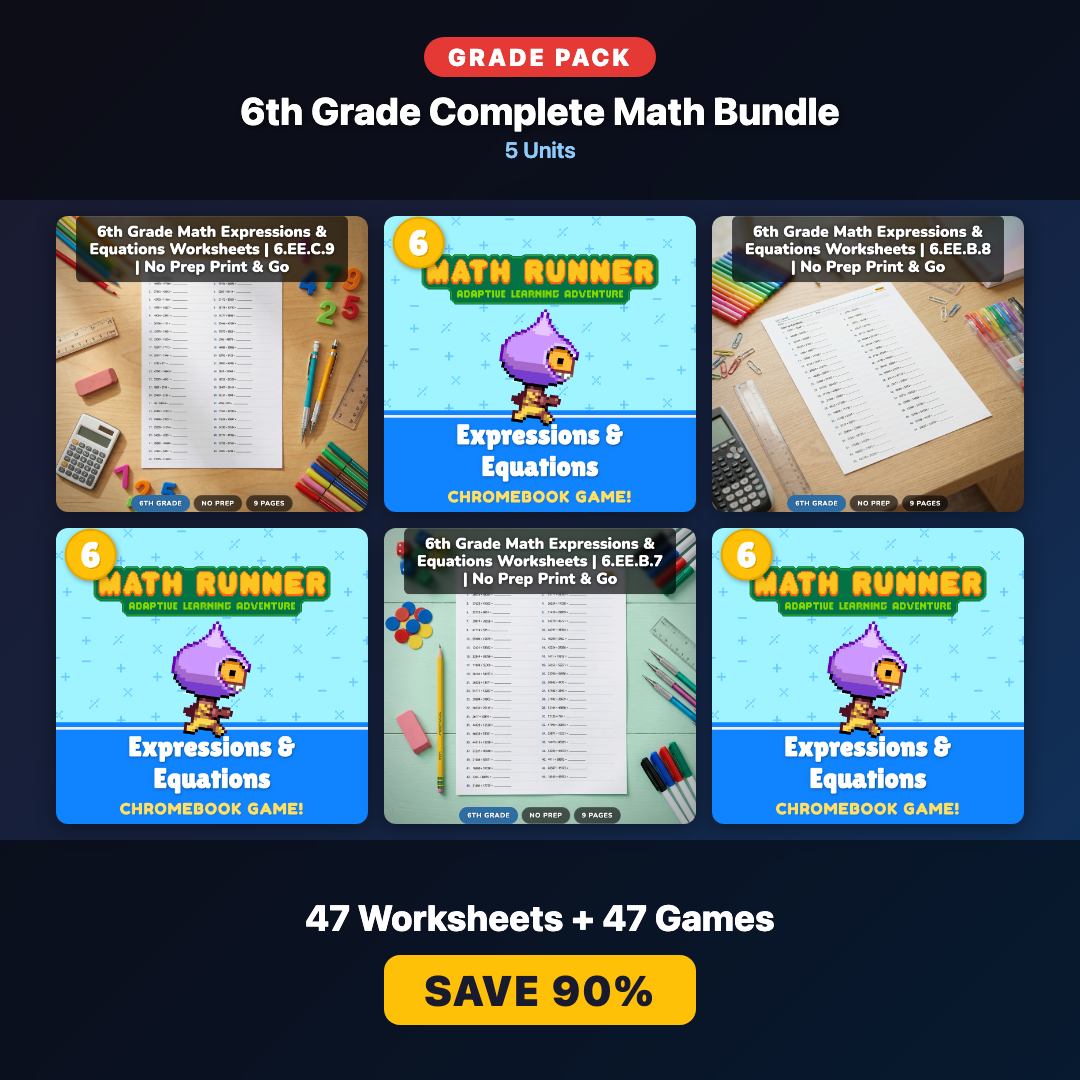
Looking for a ready-to-go resource? I put together a differentiated equal shares pack that covers everything below — but first, the teaching strategies that make it work.
Common Equal Shares Misconceptions in 2nd Grade
Common Misconception: Students think all equal parts must look identical.
Why it happens: They focus on shape rather than area when judging equality.
Quick fix: Use pizza slices cut different ways but with equal areas.
Common Misconception: Students count parts instead of identifying equal shares.
Why it happens: They see four pieces and automatically say “fourths” regardless of size.
Quick fix: Show examples of unequal parts and ask “Are these really fourths?”
Common Misconception: Students think “half” always means cutting down the middle.
Why it happens: Most examples show vertical or horizontal cuts through centers.
Quick fix: Demonstrate diagonal cuts and irregular halves using paper folding.
Common Misconception: Students confuse “a third” with “three thirds.”
Why it happens: The language is abstract and they haven’t connected parts to wholes.
Quick fix: Use consistent language: “one piece out of three equal pieces.”
5 Research-Backed Strategies for Teaching Equal Shares
Strategy 1: Paper Folding for Physical Partitioning
Students learn equal shares best when they physically create them. Paper folding gives immediate feedback — if the pieces don’t match when unfolded, they’re not equal.
What you need:
- Construction paper circles and rectangles (6 inches works well)
- Different colored paper for each student
- Crayons or markers
Steps:
- Give each student a paper circle. Model folding it in half.
- Have students unfold and color each half a different color.
- Repeat with rectangles, showing multiple ways to make halves.
- Progress to thirds using rectangles (fold into three equal strips).
- Try fourths with both circles and rectangles.
Strategy 2: Food Model Connections
Nothing makes fractions more concrete than food. Students naturally understand fairness when sharing snacks, making this strategy highly engaging and memorable.
What you need:
- Play food or pictures: pizzas, sandwiches, cookies, pies
- Plastic knives for pretend cutting
- Paper plates for sorting
Steps:
- Present a “pizza” and ask how to share fairly between 2 people.
- Let students physically “cut” and place pieces on separate plates.
- Introduce vocabulary: “Each person gets one half.”
- Repeat with 3 people (thirds) and 4 people (fourths).
- Show different cutting methods that still create equal shares.
Strategy 3: Equal Shares Detective Game
Turn misconception-busting into a game. Students become detectives who identify whether shapes are truly divided into equal parts or if someone made a mistake.
What you need:
- Pre-drawn shapes with both equal and unequal divisions
- Magnifying glasses (optional but fun)
- Detective badges or clipboards
Steps:
- Show a shape divided into parts. Ask: “Is this really divided into halves?”
- Students use “detective skills” to check by comparing part sizes.
- Introduce comparison methods: overlapping, measuring, visual estimation.
- Students sort examples into “Equal” and “Not Equal” piles.
- Discuss what makes shares truly equal.
Strategy 4: Fraction Language Building
Students need explicit instruction connecting visual models to mathematical language. This strategy builds vocabulary systematically while reinforcing the part-whole relationship.
What you need:
- Anchor chart paper
- Sentence frames printed on strips
- Shape cutouts for demonstration
Steps:
- Create anchor charts with sentence frames: “The whole is divided into ___ equal parts.”
- Practice choral reading: “One half, two halves make one whole.”
- Use consistent language patterns: “This is one third of the circle.”
- Have students complete sentence frames while pointing to visual models.
- Play vocabulary games matching words to pictures.
Strategy 5: Real-World Equal Shares Exploration
Connect classroom learning to students’ lives by finding equal shares in their world. This strategy builds relevance and helps transfer understanding beyond worksheets.
What you need:
- Digital camera or tablets
- Equal shares scavenger hunt list
- Classroom objects that can be shared
Steps:
- Brainstorm where students see equal shares: pizza slices, sandwich halves, shared toys.
- Send students on a classroom scavenger hunt for items that could be divided equally.
- Take photos of real equal shares around school (playground sections, lunch trays).
- Create a class book of “Equal Shares in Our World.”
- Practice sharing classroom supplies using equal shares vocabulary.
How to Differentiate Equal Shares for All Learners
For Students Who Need Extra Support
Start with halves only, using rectangles before circles. Provide pre-folded examples so students can see and feel equal parts. Use manipulatives like fraction bars or pattern blocks. Focus on the language “fair shares” before introducing formal terms like “halves.” Give extra practice with visual comparison — placing one part on top of another to check equality.
For On-Level Students
Work with halves, thirds, and fourths across both circles and rectangles. Practice multiple ways to partition the same shape. Use CCSS.Math.Content.2.G.A.3 vocabulary consistently: halves, thirds, fourths, half of, third of. Connect to real-world situations and begin exploring how equal shares can look different but have the same area.
For Students Ready for a Challenge
Explore irregular shapes divided into equal parts. Investigate whether different-shaped pieces can still be equal (they can!). Connect to early multiplication concepts: “Three thirds make one whole, just like 3 × 1/3 = 1.” Begin exploring fifths and sixths informally. Create their own equal shares problems for classmates to solve.
A Ready-to-Use Equal Shares Resource for Your Classroom
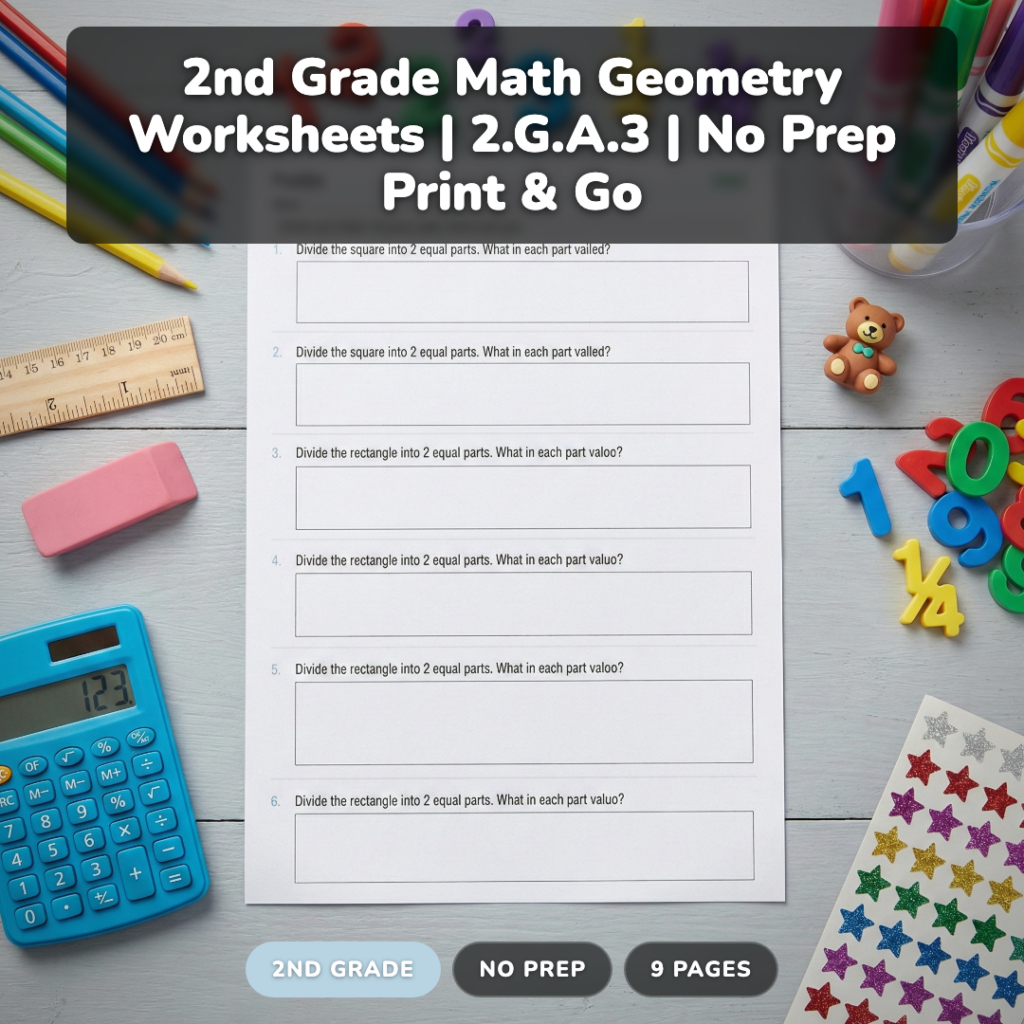
After years of teaching equal shares, I created a comprehensive resource that addresses every level in your classroom. This 9-page pack includes 106 problems across three difficulty levels — exactly what you need to differentiate without creating three separate lessons.
The Practice level focuses on basic halves and fourths with clear visual models. On-Level problems include all three types (halves, thirds, fourths) with varied orientations. Challenge problems feature irregular shapes and require deeper reasoning about what makes shares truly equal.
What sets this apart? Each level includes answer keys, and the problems progress systematically from concrete to abstract. No more scrambling to find appropriate practice for your struggling students or advanced learners.
You can grab the complete differentiated pack here — it’s saved me hours of prep time and my students love the variety.
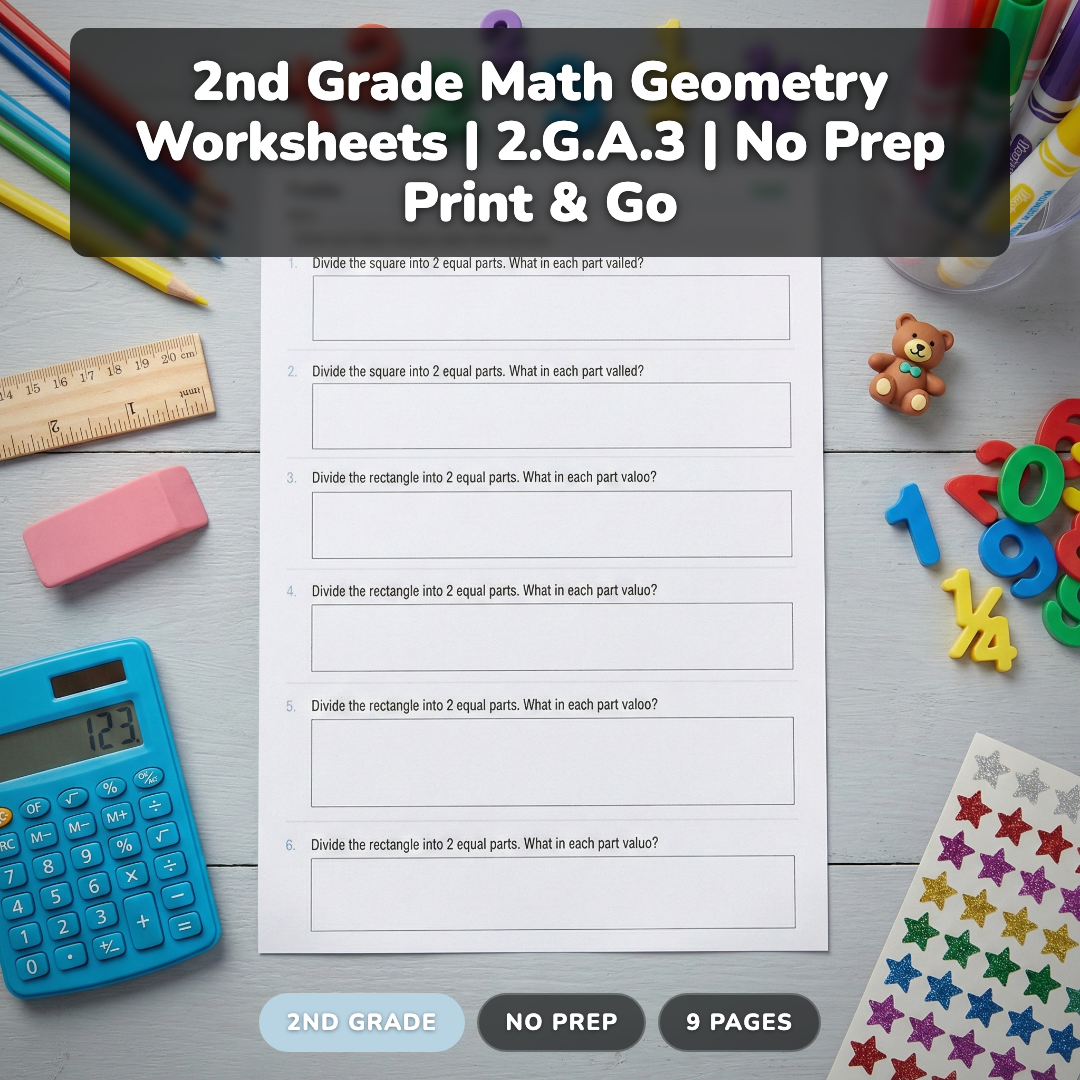
Grab a Free Equal Shares Practice Sheet to Try
Want to see the teaching approach in action? I’ll send you a free sample worksheet with problems from each level, plus my go-to anchor chart for fraction vocabulary. Perfect for trying out these strategies with your class.
Frequently Asked Questions About Teaching Equal Shares
When should I introduce equal shares in second grade?
Most teachers introduce equal shares in late fall or winter, after students have mastered basic 2D shapes. This timing allows connection to geometry units while building toward third-grade fraction work. Students need solid shape recognition before partitioning shapes into equal parts.
Do second graders need to learn fraction notation like 1/2?
No, CCSS.Math.Content.2.G.A.3 focuses on vocabulary and visual understanding, not fraction symbols. Students should master terms like “halves,” “thirds,” and “one half of” before seeing 1/2 notation in third grade. Keep it concrete and visual.
What’s the biggest mistake teachers make with equal shares?
Moving too quickly to worksheets without enough hands-on experience. Students need extensive time folding, cutting, and manipulating actual shapes before abstract practice. Spend at least a week on concrete activities before introducing paper-and-pencil work.
How do I help students understand that equal shares can look different?
Use pizza examples cut different ways but with equal areas. Show a rectangle divided vertically versus horizontally — both create halves. Let students fold paper circles in different ways to make halves. The key insight: equal area matters, not identical shape.
Should I teach fifths and sixths in second grade?
The standard only requires halves, thirds, and fourths. However, advanced students can explore fifths and sixths informally if they’ve mastered the required concepts. Focus on the required standards first, then extend for ready learners.
Teaching equal shares successfully comes down to making abstract concepts concrete through hands-on experiences. When students can physically create equal parts and use mathematical language to describe them, they’re building the foundation for all future fraction work.
What’s your favorite strategy for helping students understand that equal shares can look different? Try the free practice sheet and let me know how these approaches work with your class!