If your first graders freeze when they see an analog clock or confuse the hour and minute hands, you’re not alone. Teaching time to 6- and 7-year-olds requires breaking down abstract concepts into concrete, visual experiences they can actually understand.
This post shares five research-backed strategies that help first graders master CCSS.Math.Content.1.MD.B.3 — telling and writing time in hours and half-hours using both analog and digital clocks. You’ll walk away with specific activities, common misconception fixes, and differentiation tips for every learner in your classroom.
Key Takeaway
First graders learn time best through hands-on practice with real clocks, body movements, and clear visual connections between analog and digital formats.
Why Time-Telling Matters in First Grade
Time concepts form the foundation for daily routines, mathematical reasoning, and real-world problem solving. According to research from the National Council of Teachers of Mathematics, students who master basic time concepts in first grade show stronger number sense and fraction understanding in later grades.
The CCSS.Math.Content.1.MD.B.3 standard specifically requires first graders to tell and write time to the nearest hour and half-hour using both analog and digital clocks. This skill typically appears in the spring curriculum, after students have solid number recognition to 12 and understand counting by fives.
Studies show that 73% of first graders initially struggle with analog clocks because they require spatial reasoning and the ability to coordinate two moving parts simultaneously. The key is providing multiple representations and concrete experiences before moving to abstract worksheet practice.
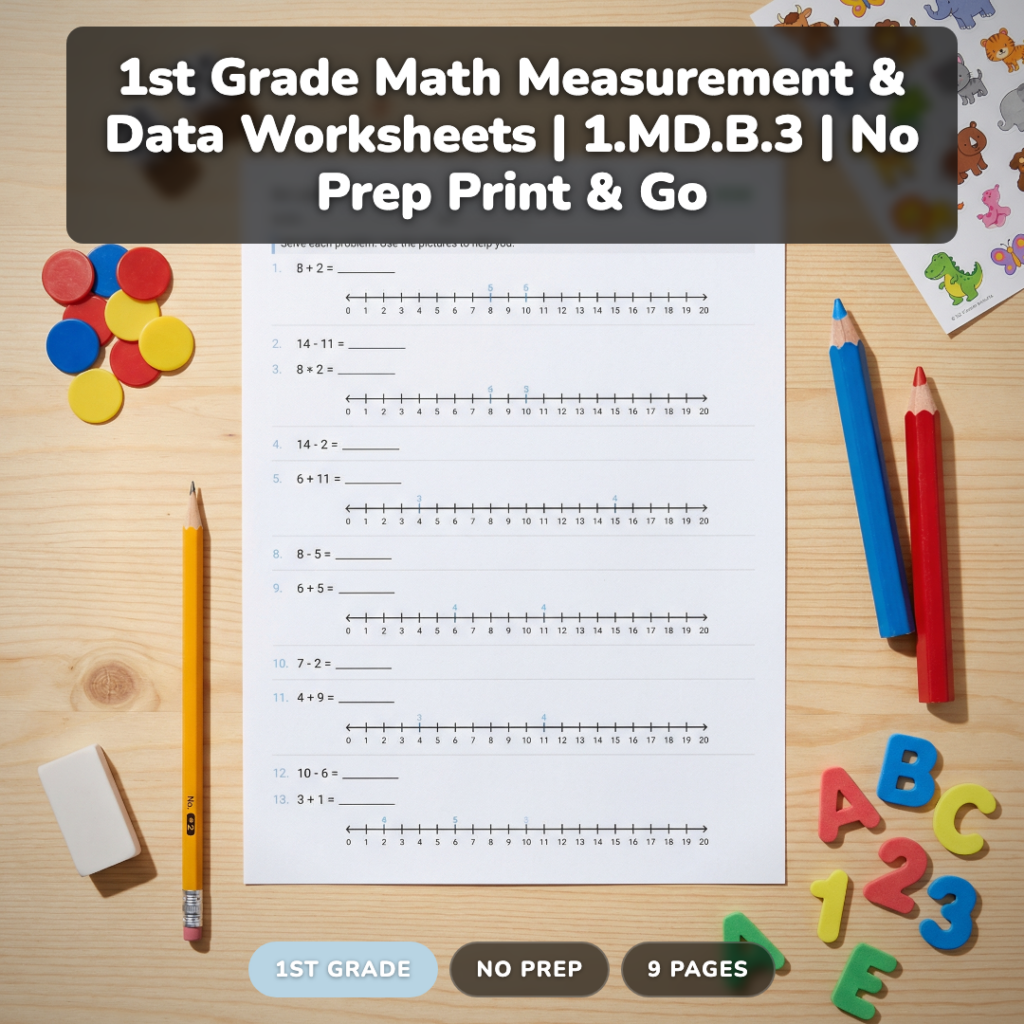
Looking for a ready-to-go resource? I put together a differentiated time-telling pack that covers everything below — but first, the teaching strategies that make it work.
Common Time-Telling Misconceptions in 1st Grade
Common Misconception: Students read the minute hand as the hour hand.
Why it happens: The longer minute hand looks more important, and students haven’t learned that hand length determines function.
Quick fix: Use color coding — hour hand red for ‘short hour,’ minute hand blue for ‘big minute.’
Common Misconception: Students think 6:30 means ‘six and thirty.’
Why it happens: They apply place value thinking to time notation without understanding the colon’s meaning.
Quick fix: Teach the colon as ‘and’ — ‘6 and 30 minutes’ or ‘6 and a half hour.’
Common Misconception: Students confuse 12:00 and 6:00 on analog clocks.
Why it happens: Both times show hands pointing straight up or down, creating visual similarity.
Quick fix: Practice ‘clock positions’ using body movements — arms up for 12, arms out for 6.
Common Misconception: Students think the hour hand jumps from number to number.
Why it happens: Digital clocks show discrete hour changes, but analog hour hands move gradually.
Quick fix: Demonstrate with a real clock how the hour hand ‘travels’ slowly toward the next number.
5 Research-Backed Strategies for Teaching Time in 1st Grade
Strategy 1: Human Clock with Body Movements
Transform your students into living clock parts to build kinesthetic understanding of how analog clocks work. This concrete approach helps students feel the relationship between hour and minute hands before working with paper clocks.
What you need:
- Open floor space
- Two different colored ribbons or scarves
- Number cards 1-12
- Timer or real clock for reference
Steps:
- Arrange number cards in a circle on the floor like a clock face
- Choose two students — one as hour hand (shorter ribbon), one as minute hand (longer ribbon)
- Call out times like ‘3:00’ and have students position themselves correctly
- Have the class chant ‘short hand points to hour, long hand points to minute’
- Practice hour times first (1:00, 2:00, 3:00) then add half-hours
- Let different students take turns being the clock hands
Strategy 2: Clock Face Number Line Connection
Help students see that clock numbers follow the same counting patterns they already know. This strategy bridges familiar number line concepts to the circular clock format.
What you need:
- Large floor number line (1-12)
- Individual student clocks or clock manipulatives
- Digital time cards
- Analog clock anchor chart
Steps:
- Start with students standing on the number line at position 1
- Count together to 12, then ‘wrap around’ back to 1
- Show how clock numbers work the same way — after 12 comes 1 again
- Practice ‘clock counting’ — 1, 2, 3… 12, 1, 2
- Connect to time: ‘When it’s 1 o’clock, the short hand points to 1’
- Use individual clocks to match the number line positions
Strategy 3: Analog-Digital Clock Matching Games
Build fluency by having students constantly connect analog and digital representations. This prevents students from learning each format in isolation.
What you need:
- Analog clock cards showing hour and half-hour times
- Digital time cards (matching times)
- Small group tables or floor space
- Timer for game rounds
Steps:
- Create pairs of cards — one analog, one digital showing the same time
- Spread all cards face down on tables
- Students take turns flipping two cards, looking for matches
- When they find a match, they must ‘read’ both times aloud
- Non-matches get flipped back over
- Continue until all matches are found
Strategy 4: Daily Schedule Time Integration
Make time-telling meaningful by connecting it to your classroom routine. Students learn faster when they see practical applications of new skills.
What you need:
- Classroom schedule chart with both analog and digital times
- Individual student schedules
- Real classroom clock
- Time transition cards
Steps:
- Post your daily schedule showing both clock formats for each activity
- At each transition, have students ‘read the time’ together
- Ask ‘What time is math?’ and have students point to both clock types
- Give students individual schedule cards to practice reading
- Use transition warnings: ‘In 5 minutes it will be 10:30 — reading time!’
- Have students draw clock faces showing important daily times
Strategy 5: Half-Hour Hand Position Teaching
Half-hours challenge first graders because the hour hand moves between numbers. This strategy makes that movement visible and predictable.
What you need:
- Demonstration clock with moveable hands
- Half-hour time cards
- Individual practice clocks
- Half-hour anchor chart
Steps:
- Show 2:00 on the demonstration clock — hour hand points exactly to 2
- Slowly move the minute hand to 6 (30 minutes)
- Point out how the hour hand ‘travels’ halfway to 3
- Teach the rule: ‘For half-hours, the hour hand goes halfway to the next number’
- Practice with multiple examples: 1:30, 4:30, 7:30
- Have students predict where the hour hand will be before showing each time
How to Differentiate Time-Telling for All Learners
For Students Who Need Extra Support
Start with hour times only (1:00, 2:00, 3:00) using real clocks and manipulatives. Focus on the hour hand position first, covering the minute hand if necessary. Use consistent language: ‘short hand shows the hour.’ Provide number lines and hundreds charts for number recognition practice. Review counting to 12 and basic number identification before introducing time concepts.
For On-Level Students
Practice both hour and half-hour times as required by CCSS.Math.Content.1.MD.B.3. Include both analog and digital formats in daily practice. Use real-world connections like class schedule times and bedtime routines. Provide independent practice with immediate feedback through self-checking activities and partner games.
For Students Ready for a Challenge
Introduce quarter-hours (15 and 45 minutes) as preview skills for second grade. Practice elapsed time problems: ‘If it’s 2:00 now, what time will it be in one hour?’ Connect time to addition and subtraction: ’30 minutes is the same as half an hour.’ Create time word problems and real-world scenarios involving scheduling and planning.
A Ready-to-Use Time-Telling Resource for Your Classroom
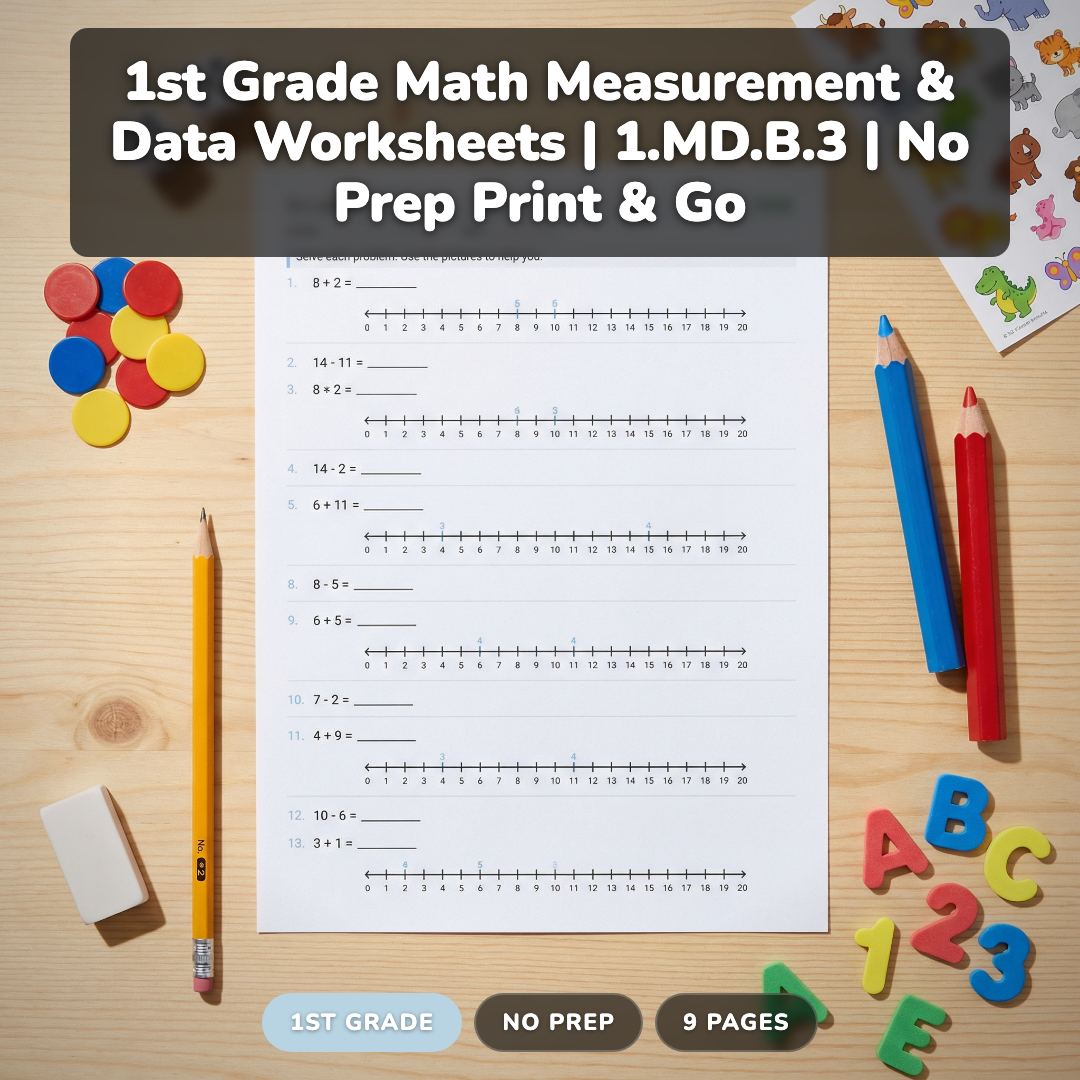
After teaching time concepts for years, I know how much prep work goes into creating differentiated practice that actually meets your students where they are. That’s why I created this comprehensive time-telling worksheet pack specifically aligned to first grade standards.
This resource includes 106 problems across three difficulty levels: 30 practice problems for students building foundational skills, 40 on-level problems for grade-appropriate mastery, and 36 challenge problems for advanced learners. Each level includes both analog and digital clock practice, with clear answer keys and teaching notes.
The pack covers everything from basic hour recognition to half-hour mastery, with visual supports and scaffolded practice that builds confidence. No prep required — just print and go.
Grab a Free Time-Telling Sample to Try
Want to see how differentiated time practice works in your classroom? I’ll send you a free sample from the resource pack, including one worksheet from each level plus teaching tips for introducing analog clocks.
Frequently Asked Questions About Teaching Time in 1st Grade
When should I introduce telling time in first grade?
Most first grade curricula introduce time concepts in spring, after students master number recognition to 12 and understand basic counting patterns. Students need solid number sense before tackling clock reading skills successfully.
Should I teach analog or digital clocks first?
Start with analog clocks using real, manipulative timepieces. The physical movement of hands helps students understand time progression better than static digital displays, even though digital seems simpler to adults.
How long does it take first graders to master telling time?
Most students need 4-6 weeks of consistent practice to master hour and half-hour times. Daily 10-15 minute practice sessions work better than longer, less frequent lessons for building automaticity.
What’s the biggest mistake teachers make when teaching time?
Moving too quickly to worksheets without enough concrete manipulation. Students need extensive hands-on experience with real clocks before they can successfully complete paper-and-pencil time-telling tasks.
How do I help students remember which hand is which?
Use consistent memory devices: ‘short hand for hour’ and ‘long hand for minutes.’ Color coding helps too — always use the same colors for hour and minute hands across all classroom materials.
Teaching time-telling successfully comes down to making abstract concepts concrete through movement, manipulation, and real-world connections. When students can physically experience how clocks work, they develop the number sense and spatial reasoning needed for lasting mastery.
What’s your go-to strategy for teaching time concepts? Try the human clock activity tomorrow and watch how quickly your students grasp the hour and minute hand relationship!