If your first graders freeze when they see problems like 24 + 8 or 35 + 20, you’re not alone. Teaching two-digit addition is one of those pivotal moments in first grade where students either build confidence with place value or develop math anxiety that follows them for years. The good news? With the right strategies, every student can master adding within 100.
Key Takeaway
First graders learn two-digit addition best through concrete models, place value understanding, and systematic progression from tens to ones.
Why Two-Digit Addition Matters in First Grade
Two-digit addition forms the foundation for all future math learning. According to research from the National Council of Teachers of Mathematics, students who master place value concepts in first grade show 40% better performance in third-grade multiplication and division. This skill directly addresses CCSS.Math.Content.1.NBT.C.4, which requires students to add within 100 using concrete models, place value strategies, and clear reasoning.
The timing matters too. Most districts introduce two-digit addition in January or February, after students have solid number recognition and single-digit addition facts. This gives you roughly 12-16 weeks to build mastery before state testing and second-grade readiness assessments.
Research from Dr. Karen Fuson at Northwestern University shows that students need approximately 60-80 practice problems across different contexts to internalize place value addition strategies. The key is systematic exposure: concrete models first, then drawings, then abstract number work.
Looking for a ready-to-go resource? I put together a differentiated addition practice pack with 106 problems across three levels — but first, the teaching strategies that make it work.
Common Two-Digit Addition Misconceptions in First Grade
Common Misconception: Students add digits in any order (24 + 8 = 212).
Why it happens: They treat each digit as a separate number rather than understanding place value.
Quick fix: Use base-ten blocks to show that 2 represents 20, not 2.
Common Misconception: When adding 35 + 20, students get 37 instead of 55.
Why it happens: They add the 2 from 20 to the 5 in the ones place.
Quick fix: Emphasize that 20 means “2 tens and 0 ones” using manipulatives.
Common Misconception: Students can’t explain their thinking or relate strategies to written methods.
Why it happens: They memorize steps without understanding the underlying place value concepts.
Quick fix: Always connect concrete models to written equations using think-alouds.
Common Misconception: Students forget to “make a ten” when adding 27 + 6.
Why it happens: They don’t recognize when regrouping is necessary.
Quick fix: Use ten-frames to visually show when you have “more than 10 ones.”
5 Research-Backed Strategies for Teaching Two-Digit Addition
Strategy 1: Base-Ten Block Building
Students use physical manipulatives to represent each number, then combine and regroup as needed. This concrete approach builds the foundation for all abstract work.
What you need:
- Base-ten blocks (tens rods and unit cubes)
- Place value mats
- Recording sheets
Steps:
- Model the first number with blocks (23 = 2 tens rods, 3 unit cubes)
- Model the second number separately (15 = 1 tens rod, 5 unit cubes)
- Combine like with like: tens with tens, ones with ones
- Check if regrouping is needed (more than 9 ones becomes 1 ten)
- Count the final result and record the written equation
Strategy 2: Ten-Frame Addition Method
Students use double ten-frames to visualize addition and naturally discover when regrouping occurs. This method bridges concrete and abstract thinking.
What you need:
- Double ten-frame mats
- Two-color counters
- Dry erase markers
Steps:
- Show the first number using filled ten-frames (24 = 2 full frames + 4 counters)
- Add the second number using different colored counters
- Count by tens, then add remaining ones
- If the ones frame overflows, make a new ten
- Record the equation and explain the strategy used
Strategy 3: Number Line Jumping
Students use open number lines to “jump” by tens and ones, making their thinking visible and building number sense.
What you need:
- Large demonstration number line
- Individual student number lines
- Colored pencils or markers
Steps:
- Start at the larger number on the number line
- Jump by tens first (easier to visualize)
- Then jump by ones to reach the final answer
- Label each jump with its value (+10, +10, +3)
- Verify by counting the total distance jumped
Strategy 4: Place Value Chart Method
Students organize addends in columns to see the tens-and-ones structure clearly. This method directly connects to standard algorithm preparation.
What you need:
- Place value charts (tens/ones columns)
- Number cards or tiles
- Recording sheets
Steps:
- Write each number in the place value chart
- Add the ones column first (explain why)
- If ones sum exceeds 9, trade 10 ones for 1 ten
- Add the tens column, including any new ten
- Read the final answer and check with manipulatives
Strategy 5: Story Problem Integration
Students solve two-digit addition within meaningful contexts, building both computational skills and problem-solving strategies.
What you need:
- Real-world story problems
- Drawing paper
- Choice of manipulatives
Steps:
- Read the problem together and identify key information
- Students choose their preferred strategy (blocks, drawings, charts)
- Solve using their chosen method
- Write the equation and explain their reasoning
- Check the answer for reasonableness in context
How to Differentiate Two-Digit Addition for All Learners
For Students Who Need Extra Support
Start with teen numbers plus single digits (16 + 3) before moving to larger two-digit problems. Use only concrete manipulatives for the first 2-3 weeks. Provide number charts and encourage counting on strategies. Break problems into smaller steps: “First, let’s just add the ones. What do you notice?” Review single-digit addition facts daily, as fluency gaps often masquerade as place value confusion.
For On-Level Students
Students at grade level should master the full range of CCSS.Math.Content.1.NBT.C.4: two-digit plus one-digit, two-digit plus multiples of 10, and two-digit plus two-digit with regrouping. They should explain their reasoning clearly and connect multiple strategies. Expect fluency with problems like 34 + 7, 45 + 20, and 28 + 15 by the end of first grade.
For Students Ready for a Challenge
Advanced students can explore three-addend problems (23 + 15 + 12), work with larger numbers approaching 100, and begin exploring subtraction connections. Introduce them to mental math strategies like “making friendly numbers” (47 + 25 = 47 + 20 + 5). Challenge them to create their own word problems and teach strategies to classmates.
A Ready-to-Use Addition Resource for Your Classroom
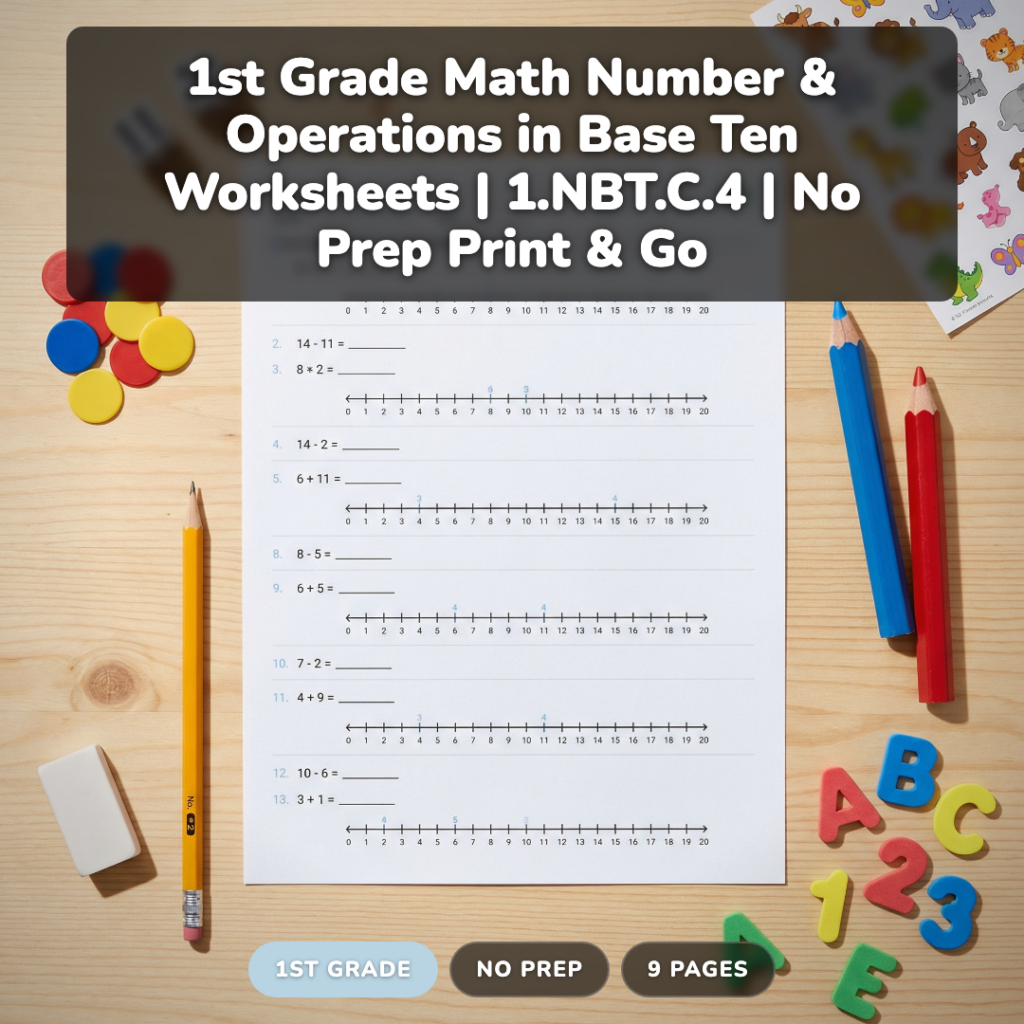
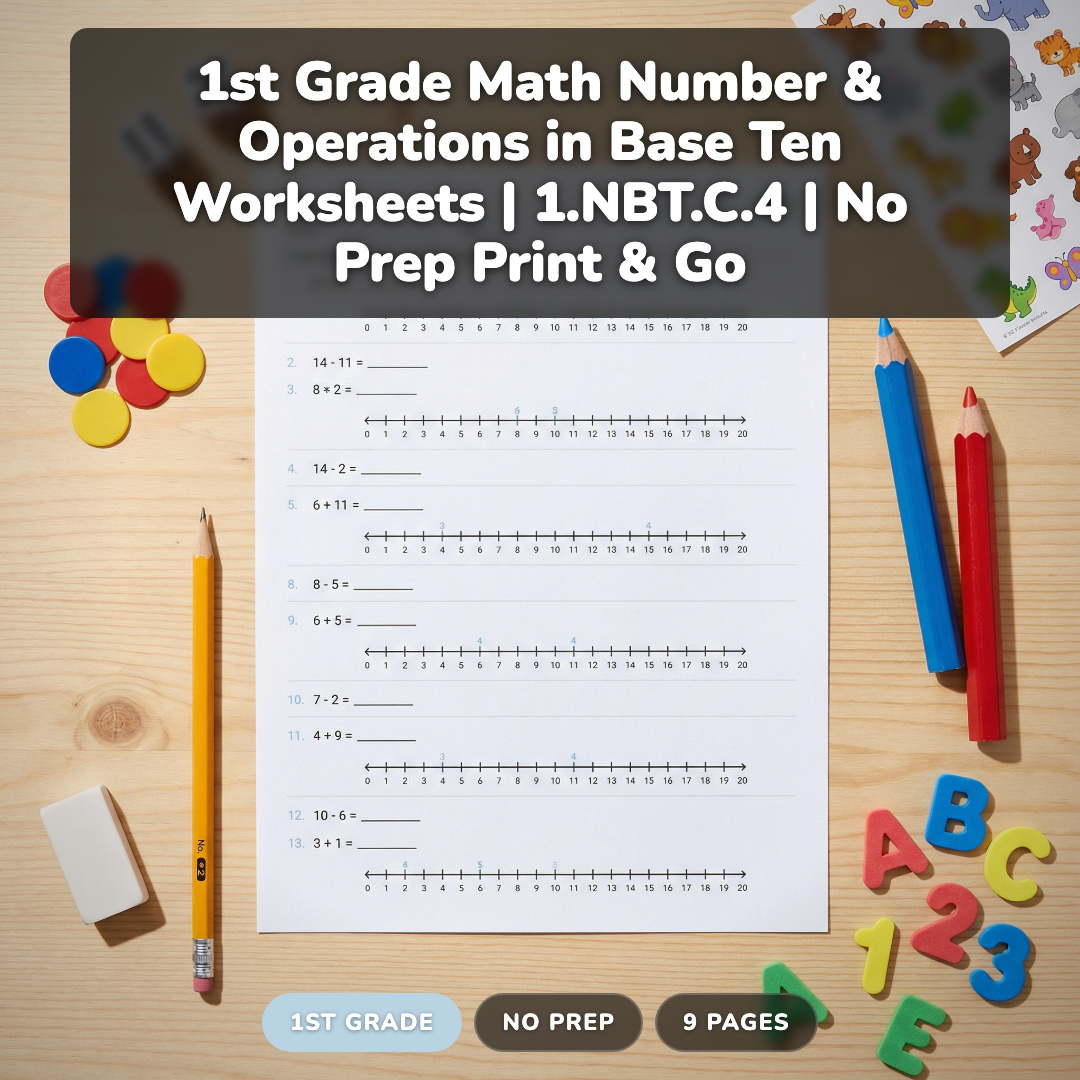
After teaching these strategies for years, I created a comprehensive addition practice pack that saves hours of prep time while providing exactly the differentiation your students need. This resource includes 106 carefully crafted problems across three distinct levels.
The Practice level (30 problems) focuses on teen numbers plus single digits and two-digit plus multiples of 10 — perfect for students building confidence. The On-Level section (40 problems) covers the full CCSS.Math.Content.1.NBT.C.4 standard with varied problem types and clear visual supports. The Challenge level (36 problems) pushes advanced learners with complex scenarios and multi-step thinking.
What sets this apart is the systematic progression and built-in scaffolds. Each page includes space for students to show their work using any strategy, plus answer keys that show multiple solution methods. No more scrambling to create different versions for your reading groups or math centers.
The pack includes 9 ready-to-print pages with clear instructions and differentiation notes, so you can focus on teaching instead of prep work.
Grab a Free Addition Practice Sheet to Try
Want to see the quality before you buy? I’ll send you a free sample page from each difficulty level, plus my go-to anchor chart for teaching place value addition. Perfect for trying out these strategies with your class.
Frequently Asked Questions About Teaching Two-Digit Addition
When should first graders master two-digit addition?
Most first graders should demonstrate proficiency with CCSS.Math.Content.1.NBT.C.4 by March or April. Students need 8-12 weeks of systematic instruction and practice. Focus on understanding before speed, as rushed instruction often creates misconceptions that persist into second grade.
What manipulatives work best for teaching place value addition?
Base-ten blocks are most effective because they clearly show the ten-to-one relationship. Ten-frames work well for smaller numbers. Avoid counting bears or generic counters, as they don’t emphasize place value structure. Students should use concrete models for 3-4 weeks before transitioning to drawings.
How do I help students who still count by ones for everything?
This indicates weak number sense rather than addition difficulty. Practice counting by tens daily using hundreds charts and skip-counting songs. Use “quick images” with ten-frames to build subitizing skills. Explicitly teach that 23 means “2 tens and 3 ones,” not “twenty-three separate things.”
Should first graders learn the standard algorithm for addition?
Not yet. CCSS.Math.Content.1.NBT.C.4 emphasizes understanding strategies and explaining reasoning. The standard algorithm comes in second grade after place value concepts are solid. Focus on concrete models, place value charts, and student-invented strategies that make sense to them.
How many practice problems do students need to master this skill?
Research suggests 60-80 problems across varied contexts, spread over 8-12 weeks. Quality matters more than quantity — students need problems that progress systematically and allow multiple solution strategies. Include word problems, visual models, and abstract equations in equal measure.
Building Confident Mathematicians
Teaching two-digit addition successfully comes down to one key principle: understanding before memorization. When students can explain why 34 + 18 = 52 using concrete models, drawings, or clear reasoning, they’re building mathematical thinking that will serve them for years to come.
What’s your favorite strategy for helping students visualize place value? I’d love to hear what works in your classroom! And don’t forget to grab that free practice sheet above — it’s a great way to try these strategies with your students this week.
Need more first-grade math resources? Check out my number sense activities that perfectly complement these addition strategies.