If your 4th graders freeze when they see area and perimeter word problems, you’re not alone. The jump from simply measuring length to applying formulas in real-world situations trips up even your strongest math students. You need strategies that help students visualize these concepts and connect them to everyday experiences they actually understand.
Key Takeaway
Students master area and perimeter when they can visualize the difference, practice with concrete examples, and apply formulas to problems that matter to them.
Why Area and Perimeter Matter in 4th Grade
Area and perimeter form the foundation for all future geometry learning. Students who struggle with CCSS.Math.Content.4.MD.A.3 often lack the conceptual understanding needed for middle school coordinate geometry, surface area calculations, and algebraic thinking.
This standard appears in most curricula between February and April, building on 3rd grade’s introduction to area concepts. Research from the National Council of Teachers of Mathematics shows that students who master area and perimeter formulas through hands-on application score 23% higher on state assessments than those who only practice computational problems.
The challenge isn’t the formulas themselves—it’s helping students understand when to use area versus perimeter and how to extract the right information from word problems. Students need to move beyond rote memorization to genuine conceptual understanding.
Looking for a ready-to-go resource? I put together a differentiated area and perimeter pack that covers everything below — but first, the teaching strategies that make it work.
Common Area & Perimeter Misconceptions in 4th Grade
Common Misconception: Students think area and perimeter are the same thing.
Why it happens: Both involve measuring rectangles, and students haven’t built clear mental models for each concept.
Quick fix: Use the fence analogy—perimeter goes around like a fence, area fills the inside like carpet.
Common Misconception: Students multiply length times width for both area and perimeter.
Why it happens: They’ve memorized one formula and apply it to everything.
Quick fix: Practice tracing perimeter with your finger while saying “around” and patting area while saying “inside.”
Common Misconception: Students can’t identify which measurement to find in word problems.
Why it happens: Word problems use terms like “space,” “border,” or “covering” that don’t clearly signal area versus perimeter.
Quick fix: Teach keyword strategies—”around,” “fence,” “frame” signal perimeter; “cover,” “paint,” “carpet” signal area.
Common Misconception: Students forget to include units in their answers.
Why it happens: They focus on computation and forget that measurements always have units.
Quick fix: Create an anchor chart showing area uses square units (carpet squares) and perimeter uses linear units (fence posts).
5 Research-Backed Strategies for Teaching Area & Perimeter
Strategy 1: Rectangle Building with Grid Paper
Students physically construct rectangles to see the relationship between dimensions and area/perimeter calculations.
What you need:
- 1-inch grid paper
- Colored pencils or crayons
- Rulers
- Area and perimeter recording sheet
Steps:
- Give each student a sheet of grid paper and ask them to draw a rectangle that’s 4 units by 6 units
- Have them color the perimeter red and shade the interior area blue
- Count the red squares around the edge together (20 units)
- Count the blue squares inside together (24 square units)
- Repeat with different rectangle sizes, recording results on a chart
- Look for patterns—perimeter adds all sides, area multiplies length times width
Strategy 2: Real-World Measurement Projects
Students measure actual classroom objects to apply area and perimeter formulas to meaningful contexts.
What you need:
- Measuring tapes or rulers
- Clipboards with recording sheets
- Calculators
- Various rectangular classroom items (books, desks, bulletin boards)
Steps:
- Assign pairs of students to measure 3 rectangular objects in the classroom
- Students record length and width measurements in a data table
- Calculate area using length × width formula
- Calculate perimeter using 2(length + width) formula
- Present findings to class, explaining which measurement would be needed for different purposes (area for covering with paper, perimeter for adding trim)
Strategy 3: Garden Planning Math Talk
Students design rectangular gardens while discussing when they need area versus perimeter calculations.
What you need:
- Graph paper
- Garden planning worksheet
- Sample seed packets with coverage information
- Fencing cost per foot information
Steps:
- Present the scenario: “You have 48 square feet of space and want to plant a rectangular garden”
- Students sketch possible garden shapes on graph paper
- Calculate area for each design to ensure it fits the space
- Calculate perimeter to determine fencing costs
- Hold a math talk discussion: “When do we need area? When do we need perimeter?”
- Students explain their reasoning using mathematical vocabulary
Strategy 4: Area and Perimeter Sort
Students categorize word problems by whether they require area or perimeter calculations, building problem-solving skills.
What you need:
- Word problem cards (15-20 problems)
- Two sorting mats labeled “Area” and “Perimeter”
- Answer key for self-checking
Steps:
- Give student pairs a set of mixed area and perimeter word problems
- Students read each problem and identify key words that signal area or perimeter
- Sort problems onto the appropriate mat without solving
- Discuss sorting decisions as a class, focusing on reasoning
- Solve 2-3 problems from each category together
- Students complete remaining problems independently
Strategy 5: Formula Connection Anchor Charts
Students create visual references that connect formulas to real-world applications and help prevent formula confusion.
What you need:
- Large poster paper
- Markers and colored pencils
- Real-world photos (fences, carpets, picture frames)
- Formula cards
Steps:
- Divide class into two groups—one creates an area anchor chart, one creates a perimeter chart
- Each group includes the formula, a visual model, real-world examples, and key vocabulary
- Groups present their charts, explaining when to use each measurement
- Post charts prominently for reference during problem-solving
- Add to charts throughout the unit as students discover new applications
How to Differentiate Area & Perimeter for All Learners
For Students Who Need Extra Support
Start with concrete manipulatives before moving to abstract formulas. Use square tiles to build rectangles, physically counting area and perimeter. Provide formula cards with visual cues—area shows a filled rectangle, perimeter shows an outlined rectangle. Practice with single-step problems using whole numbers before introducing multi-step word problems. Review multiplication facts for common dimensions (6×8, 5×12) to build computational fluency.
For On-Level Students
Focus on applying CCSS.Math.Content.4.MD.A.3 through varied word problems that require students to identify which measurement to find. Practice with rectangles that have decimal dimensions (4.5 × 6.2) to prepare for 5th grade standards. Include problems where students must find missing dimensions when given area or perimeter. Emphasize mathematical reasoning and explaining their problem-solving process.
For Students Ready for a Challenge
Introduce compound shapes that require breaking complex figures into rectangles. Present optimization problems: “What rectangle with perimeter 24 has the greatest area?” Connect to algebraic thinking by finding missing dimensions using variables. Explore real-world applications like calculating material costs for construction projects or comparing efficiency of different garden layouts.
A Ready-to-Use Area & Perimeter Resource for Your Classroom
Teaching area and perimeter effectively requires a lot of differentiated practice problems—more than most teachers have time to create from scratch. After years of making my own worksheets and seeing which problems actually help students master these concepts, I put together a comprehensive resource that saves you hours of prep time.
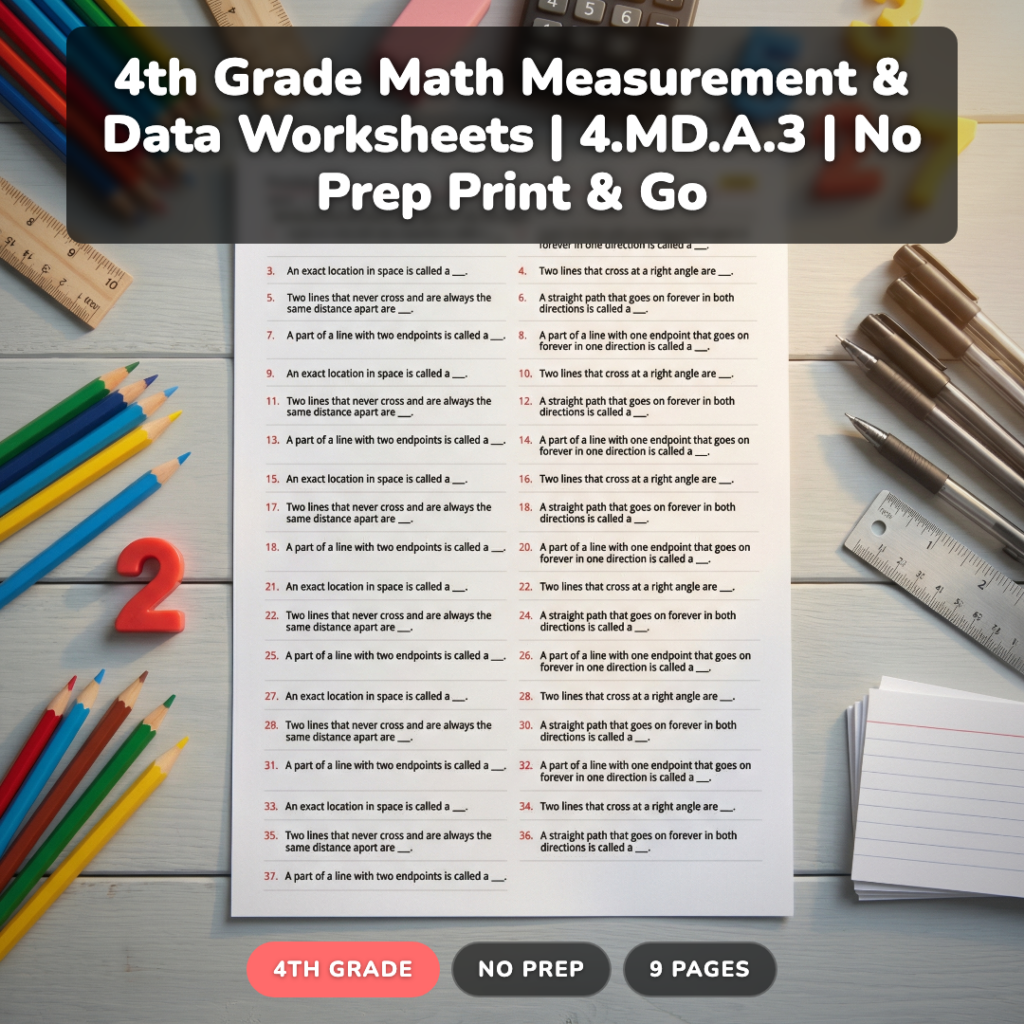
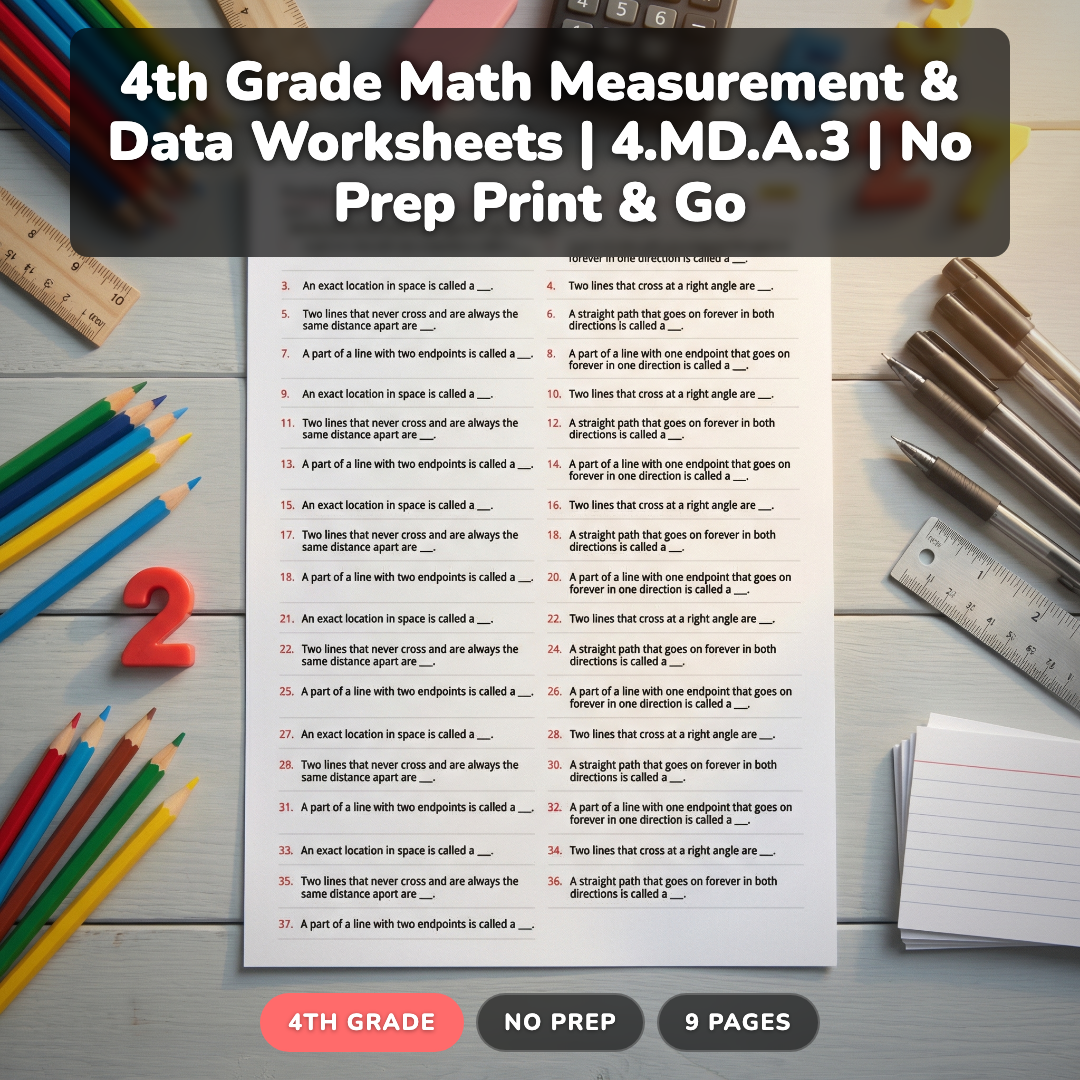
This area and perimeter pack includes 132 carefully crafted problems across three difficulty levels. The practice level focuses on basic formula application with visual supports. On-level problems mirror what students see on state assessments, mixing area and perimeter questions with real-world contexts. Challenge problems push students to think critically about optimization and multi-step problem solving.
What makes this different from generic worksheets is the intentional progression and built-in misconception prevention. Each level includes answer keys with common error explanations, so you can quickly identify where students need additional support.
The resource includes 9 pages of differentiated practice that you can use for centers, homework, or assessment prep. No cutting, no laminating—just print and go.
Grab a Free Area & Perimeter Practice Sheet to Try
Want to see how differentiated practice works before diving in? I’ll send you a free sample worksheet with problems from each level, plus my formula reference card that students love. Drop your email below and I’ll send it right over.
Frequently Asked Questions About Teaching Area & Perimeter
When should I introduce area and perimeter formulas in 4th grade?
Most curricula introduce these concepts in February or March, after students have mastered multiplication facts and basic geometry vocabulary. Students need solid understanding of rectangles and measurement units before tackling CCSS.Math.Content.4.MD.A.3 applications.
How do I help students remember which formula to use?
Use concrete analogies and kinesthetic cues. Teach “perimeter is like a fence that goes around” while tracing the outline, and “area is like carpet that covers the inside” while patting the surface. Practice identifying keywords in word problems daily.
What’s the biggest mistake students make with area and perimeter?
Students often confuse when to add versus multiply. They’ll use length × width for perimeter or add all sides for area. Consistent use of visual models and hands-on practice prevents this confusion better than repeated drill.
Should I teach area or perimeter first?
Start with perimeter since it builds on linear measurement concepts from 3rd grade. Once students understand “distance around,” introduce area as “space inside.” Teaching them separately for 2-3 days before combining prevents initial confusion.
How do I make word problems less intimidating for struggling readers?
Highlight key information in different colors—dimensions in blue, question in red. Teach students to draw quick sketches of each problem. Provide sentence frames like “I need to find the _____ so I will use the _____ formula.”
Mastering area and perimeter sets your students up for success in all future geometry learning. Focus on building conceptual understanding through hands-on experiences before moving to abstract problem-solving, and you’ll see confident mathematicians emerge.
What’s your favorite way to help students visualize the difference between area and perimeter? And don’t forget to grab that free practice sheet above—it’s a great way to see these strategies in action with your own students.