If your second graders look confused when you mention “hundreds, tens, and ones,” you’re not alone. Place value is one of those foundational concepts that seems simple to adults but can be surprisingly tricky for young learners. The good news? With the right strategies and plenty of hands-on practice, you can help every student master this crucial skill.
Key Takeaway
Second graders learn place value best through concrete manipulation, visual models, and repeated practice connecting numbers to their real-world meaning.
Why Place Value Matters in Second Grade
Place value understanding is the gateway to everything your students will do with larger numbers. When second graders truly grasp CCSS.Math.Content.2.NBT.A.1 — understanding that three-digit numbers represent amounts of hundreds, tens, and ones — they’re building the foundation for addition, subtraction, and number sense that will carry them through elementary math.
This standard typically appears in the first quarter of second grade, right after students have solidified their understanding of two-digit numbers. Research from the National Council of Teachers of Mathematics shows that students who struggle with place value concepts in second grade are 60% more likely to have difficulty with multi-digit operations later.
The timing is crucial because place value connects to nearly every other second grade math standard. Students need this foundation before tackling CCSS.Math.Content.2.NBT.B.5 (fluently adding within 100) and CCSS.Math.Content.2.NBT.B.7 (adding and subtracting within 1000).
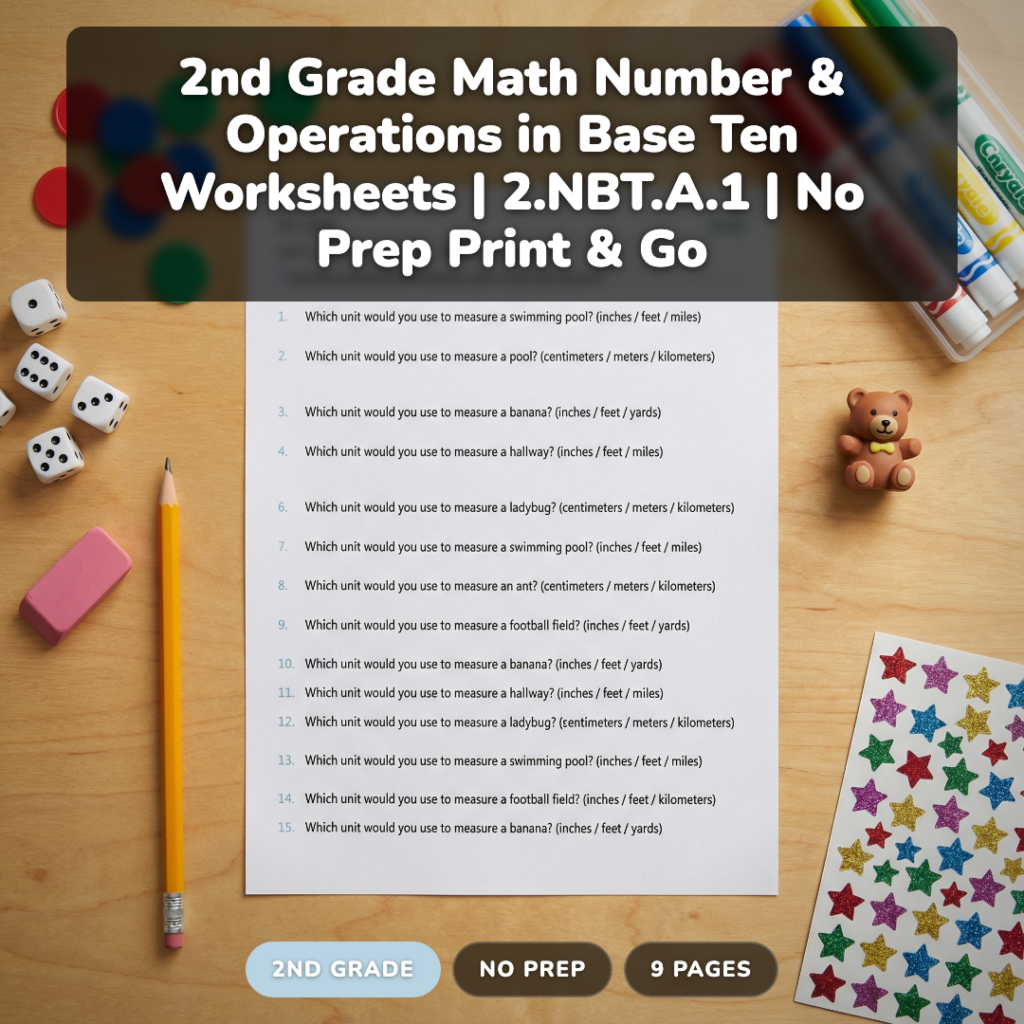
Looking for a ready-to-go resource? I put together a differentiated place value pack that covers everything below — but first, the teaching strategies that make it work.
Common Place Value Misconceptions in 2nd Grade
Understanding where students typically stumble helps you address these issues before they become ingrained habits.
Common Misconception: Students think the digit 0 means “nothing” rather than “no tens” or “no ones.”
Why it happens: They haven’t connected zero to the concept of an empty place holder.
Quick fix: Use empty ten-frames or base-ten blocks to show zero as “no groups” rather than “nothing.”
Common Misconception: Students read 706 as “seven hundred and six” but think it contains 76 ones.
Why it happens: They focus on the digits they see rather than place value meaning.
Quick fix: Always have students build numbers with manipulatives before writing them.
Common Misconception: Students think larger digits always mean larger numbers (believing 56 is bigger than 205).
Why it happens: They compare individual digits rather than understanding place value.
Quick fix: Use number lines and comparison activities that emphasize the hundreds place first.
Common Misconception: Students struggle with numbers like 300 or 450, thinking they’re “missing” digits.
Why it happens: They haven’t internalized that zero holds a place but represents no quantity.
Quick fix: Practice expanded form regularly (300 = 3 hundreds + 0 tens + 0 ones).
5 Research-Backed Strategies for Teaching Place Value
Strategy 1: Base-Ten Block Building
Start with concrete manipulation before moving to abstract numbers. Base-ten blocks provide the visual and tactile experience students need to truly understand place value relationships.
What you need:
- Base-ten blocks (hundreds flats, tens rods, ones units)
- Place value mats
- Number cards 100-999
- Recording sheets
Steps:
- Give students a three-digit number card (start with numbers like 234 or 156)
- Have them build the number using base-ten blocks on their place value mat
- Ask them to count aloud: “2 hundreds, 3 tens, 4 ones”
- Record the number in expanded form: 200 + 30 + 4 = 234
- Repeat with increasingly challenging numbers, including those with zeros
Strategy 2: Place Value Pocket Chart Sorting
This visual strategy helps students see the relationship between digits and their place value meaning through systematic sorting and comparison.
What you need:
- Pocket chart with three columns labeled H, T, O
- Digit cards 0-9
- Three-digit number cards
- Sticky notes
Steps:
- Display a three-digit number (like 472) at the top of the pocket chart
- Have students identify each digit and place it in the correct column
- Discuss what each digit represents: “4 means 4 hundreds, 7 means 7 tens, 2 means 2 ones”
- Create the expanded form together: 400 + 70 + 2
- Compare with similar numbers (like 427 or 742) to highlight how position changes value
Strategy 3: The Place Value Game Show
Turn place value practice into an engaging game where students become contestants answering questions about number representation and comparison.
What you need:
- Whiteboard or chart paper
- Question cards with three-digit numbers
- Buzzers or hand signals
- Small prizes or stickers
Steps:
- Divide class into teams of 3-4 students
- Display a three-digit number and ask rapid-fire questions: “How many hundreds?” “What digit is in the tens place?” “What’s the expanded form?”
- Teams buzz in to answer, earning points for correct responses
- Include comparison questions: “Which is larger: 456 or 465?”
- End each round by having teams build the number with manipulatives to verify answers
Strategy 4: Mystery Number Detective Work
Students use clues about place value to identify mystery numbers, developing logical reasoning while reinforcing place value concepts.
What you need:
- Clue cards with place value hints
- Number grid 100-999
- Detective notebooks (or regular paper)
- Magnifying glasses (optional, for fun)
Steps:
- Present clues one at a time: “My number has 5 hundreds,” “It has 0 tens,” “It has 8 ones”
- Students eliminate possibilities and narrow down options
- Have them justify their thinking: “It can’t be 580 because that has 8 tens, not 0 tens”
- Reveal the answer (508) and discuss the process
- Students create their own mystery number clues for classmates
Strategy 5: Real-World Place Value Connections
Connect place value learning to students’ everyday experiences through meaningful contexts like money, measurement, and population numbers.
What you need:
- Play money (dollar bills, dimes, pennies)
- Real-world number examples (school enrollment, distances, etc.)
- Calculators
- Chart paper for recording
Steps:
- Present real scenarios: “Our school has 347 students”
- Break down the number: “That’s 3 groups of 100 students, 4 groups of 10 students, and 7 individual students”
- Use money connections: $347 = 3 hundred-dollar bills + 4 ten-dollar bills + 7 one-dollar bills
- Have students find three-digit numbers in their environment (page numbers, addresses, prices)
- Create a class collection of real-world three-digit numbers with their place value breakdowns
How to Differentiate Place Value for All Learners
For Students Who Need Extra Support
These students benefit from extended concrete manipulation and smaller number ranges. Start with two-digit numbers and gradually introduce hundreds. Provide place value mats with clear visual boundaries and use consistent language. Consider pre-teaching vocabulary like “digit,” “place,” and “value.” Pair struggling students with supportive partners and allow extra time for hands-on exploration with base-ten blocks.
For On-Level Students
These students are ready for the full CCSS.Math.Content.2.NBT.A.1 expectations with three-digit numbers including zeros. They can work independently with guided practice, engage in partner activities, and begin making connections between place value and addition/subtraction. Provide varied practice opportunities and encourage them to explain their thinking to reinforce understanding.
For Students Ready for a Challenge
Advanced students can explore four-digit numbers, work with place value patterns, and make connections to rounding and estimation. Challenge them to find multiple ways to represent the same number (expanded form, word form, base-ten blocks) and to create their own place value problems for classmates. Introduce early concepts of regrouping and place value in different number systems.
A Ready-to-Use Place Value Resource for Your Classroom
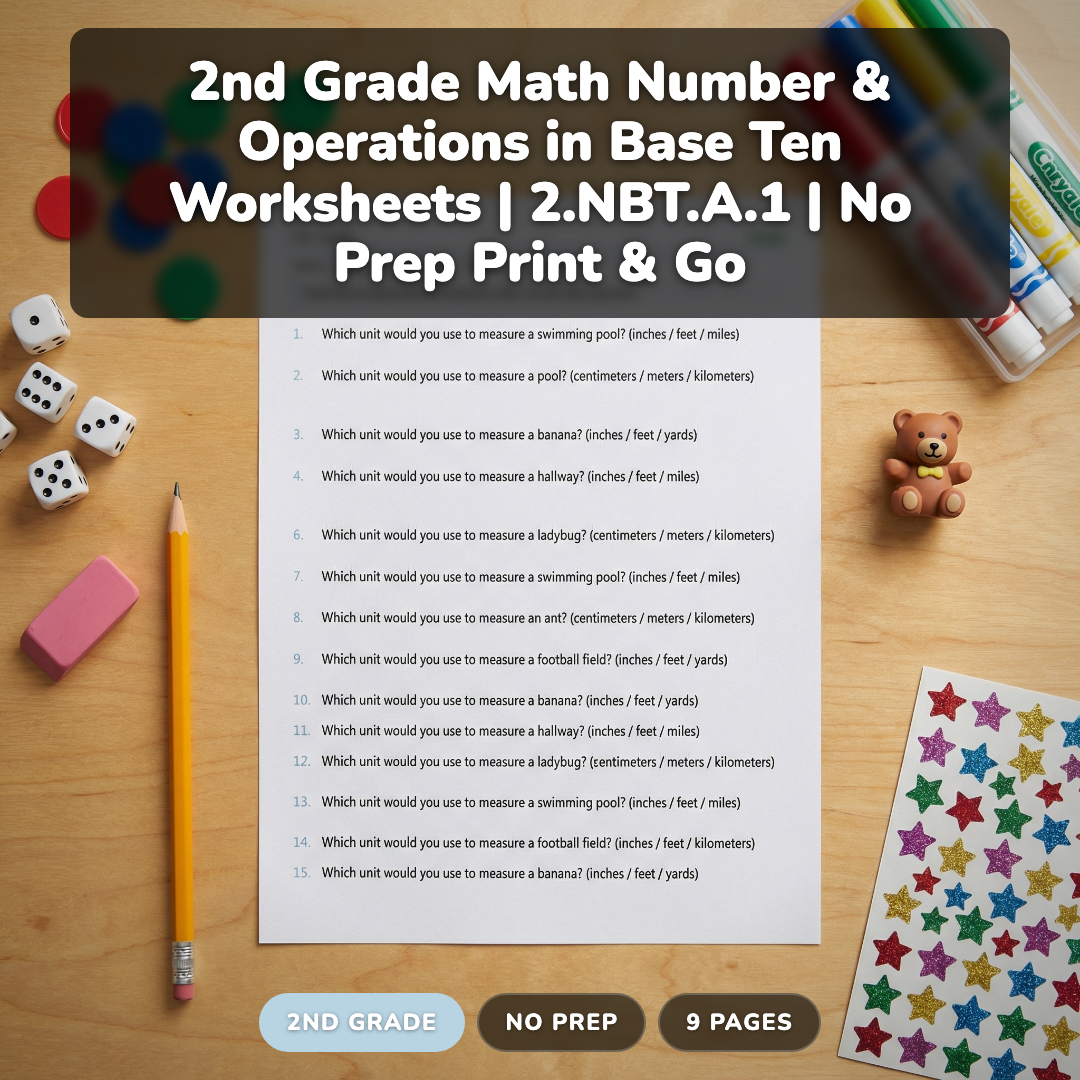
After trying these strategies with my own students, I created a comprehensive place value resource that saves you hours of prep time while providing exactly the differentiated practice your students need.
This 9-page resource includes 106 carefully crafted problems across three difficulty levels. The Practice level (30 problems) focuses on basic place value identification with visual supports. The On-Level section (40 problems) covers grade-level expectations including numbers with zeros and expanded form. The Challenge level (36 problems) pushes students to apply place value understanding in problem-solving contexts.
What makes this resource different is the intentional progression and built-in differentiation. Each level includes answer keys, and the problems are designed to address the common misconceptions we discussed earlier. You can use it for whole-class instruction, math centers, or homework — whatever fits your teaching style.
Grab a Free Place Value Sample to Try
Want to see how these differentiated problems work in your classroom? I’ll send you a free sample with problems from each level, plus a quick reference guide for addressing common place value misconceptions.
Frequently Asked Questions About Teaching Place Value
When should I introduce three-digit numbers in second grade?
Most second graders are ready for three-digit numbers after mastering two-digit place value, typically in the first quarter. Start with numbers like 234 or 156 before introducing numbers with zeros like 305 or 420, which require stronger conceptual understanding.
How long should students use manipulatives for place value?
Students should use concrete manipulatives like base-ten blocks for at least 4-6 weeks before transitioning to pictorial representations. Some students may need manipulatives throughout the year for challenging concepts. The key is ensuring understanding before removing supports.
What’s the best way to teach place value with zeros?
Start with numbers like 203 or 350 where zero appears in one place. Use manipulatives to show that zero means “no tens” or “no ones,” not “nothing.” Practice expanded form extensively: 203 = 200 + 0 + 3 = 2 hundreds + 0 tens + 3 ones.
How do I help students who confuse digit value with place value?
Use consistent language and visual supports. Always say “the digit 5 is in the tens place, so it represents 5 tens or 50.” Avoid saying “5 tens” without connecting it to the actual value of 50. Practice with base-ten blocks reinforces this connection.
Should I teach expanded form and word form together?
Introduce expanded form first (234 = 200 + 30 + 4) as it directly connects to place value understanding. Add word form (two hundred thirty-four) once students are solid with expanded form. This sequence prevents confusion and builds conceptual understanding.
Place value is truly the foundation for everything your second graders will do with numbers this year and beyond. With consistent practice using concrete materials, visual models, and real-world connections, every student can master this essential skill.
What’s your go-to strategy for helping students understand place value? I’d love to hear what works in your classroom! And don’t forget to grab that free sample to see how differentiated practice can support all your learners.