If your second graders still freeze when they see an analog clock or randomly guess whether it’s “a.m.” or “p.m.,” you’re not alone. Teaching time to 2nd graders requires breaking down multiple complex skills — reading analog clocks, understanding digital displays, and grasping the concept of a.m. and p.m. This post shares five research-backed strategies that help students master these skills step by step, plus differentiation tips for every learner in your classroom.
Key Takeaway
Students learn time best when they connect analog and digital formats through hands-on practice and real-world contexts.
Why Time Skills Matter in 2nd Grade
Time instruction in 2nd grade builds critical number sense and prepares students for more complex mathematical concepts. According to CCSS.Math.Content.2.MD.C.7, students must tell and write time from analog and digital clocks to the nearest five minutes, using a.m. and p.m. This standard appears in the third quarter of most curricula, after students have mastered skip counting by 5s and basic addition within 100.
Research from the National Council of Teachers of Mathematics shows that students who struggle with time concepts often lack understanding of the base-60 system used in timekeeping, which differs from the base-10 system they use in other math areas. Additionally, a 2019 study found that 68% of second graders initially confuse the hour and minute hands on analog clocks.
Time skills connect directly to daily routines, making them highly relevant for students. When children can read clocks accurately, they develop better time management skills and mathematical reasoning. The standard also prepares students for 3rd grade elapsed time problems and fraction concepts (since minutes represent parts of an hour).
Looking for a ready-to-go resource? I put together a differentiated time practice pack that covers everything below — but first, the teaching strategies that make it work.
Common Time Misconceptions in 2nd Grade
Common Misconception: Students think the longer hand shows the hour because it’s “bigger.”
Why it happens: Children naturally associate size with importance or magnitude.
Quick fix: Teach “minute hand is long like the word minute” as a memory device.
Common Misconception: Students read 3:45 as “3:9” because they count by ones instead of fives.
Why it happens: They haven’t connected skip counting by 5s to clock reading.
Quick fix: Practice skip counting by 5s while pointing to clock numbers before reading time.
Common Misconception: Students think a.m. means morning and p.m. means night, missing afternoon nuances.
Why it happens: They oversimplify the 12-hour cycle into just two categories.
Quick fix: Use specific activities like “lunch time” (12:00 p.m.) to show p.m. starts at noon.
Common Misconception: Students read digital times like 2:05 as “two-oh-five” instead of “two-oh-five” or “five minutes after two.”
Why it happens: They apply number reading rules without understanding time context.
Quick fix: Model multiple ways to say the same time and explain when each is appropriate.
5 Research-Backed Strategies for Teaching Time
Strategy 1: Clock Hand Movement Modeling
This kinesthetic approach helps students understand how clock hands move at different speeds and in different directions. Students use their bodies or manipulatives to model hand movements, making abstract concepts concrete.
What you need:
- Large demonstration clock with moveable hands
- Individual student clocks or paper plates with brad fasteners
- Timer or stopwatch
Steps:
- Show students how the minute hand moves one number (5 minutes) while the hour hand barely moves
- Have students hold up arms as clock hands — right arm as hour hand, left as minute hand
- Call out times and have students position their “hands” correctly
- Use the demonstration clock to verify answers and discuss hand positions
- Practice with student clocks, emphasizing the relationship between hands
Strategy 2: Skip Counting to Clock Reading Bridge
This strategy explicitly connects students’ skip counting skills to reading minutes on a clock. By practicing skip counting by 5s while pointing to clock numbers, students build the foundation for accurate time reading.
What you need:
- Clock with numbers clearly marked
- Pointer or finger for indicating numbers
- Skip counting by 5s chart
- Sticky notes with multiples of 5
Steps:
- Review skip counting by 5s up to 60 without the clock
- Point to each number on the clock while skip counting (1=5, 2=10, 3=15, etc.)
- Place sticky notes with multiples of 5 next to each number temporarily
- Practice reading minute hands by identifying which number they point to, then saying the skip counting equivalent
- Remove sticky notes and repeat until students can skip count around the clock independently
Strategy 3: Daily Schedule Time Matching
This real-world connection strategy uses students’ actual daily routines to practice reading both analog and digital time displays. Students match activities to times and practice using a.m. and p.m. correctly.
What you need:
- Cards showing daily activities (breakfast, lunch, bedtime, etc.)
- Analog clock cards showing various times
- Digital time cards with a.m./p.m.
- Chart paper for creating class schedule
Steps:
- Discuss typical times for daily activities as a class
- Show analog clock displaying a routine time (like 7:00)
- Have students find the matching digital time card and activity card
- Discuss whether the time would be a.m. or p.m. based on the activity
- Create a class daily schedule poster with both analog and digital times
- Practice throughout the day by asking “What time is it now?” and “Is this a.m. or p.m.?”
Strategy 4: Time to the Hour vs. Time to the Minute Comparison
This visual strategy helps students understand the difference between reading time to the hour and reading time with minutes. Students practice identifying when the minute hand affects the hour reading.
What you need:
- Two-column chart labeled “Hour Times” and “Minute Times”
- Clock faces showing various times
- Colored pencils or markers
- Time cards for sorting
Steps:
- Show students clocks displaying times like 3:00, 3:15, 3:30, 3:45
- Identify that all show “3 o’clock hour” but have different minute readings
- Sort time cards into “exactly on the hour” and “minutes past the hour” categories
- Color-code hour hands in blue and minute hands in red on practice clocks
- Practice reading the hour first, then the minutes for each time
Strategy 5: Analog to Digital Translation Practice
This strategy builds fluency in converting between analog and digital time formats. Students practice reading analog clocks and writing the corresponding digital time, including a.m. and p.m. designations.
What you need:
- Analog clock worksheets or manipulative clocks
- Digital time recording sheets
- A.M./P.M. reference chart
- Timer for timed practice sessions
Steps:
- Present an analog clock showing a specific time
- Have students identify the hour by looking at the short hand position
- Count by 5s to determine minutes using the long hand
- Write the digital time format (hour:minutes)
- Determine a.m. or p.m. based on context clues or given scenarios
- Check answers using a digital clock or teacher verification
How to Differentiate Time Instruction for All Learners
For Students Who Need Extra Support
Begin with digital clocks only, focusing on times that end in :00 and :30. Use large, clear analog clocks with color-coded hands (red for minutes, blue for hours). Provide hundreds charts to practice skip counting by 5s before applying to clock reading. Break CCSS.Math.Content.2.MD.C.7 into smaller steps: master hour reading first, then add 30-minute intervals, finally work up to 5-minute intervals. Use consistent language like “the little hand shows the hour” and provide visual cues.
For On-Level Students
Students work with the full range of times to the nearest 5 minutes as required by the standard. They practice both analog and digital formats simultaneously and begin using a.m. and p.m. correctly in context. Provide mixed practice with various clock types and real-world scenarios. Students should demonstrate fluency with quarter hours (15, 30, 45 minutes) and common times throughout the day.
For Students Ready for a Challenge
Extend learning by introducing times to the nearest minute, elapsed time problems, and time word problems. Challenge students to explain why we use a 12-hour clock system versus 24-hour military time. Introduce concepts like “quarter past,” “half past,” and “quarter till” language. Connect time to fractions by discussing how 15 minutes equals 1/4 of an hour. Have students create their own daily schedules with specific times and justify their a.m./p.m. choices.
A Ready-to-Use Time Practice Resource for Your Classroom
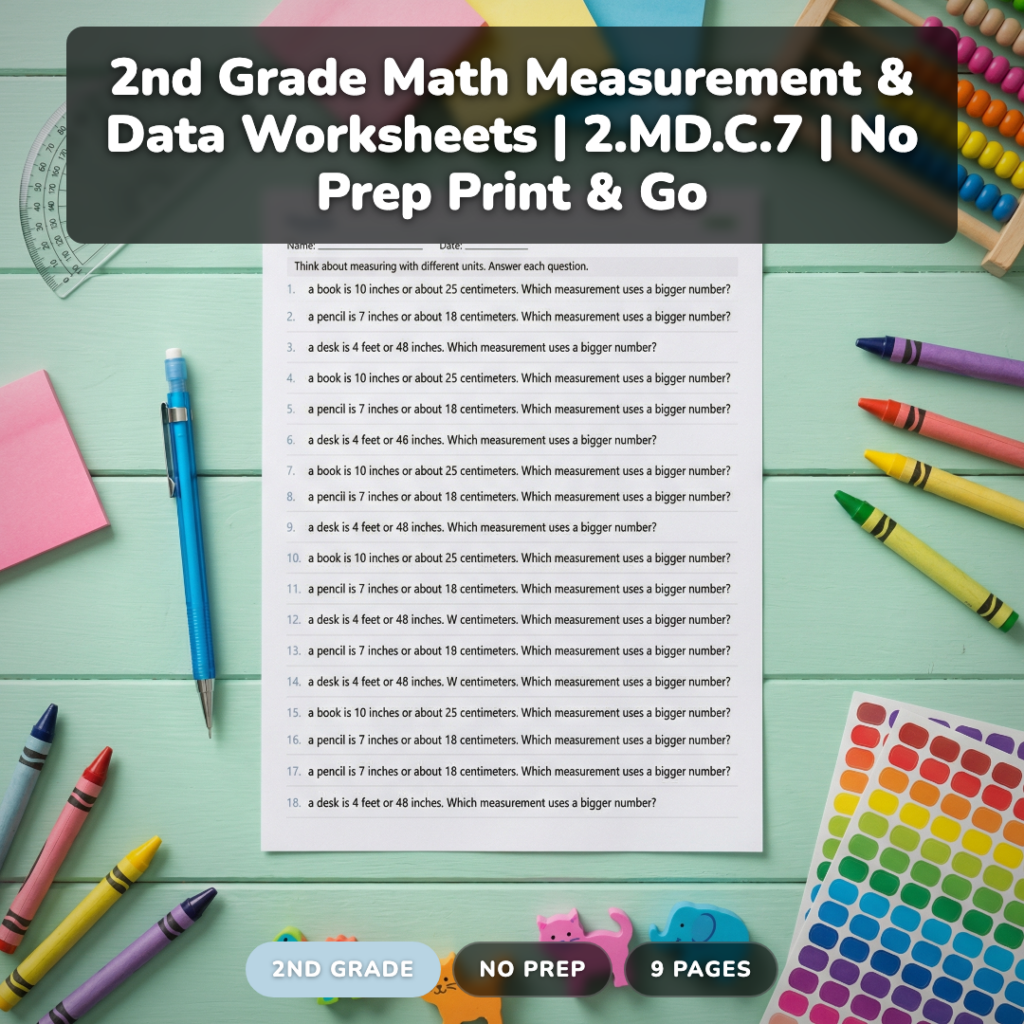
After trying these strategies, you’ll want plenty of practice problems to reinforce learning. I created a comprehensive time practice pack specifically aligned to CCSS.Math.Content.2.MD.C.7 that includes 106 problems across three differentiation levels. The Practice level focuses on times to the hour and half-hour, the On-Level section covers all 5-minute intervals, and the Challenge level includes word problems and mixed formats.
What makes this resource different is the systematic progression — students start with clear analog clocks and gradually work toward more complex scenarios. Each level includes both analog-to-digital and digital-to-analog practice, plus a.m./p.m. identification. The 9 pages are designed for easy printing and can be used for centers, homework, or assessment preparation.
The pack includes answer keys for quick grading and can be used throughout your time unit or as spiral review. Students get the practice they need without overwhelming prep work for you.
Grab a Free Time Practice Sheet to Try
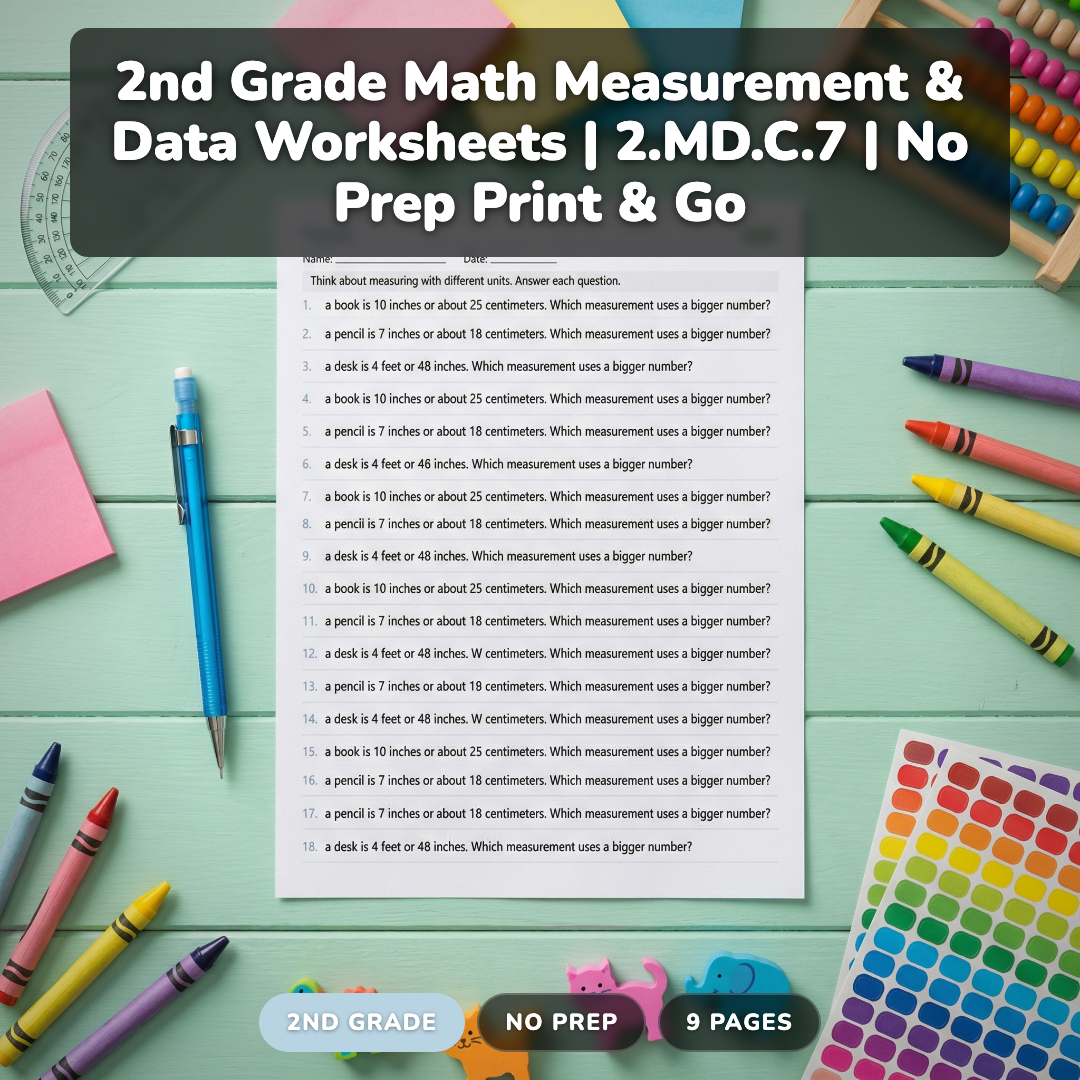
Want to see how these strategies work in practice? I’ll send you a free sample worksheet that includes both analog and digital time practice, plus a quick reference guide for teaching clock reading. Perfect for trying out these techniques with your students!
Frequently Asked Questions About Teaching Time in 2nd Grade
When should I introduce analog vs. digital clocks?
Start with digital clocks since students can read the numbers directly, then introduce analog clocks once students understand the concept of hours and minutes. The CCSS.Math.Content.2.MD.C.7 standard requires both formats by end of 2nd grade.
How do I help students remember which hand is which?
Use memory devices like “the minute hand is long like the word minute” and “the hour hand is short like the word hour.” Color-coding hands (blue for hour, red for minute) also helps visual learners remember the difference.
What’s the best way to teach a.m. and p.m.?
Connect a.m. and p.m. to students’ daily routines rather than just “morning and night.” Emphasize that a.m. starts at midnight and p.m. starts at noon. Use specific activities like “eating lunch at 12:00 p.m.” to make it concrete.
Should students learn “quarter past” and “half past” language?
While not required by the 2nd grade standard, this language helps students understand time relationships. Introduce it after students master basic time reading to the nearest 5 minutes, typically as enrichment for advanced learners.
How much time should I spend on this unit?
Most teachers spend 2-3 weeks on time instruction, with daily 15-20 minute lessons. Plan for additional review throughout the year since time concepts require repeated practice to become automatic for most 2nd graders.
Building Strong Time Skills Takes Practice
Teaching time effectively means connecting abstract clock concepts to concrete experiences students understand. When you use hands-on strategies, real-world connections, and differentiated practice, students develop both the skills and confidence they need to read clocks accurately. Remember that time concepts build gradually — celebrate small wins as students master each component.
What’s your favorite strategy for helping students remember the difference between hour and minute hands? Don’t forget to grab your free time practice sheet above, and check out our complete guide to 2nd grade measurement activities for more hands-on learning ideas.