If your first graders freeze when they see a greater than or less than symbol, you’re not alone. Comparing two-digit numbers is one of those skills that looks simple on paper but requires deep understanding of place value concepts that many six and seven-year-olds are still developing.
You’ll walk away from this post with five research-backed strategies that make comparing numbers click for your students, plus differentiation tips for every learner in your classroom.
Key Takeaway
Students master number comparison when they understand tens and ones as quantities, not just symbols on a page.
Why Comparing Numbers Matters in First Grade
Comparing two-digit numbers sits at the heart of first grade mathematics because it bridges concrete counting with abstract mathematical thinking. When students compare 47 and 52, they’re not just memorizing which number is bigger — they’re developing number sense that will support everything from addition strategies to understanding fractions later.
This skill typically appears in the second half of first grade, after students have solid foundation with counting to 100 and understanding place value through 99. The timing matters because students need to see numbers as composed of tens and ones before they can meaningfully compare them.
CCSS.Math.Content.1.NBT.B.3 specifically asks students to “compare two two-digit numbers based on meanings of the tens and ones digits, recording the results of comparisons with the symbols >, =, and <." Notice the emphasis on meaning — students must understand what those digits represent, not just apply rote procedures.
Research from the National Research Council shows that students who develop strong number comparison skills in first grade perform significantly better on standardized assessments through fifth grade. The visual-spatial reasoning required for place value comparison transfers directly to multi-digit operations and algebraic thinking.
Looking for a ready-to-go resource? I put together a differentiated comparing numbers pack that covers everything below — but first, the teaching strategies that make it work.
Common Number Comparison Misconceptions in First Grade
Common Misconception: Students think 7 is greater than 23 because “7 is a big number.”
Why it happens: They focus on individual digit magnitude rather than place value meaning.
Quick fix: Always build numbers with manipulatives before comparing symbols.
Common Misconception: Students confuse the direction of comparison symbols, reading > as “less than.”
Why it happens: The symbols are abstract and don’t connect to their understanding of quantity.
Quick fix: Use the “hungry alligator” visual that always eats the bigger number.
Common Misconception: Students think 30 and 03 are the same number.
Why it happens: They see the same digits without understanding positional value.
Quick fix: Emphasize that zeros hold places and change a number’s value completely.
Common Misconception: Students compare only the ones place when tens digits are the same (thinking 34 > 38).
Why it happens: They apply ones-place comparison rules without checking tens first.
Quick fix: Teach the “tens first, then ones” comparison routine explicitly.
5 Research-Backed Strategies for Teaching Number Comparison
Strategy 1: Base Ten Block Races
Students build both numbers with base ten blocks, then physically compare the quantities by lining up tens rods and counting ones cubes. This concrete approach helps students see that comparison is about total quantity, not individual digits.
What you need:
- Base ten blocks (tens rods and ones cubes)
- Number cards or worksheet problems
- Recording sheet for comparison symbols
Steps:
- Give partners two numbers to compare (start with numbers where tens are different)
- Each student builds one number with blocks at their workspace
- Students bring their numbers together and line up tens rods side by side
- Count tens together, then ones if needed
- Record the comparison with correct symbol on paper
- Switch numbers and repeat
Strategy 2: Number Line Jumping
Students locate both numbers on a large floor number line, then determine which is greater based on position. This spatial approach reinforces that numbers increase as you move right and helps students visualize the distance between numbers.
What you need:
- Floor number line 1-100 (tape or chalk)
- Two different colored bean bags or markers
- Comparison recording sheet
Steps:
- Call out two numbers for students to compare
- Two students each take a marker and find their number on the line
- Class observes which student is farther to the right
- Discuss: “Which number is greater? How do you know?”
- Record the comparison symbol as a class
- Have students explain their reasoning using tens and ones language
Strategy 3: Tens and Ones Comparison Charts
Students break each number into tens and ones using a visual chart, then compare column by column. This systematic approach teaches the standard algorithm for comparison while maintaining connection to place value meaning.
What you need:
- Two-column charts (tens | ones)
- Dry erase markers or pencils
- Number cards or comparison problems
Steps:
- Draw two comparison charts side by side on the board
- Write the first number in the left chart (47 → 4 tens, 7 ones)
- Write the second number in the right chart (52 → 5 tens, 2 ones)
- Compare tens first: “4 tens or 5 tens — which is more?”
- Since tens are different, circle the greater number
- If tens were equal, compare ones the same way
Strategy 4: Alligator Symbol Stories
Students create narrative contexts for comparison problems using the “hungry alligator” metaphor for comparison symbols. This memory device helps students remember symbol direction while building number sense through storytelling.
What you need:
- Alligator puppet or drawing
- Number cards
- Comparison symbol cards (>, <, =)
- Story recording sheets
Steps:
- Introduce the hungry alligator who always wants to eat more food
- Present two numbers as “food amounts” (23 fish vs. 19 fish)
- Ask: “Which amount would the alligator choose?”
- Students place the alligator symbol pointing toward the larger number
- Write a sentence: “The alligator ate 23 fish because 23 > 19”
- Practice with multiple number pairs, including equal amounts
Strategy 5: Number Comparison Games
Students play structured games that require repeated comparison practice in engaging contexts. Game-based learning increases motivation while providing the repetition needed for automaticity with comparison skills.
What you need:
- Deck of number cards (10-99)
- Comparison symbol cards
- Recording sheets for game rounds
- Timer (optional)
Steps:
- Partners each draw two cards to make a two-digit number
- Both players build their numbers with blocks or draw place value models
- Players compare their numbers and determine who has the greater number
- Winner explains their reasoning using tens and ones language
- Record the comparison on paper with correct symbol
- Play 5-10 rounds, keeping track of wins
How to Differentiate Number Comparison for All Learners
For Students Who Need Extra Support
Start with concrete comparisons using manipulatives for every problem. Focus on numbers 10-30 where the tens difference is obvious (like 13 vs. 27). Provide hundreds charts for reference and allow students to count by tens to see which number comes later in the sequence. Use consistent language: “First check tens, then check ones.” Give extra practice with teen numbers vs. single digits before moving to two-digit vs. two-digit comparisons.
For On-Level Students
Practice with the full range of two-digit numbers (10-99) as specified in CCSS.Math.Content.1.NBT.B.3. Include problems where tens digits are the same, requiring ones comparison. Students should fluently use all three symbols (>, <, =) and explain their reasoning using place value language. Expect independent work with visual models like place value charts, moving toward mental comparison strategies.
For Students Ready for a Challenge
Introduce three-number comparisons (order 34, 28, 41 from least to greatest). Explore patterns in comparison (what happens when you add 10 to both numbers?). Connect to real-world contexts like comparing prices, temperatures, or sports scores. Challenge students to create comparison problems for classmates and explain multiple solution strategies for the same problem.
A Ready-to-Use Number Comparison Resource for Your Classroom
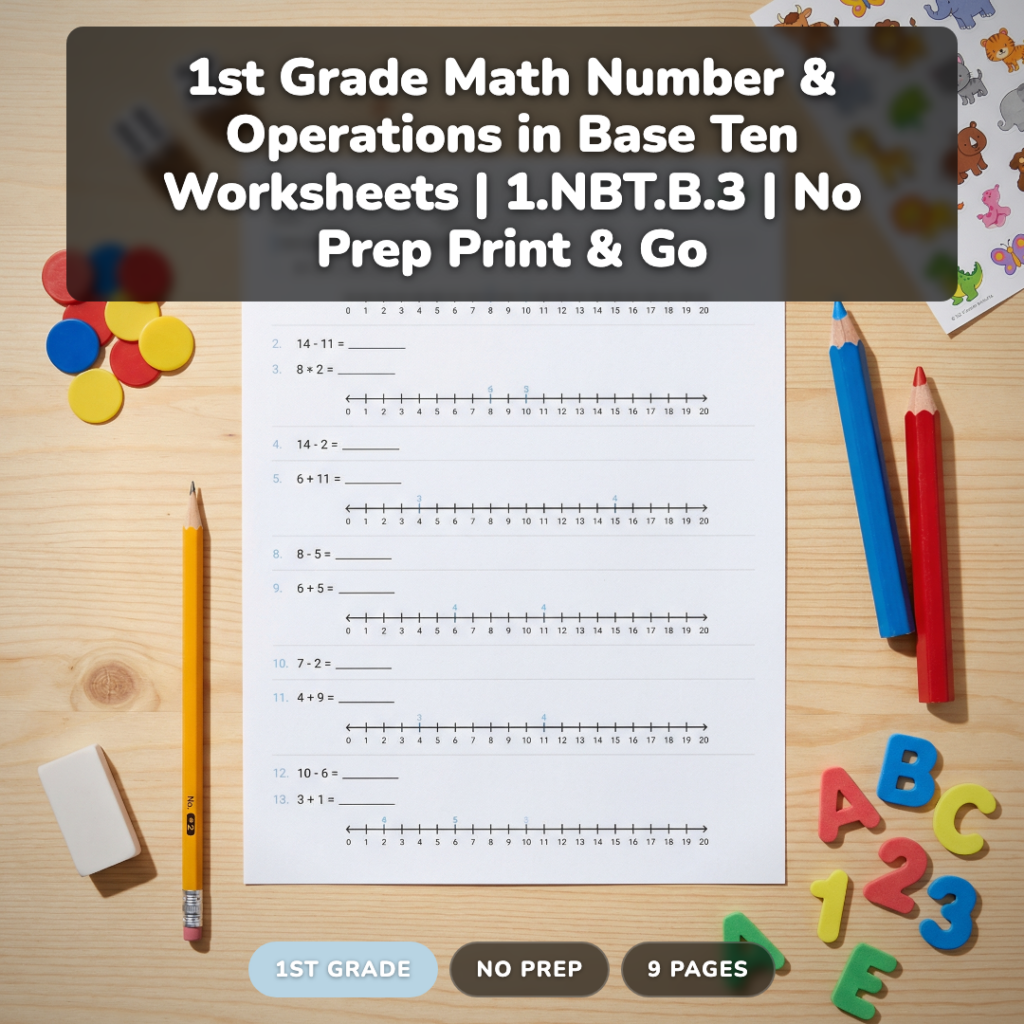
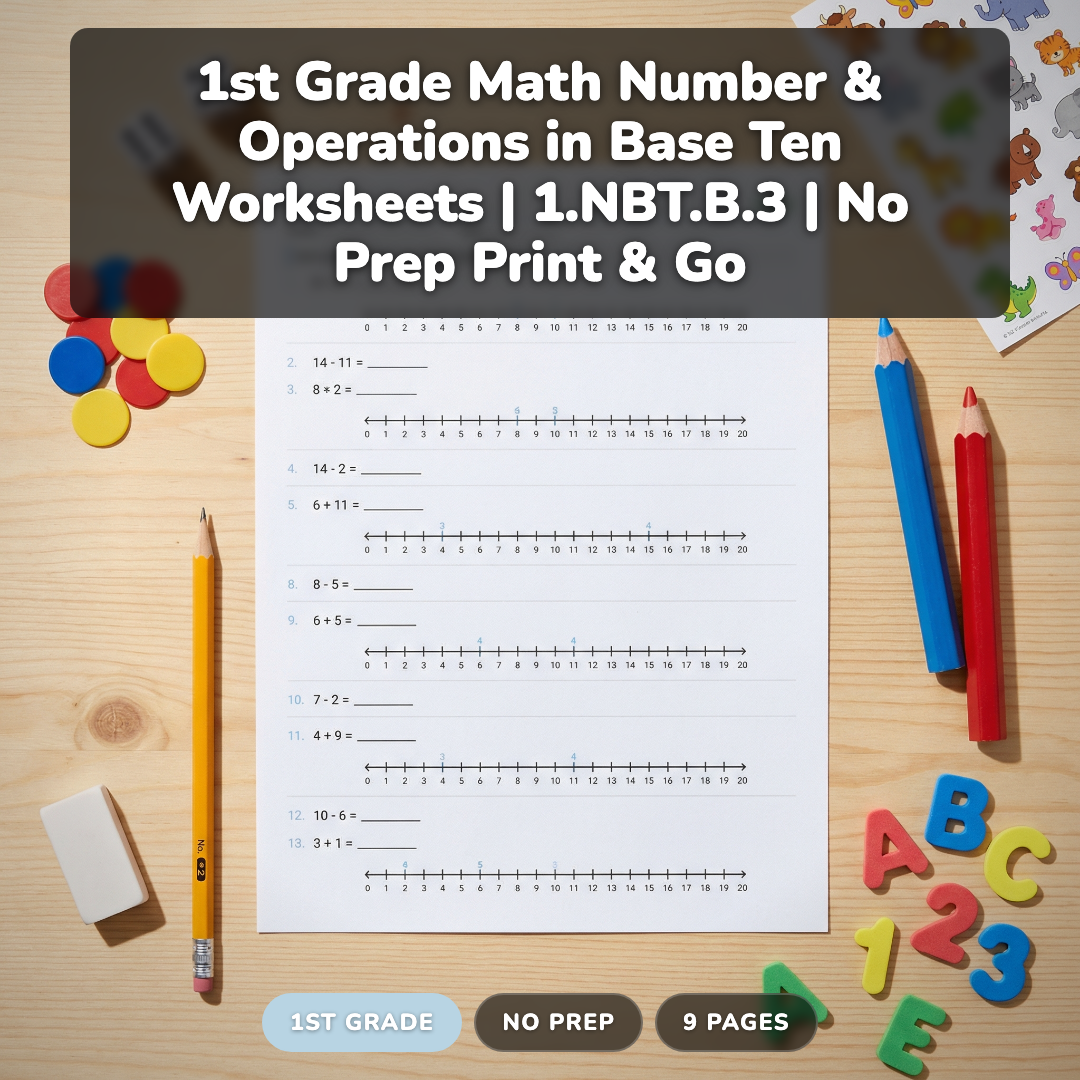
After years of teaching first grade, I know how time-consuming it is to create differentiated materials that truly meet every student’s needs. That’s why I put together this comprehensive comparing numbers resource pack that takes the prep work off your plate.
The pack includes 106 carefully crafted problems across three difficulty levels: 30 practice problems for students building foundational skills, 40 on-level problems aligned perfectly with CCSS.Math.Content.1.NBT.B.3, and 36 challenge problems for advanced learners. Each level uses different number ranges and problem types, so you can match worksheets to exactly where each student is in their learning journey.
What makes this resource different is the intentional progression within each difficulty level. Problems start with obvious differences (like 15 vs. 67) and gradually move to closer comparisons that require careful place value analysis. Answer keys are included for quick grading, and the clean, student-friendly format means less time explaining directions and more time learning.
This no-prep resource saves you hours of planning while ensuring every student gets appropriately challenging practice with number comparison skills.
Grab a Free Number Comparison Sample to Try
Want to see how these strategies work in practice? I’ll send you a free sample worksheet with 10 comparison problems plus a teaching guide that walks through each strategy step-by-step. Perfect for trying these techniques with your class before diving in deeper.
Frequently Asked Questions About Teaching Number Comparison
When should first graders master comparing two-digit numbers?
Most first graders master basic two-digit number comparison by late winter or early spring, after they’re solid with counting to 100 and understanding place value. Students need 4-6 weeks of consistent practice with concrete manipulatives before moving to abstract symbol work.
What’s the biggest mistake teachers make when teaching comparison symbols?
Teaching the symbols before students understand the underlying concept of quantity comparison. Students must first compare actual amounts using manipulatives or visual models, then learn that symbols record what they already understand about which number represents more.
How do I help students who consistently reverse > and < symbols?
Use consistent visual cues like the hungry alligator that always opens its mouth toward the bigger number. Practice with concrete objects first — have students physically point the alligator toward larger groups before writing symbols. Consistent daily practice for 2-3 weeks typically resolves symbol confusion.
Should first graders compare numbers beyond 99?
CCSS.Math.Content.1.NBT.B.3 specifically focuses on two-digit numbers (10-99). Three-digit comparison introduces new place value concepts that are typically addressed in second grade. Stick to the standard’s scope to build solid foundations before advancing.
How can I assess whether students truly understand number comparison?
Ask students to explain their thinking using place value language (“47 is greater than 23 because 4 tens is more than 2 tens”). Students who rely on memorized rules without understanding will struggle to explain their reasoning or make errors when tens digits are equal.
Teaching number comparison successfully comes down to helping students see numbers as quantities, not just symbols. When you ground comparison work in concrete experiences with manipulatives and visual models, students develop the deep understanding they need for future math success.
What’s your go-to strategy for helping students master comparison symbols? I’d love to hear what works in your classroom, and don’t forget to grab that free sample resource above to try these strategies with your students.