If your first graders are struggling to understand that the number 30 means “three tens and zero ones,” you’re not alone. This foundational concept trips up many students because it requires them to think beyond counting by ones to understanding our base ten system.
You’ll walk away from this post with five research-backed strategies that make tens and ones concrete and meaningful for first graders, plus differentiation tips for every learner in your classroom.
Key Takeaway
First graders master tens and ones when they can physically manipulate groups of ten and connect those groups to written numbers through multiple representations.
Why Tens and Ones Matter in First Grade
Understanding that numbers like 10, 20, 30, 40, 50, 60, 70, 80, and 90 represent groups of tens (with zero ones) is the foundation for all future place value work. This concept, outlined in CCSS.Math.Content.1.NBT.B.2c, bridges the gap between counting individual objects and understanding our number system’s structure.
Research from the National Council of Teachers of Mathematics shows that students who master place value concepts in first grade perform 23% better on standardized math assessments through third grade. The timing matters too — this standard typically appears in late fall or early winter, after students have solid counting skills but before they tackle two-digit addition and subtraction.
First graders need extensive hands-on experience with grouping objects into tens before they can understand the abstract concept that “40” means “four groups of ten.” Without this foundation, they’ll struggle with regrouping in addition and subtraction later in the year.
Looking for a ready-to-go resource? I put together a differentiated tens and ones worksheet pack that covers everything below — but first, the teaching strategies that make it work.
Common Tens and Ones Misconceptions in First Grade
Understanding where students typically get confused helps you address these misconceptions before they become ingrained habits.
Common Misconception: Students think “20” means “two and zero” instead of “two tens.”
Why it happens: They’re reading the digits separately rather than understanding place value meaning.
Quick fix: Always connect numbers to physical groups of ten objects.
Common Misconception: Students count individual objects in a group of ten instead of recognizing it as one unit.
Why it happens: They haven’t developed the mental model that ten objects can be treated as one group.
Quick fix: Use ten-frames and bundled sticks to emphasize the “group of ten” concept.
Common Misconception: Students think larger numbers like 80 or 90 are “harder” than smaller numbers like 10 or 20.
Why it happens: They focus on the size of the number rather than the pattern of tens.
Quick fix: Emphasize the pattern: “10 is one ten, 20 is two tens, 30 is three tens…”
Common Misconception: Students confuse the number of tens with the total number of objects.
Why it happens: They haven’t connected that “three tens” equals thirty individual items.
Quick fix: Count by tens while pointing to each group, then count all objects by ones to verify.
5 Research-Backed Strategies for Teaching Tens and Ones
Strategy 1: Ten-Frame Building with Counters
Ten-frames provide a visual structure that helps students see groups of ten as distinct units while connecting to the base ten system.
What you need:
- Ten-frames (laminated or in sheet protectors)
- Two-color counters or small manipulatives
- Dry erase markers
- Number cards 10-90
Steps:
- Give each student 2-3 ten-frames and counters
- Show a number card (start with 20)
- Students fill complete ten-frames first, then count empty frames
- Say together: “Two full ten-frames means two tens, which is twenty”
- Write the number and circle the tens digit
- Repeat with other multiples of ten
Strategy 2: Base Ten Block Exploration
Base ten blocks provide the most direct representation of our number system, making the connection between physical groups and written numbers explicit.
What you need:
- Base ten blocks (tens rods and ones cubes)
- Place value mats
- Number cards 10-90
- Recording sheets
Steps:
- Introduce the tens rod as “one group of ten”
- Show number card 40, ask “How many tens rods do we need?”
- Students build the number with tens rods only
- Count by tens while pointing to each rod: “10, 20, 30, 40”
- Record on place value mat: 4 tens, 0 ones
- Connect to standard form: “Four tens equals 40”
Strategy 3: Bundling Sticks Activity
Bundling loose objects into groups of ten helps students understand that ten individual items can become one unit of ten.
What you need:
- Craft sticks or straws
- Rubber bands
- Small containers
- Counting mats
Steps:
- Give students 50-60 loose sticks
- Demonstrate bundling 10 sticks with a rubber band
- Students create their own bundles of ten
- Count bundles: “1 ten, 2 tens, 3 tens…”
- Match bundles to written numbers (30 = 3 bundles)
- Emphasize: “Each bundle is worth ten, just like the number shows”
Strategy 4: Number Line Jumping by Tens
A number line helps students visualize the pattern in multiples of ten and understand the equal spacing between these benchmark numbers.
What you need:
- Floor number line or large wall number line
- Small toy figures or game pieces
- Number cards
- Recording sheets
Steps:
- Start game piece at 0 on the number line
- Show card “30” and ask “How many jumps of ten?”
- Students predict, then move piece in jumps of 10
- Count aloud: “One ten is 10, two tens is 20, three tens is 30”
- Record the pattern: 1 ten = 10, 2 tens = 20, 3 tens = 30
- Repeat with other multiples of ten
Strategy 5: Tens and Ones Memory Game
This partner game reinforces the connection between multiple representations of the same number while building automaticity with tens recognition.
What you need:
- Cards showing base ten blocks
- Cards showing written numbers (10-90)
- Cards showing ten-frames
- Timer (optional)
Steps:
- Spread all cards face down in a grid
- Player 1 flips two cards, looking for matches (same number, different representation)
- If match found, player keeps cards and explains: “Four tens rods equals 40”
- If no match, cards flip back over
- Players alternate turns until all matches found
- Winner has the most pairs
How to Differentiate Tens and Ones for All Learners
For Students Who Need Extra Support
Start with concrete manipulatives and limit the range to 10, 20, and 30. Use consistent language: “One ten equals ten” and provide extra time for hands-on exploration. Review counting by ones to 30 before introducing grouping concepts. Pair these students with stronger partners during games and provide visual supports like hundreds charts with tens highlighted.
For On-Level Students
These students should work with all multiples of ten from 10-90, as specified in CCSS.Math.Content.1.NBT.B.2c. They can move between concrete and representational models (base ten blocks to drawings) and begin explaining their thinking verbally. Expect them to recognize patterns independently and complete practice problems with minimal support.
For Students Ready for a Challenge
Extend learning by introducing two-digit numbers with ones (like 23 or 47) and asking them to identify the tens and ones separately. Challenge them to find multiple ways to represent the same number or create their own tens and ones problems for classmates. Connect to real-world examples like counting classroom supplies or playground equipment by tens.
A Ready-to-Use Tens and Ones Resource for Your Classroom
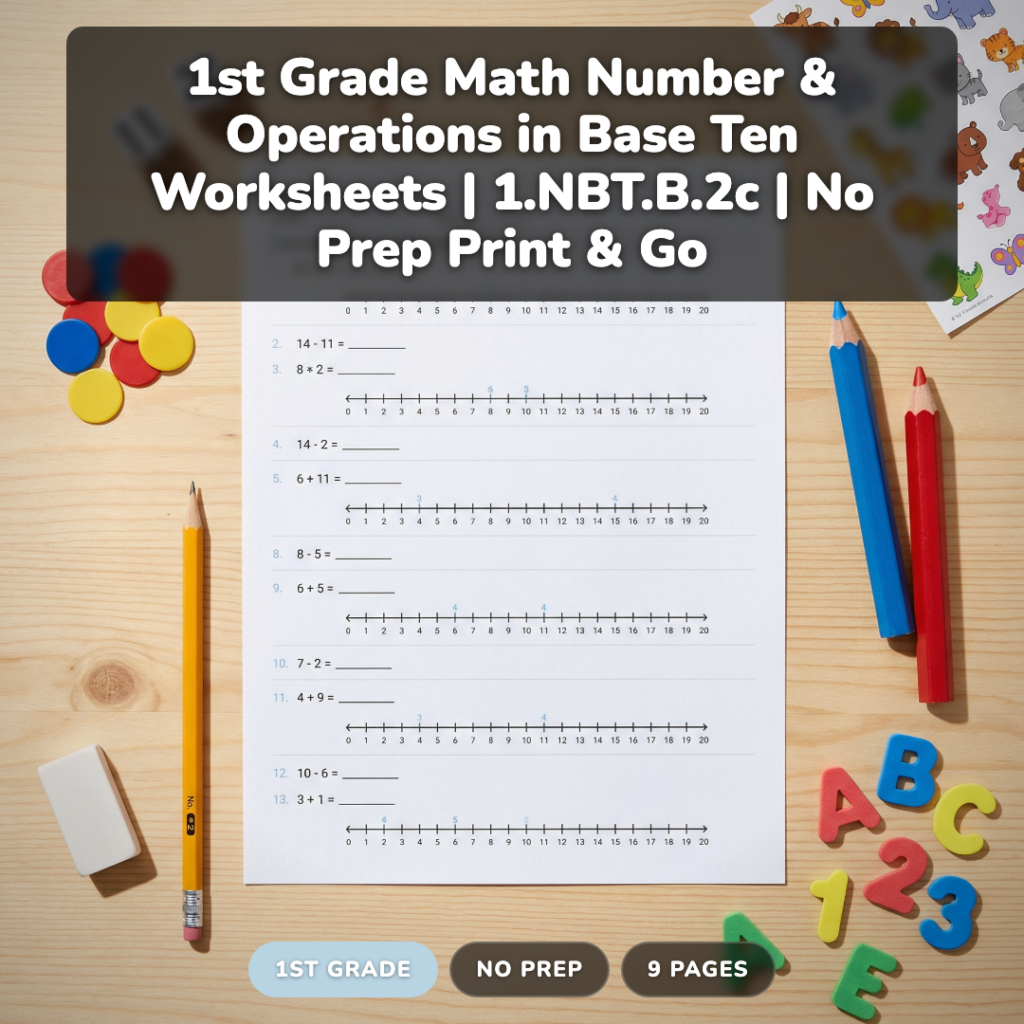
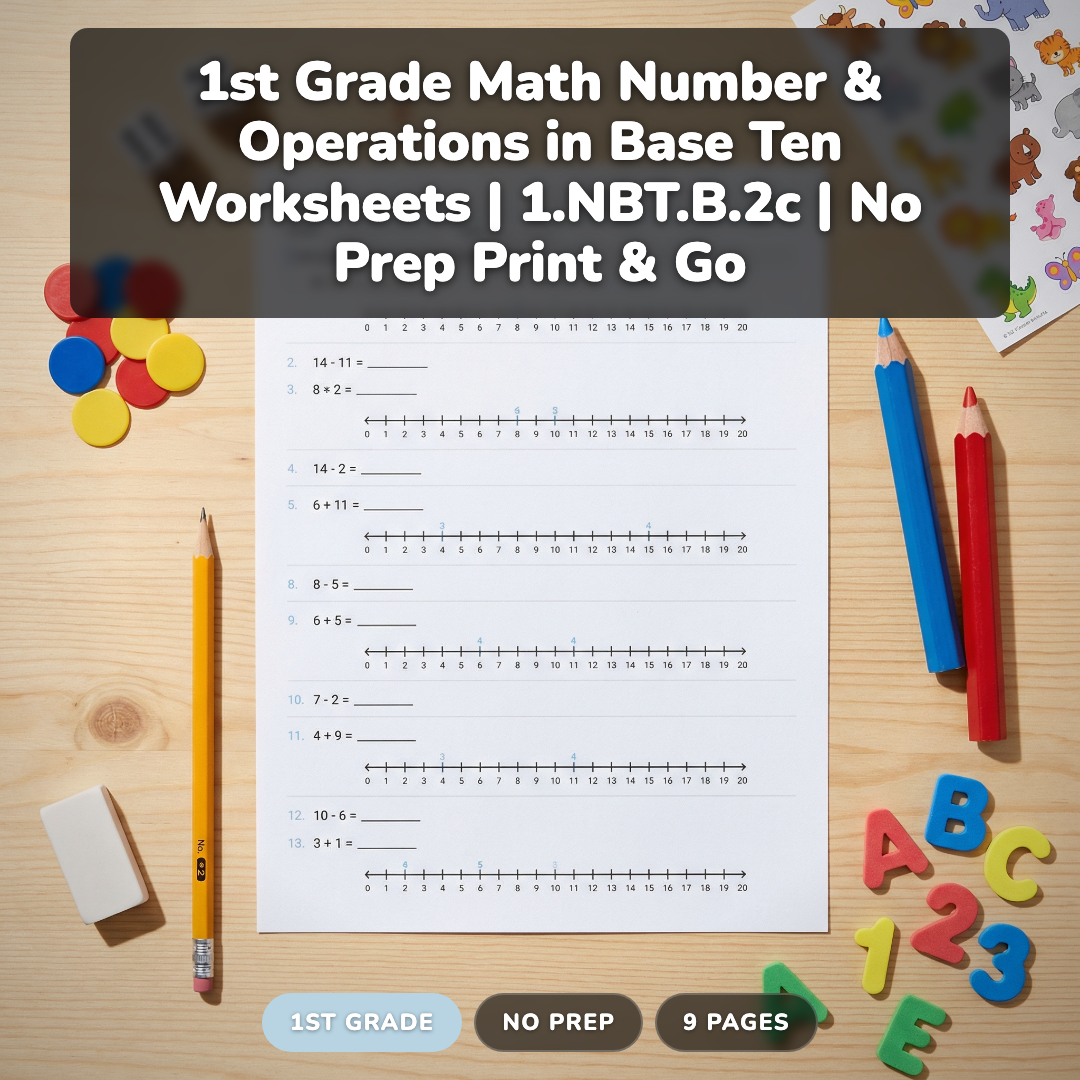
After teaching this concept for several years, I created a comprehensive worksheet pack that saves hours of prep time while providing the exact practice students need. This 9-page resource includes 106 differentiated problems across three levels: Practice (30 problems for students needing extra support), On-Level (40 problems for grade-level expectations), and Challenge (36 problems for advanced learners).
What makes this resource different is the careful scaffolding within each level. Practice pages start with visual supports and guided examples, On-Level pages include a mix of representations, and Challenge pages push students to apply their understanding in new contexts. Each page includes clear answer keys, making it perfect for independent work, homework, or assessment.
The pack covers everything from basic tens recognition to complex problem-solving scenarios, all aligned to the Common Core standard. Students work with base ten blocks, ten-frames, and number lines across multiple problem types.
Grab a Free Tens and Ones Practice Sheet to Try
Want to see the quality and format before purchasing the full pack? I’ll send you a free sample worksheet that includes problems from each difficulty level, plus an answer key. Perfect for trying out these strategies with your class!
Frequently Asked Questions About Teaching Tens and Ones
When should I introduce tens and ones in first grade?
Most first graders are ready for tens and ones instruction in late fall or early winter, typically November through January. Students need solid counting skills to 100 and experience with teen numbers before tackling this CCSS.Math.Content.1.NBT.B.2c concept.
How long should I spend teaching this concept?
Plan for 2-3 weeks of focused instruction with ongoing review throughout the year. Students need multiple exposures across different contexts to truly understand that multiples of ten represent groups of tens with zero ones.
What if students still count by ones instead of recognizing tens?
This is normal developmental behavior. Provide more hands-on bundling activities and emphasize the efficiency of counting by tens. Use consistent language like “three tens” rather than “thirty” initially to reinforce the grouping concept.
Should I teach teen numbers before or after multiples of ten?
Teach teen numbers first, as they provide a bridge between counting and place value. Students understand “thirteen” as “ten and three more” before grasping that “thirty” means “three tens and zero ones.”
How do I assess if students truly understand tens and ones?
Ask students to represent the same number (like 40) using three different methods: manipulatives, drawings, and words. True understanding means they can explain why “four tens” equals “forty” across all representations.
Teaching tens and ones successfully comes down to providing multiple concrete experiences before moving to abstract numbers. When students can physically group objects into tens and connect those groups to written numbers, they’ve built the foundation for all future place value learning.
What’s your favorite way to help first graders understand that 50 means “five tens”? And don’t forget to grab that free practice sheet above — it’s a great way to see how these strategies work in your classroom!