If your third graders freeze when they see fractions like 2/4 and 1/2 side by side, you’re not alone. Teaching fraction equivalence feels like trying to explain magic — until you find the right concrete strategies. You’ll discover five research-backed methods that make fraction relationships crystal clear, plus differentiation tips for every learner in your classroom.
Key Takeaway
Students master fraction equivalence when they see, touch, and compare fractions through multiple representations before moving to abstract symbols.
Why Fraction Equivalence Matters in Third Grade
Fraction equivalence forms the foundation for every fraction skill your students will learn through high school. According to the National Mathematics Advisory Panel, students who struggle with fraction concepts in elementary school are 5 times more likely to have difficulty with algebra later.
Third grade marks the critical transition from whole number thinking to fractional reasoning. CCSS.Math.Content.3.NF.A.3 specifically requires students to explain equivalence of fractions in special cases and compare fractions by reasoning about their size — not just memorizing rules.
Research from the University of Delaware shows that students who learn fraction equivalence through visual models and manipulatives score 23% higher on standardized assessments than those taught through traditional algorithms alone. The key timing? Introduce equivalence after students understand unit fractions but before diving into addition and subtraction.
Looking for a ready-to-go resource? I put together a differentiated fraction equivalence pack with 132 problems across three levels — but first, the teaching strategies that make it work.
Common Fraction Equivalence Misconceptions in 3rd Grade
Common Misconception: Students think 1/4 is bigger than 1/2 because 4 is bigger than 2.
Why it happens: They apply whole number reasoning to fractions without understanding that larger denominators create smaller pieces.
Quick fix: Start every lesson with physical objects — pizza slices, chocolate bars, or fraction strips.
Common Misconception: Students believe 2/4 and 4/8 can’t be equal because the numbers look different.
Why it happens: They focus on surface features rather than the actual size of the fractional parts.
Quick fix: Use consistent visual models where students can see that different fractions represent the same amount.
Common Misconception: Students think equivalent fractions must have the same numerator or denominator.
Why it happens: Limited exposure to diverse equivalent fraction pairs during initial instruction.
Quick fix: Introduce equivalence through folding paper and comparing overlapping sections.
5 Research-Backed Strategies for Teaching Fraction Equivalence
Strategy 1: Fraction Strip Comparison Method
This hands-on approach uses physical strips to make abstract equivalence concrete. Students physically align different fraction strips to discover equivalent relationships through direct comparison.
What you need:
- Fraction strips (1 whole, halves, thirds, fourths, sixths, eighths)
- Different colored paper for each denomination
- Recording sheet for discoveries
Steps:
- Give each student a complete set of fraction strips
- Start with the whole strip as your baseline
- Have students find how many 1/4 strips equal one 1/2 strip
- Record the discovery: 2/4 = 1/2
- Systematically explore other combinations (3/6 = 1/2, 4/8 = 1/2)
- Create a class chart of equivalent fraction discoveries
Strategy 2: Paper Folding Revelation
Students fold identical paper rectangles in different ways to create equivalent fractions, making the ‘same amount’ concept visible and tactile.
What you need:
- Identical paper rectangles (6 per student)
- Crayons or markers
- Chart paper for recording
Steps:
- Give students two identical rectangles
- Fold one rectangle in half, shade 1/2
- Fold the second rectangle into fourths, shade 2/4
- Place folded papers on top of each other to compare shaded areas
- Record the equivalence: 1/2 = 2/4
- Repeat with other equivalent pairs using fresh rectangles
- Create a visual equivalence anchor chart
Strategy 3: Number Line Positioning
Using number lines helps students see that equivalent fractions occupy the exact same position, reinforcing that they represent identical values despite different symbols.
What you need:
- Large floor number line (0 to 1)
- Fraction cards for different denominators
- Colored tape for marking positions
Steps:
- Create a floor number line from 0 to 1
- Mark common benchmark positions (1/4, 1/2, 3/4)
- Have students place 1/2 on the line
- Challenge them to find other fractions that land in the same spot
- Test their predictions by walking to each position
- Record all fractions that share the same location
Strategy 4: Pizza Party Equivalence Game
This partner activity uses pizza models to make fraction equivalence meaningful through a real-world context that students naturally understand.
What you need:
- Paper plate ‘pizzas’ divided into different sections
- Pizza topping stickers or drawings
- Equivalence recording sheets
Steps:
- Partners receive pizzas divided into different numbers of slices
- Both players must ‘eat’ the same amount of pizza
- Player 1 eats 1/2 of their 4-slice pizza (2 slices)
- Player 2 finds the equivalent amount on their 8-slice pizza (4 slices)
- Partners verify by comparing remaining pizza amounts
- Record the equivalent fractions discovered
- Switch pizzas and repeat with new fractions
Strategy 5: Equivalence Detective Work
Students become fraction detectives, using multiple tools to prove whether fraction pairs are equivalent, developing reasoning skills beyond memorization.
What you need:
- Fraction circles, strips, and number lines
- ‘Detective badges’ for motivation
- Investigation recording sheets
- Timer for urgency
Steps:
- Present students with fraction pairs to investigate
- Students choose their ‘detective tools’ (circles, strips, or number lines)
- Set a 3-minute timer for each investigation
- Students gather evidence using their chosen tools
- Partners share their findings and reasoning
- Class votes on whether each pair is equivalent
- Reveal answers and celebrate correct reasoning
How to Differentiate Fraction Equivalence for All Learners
For Students Who Need Extra Support
Start with concrete manipulatives exclusively for the first week. Use only halves and fourths until students demonstrate mastery through multiple representations. Provide fraction strips that are color-coded and pre-labeled. Focus on one equivalent pair per day rather than multiple comparisons. Create personal fraction equivalence charts students can reference during independent work.
For On-Level Students
Balance concrete and representational work according to CCSS.Math.Content.3.NF.A.3 expectations. Include halves, thirds, fourths, sixths, and eighths in your instruction. Students should explain their reasoning using mathematical vocabulary like ‘equal parts’ and ‘same size.’ Provide mixed practice with both equivalent and non-equivalent pairs to develop discrimination skills.
For Students Ready for a Challenge
Introduce equivalent fractions with larger denominators like tenths and twelfths. Challenge students to find multiple equivalent fractions for a single given fraction (1/2 = 2/4 = 3/6 = 4/8). Connect fraction equivalence to real-world scenarios like cooking measurements or sports statistics. Have students create their own fraction equivalence problems for classmates to solve.
A Ready-to-Use Fraction Equivalence Resource for Your Classroom
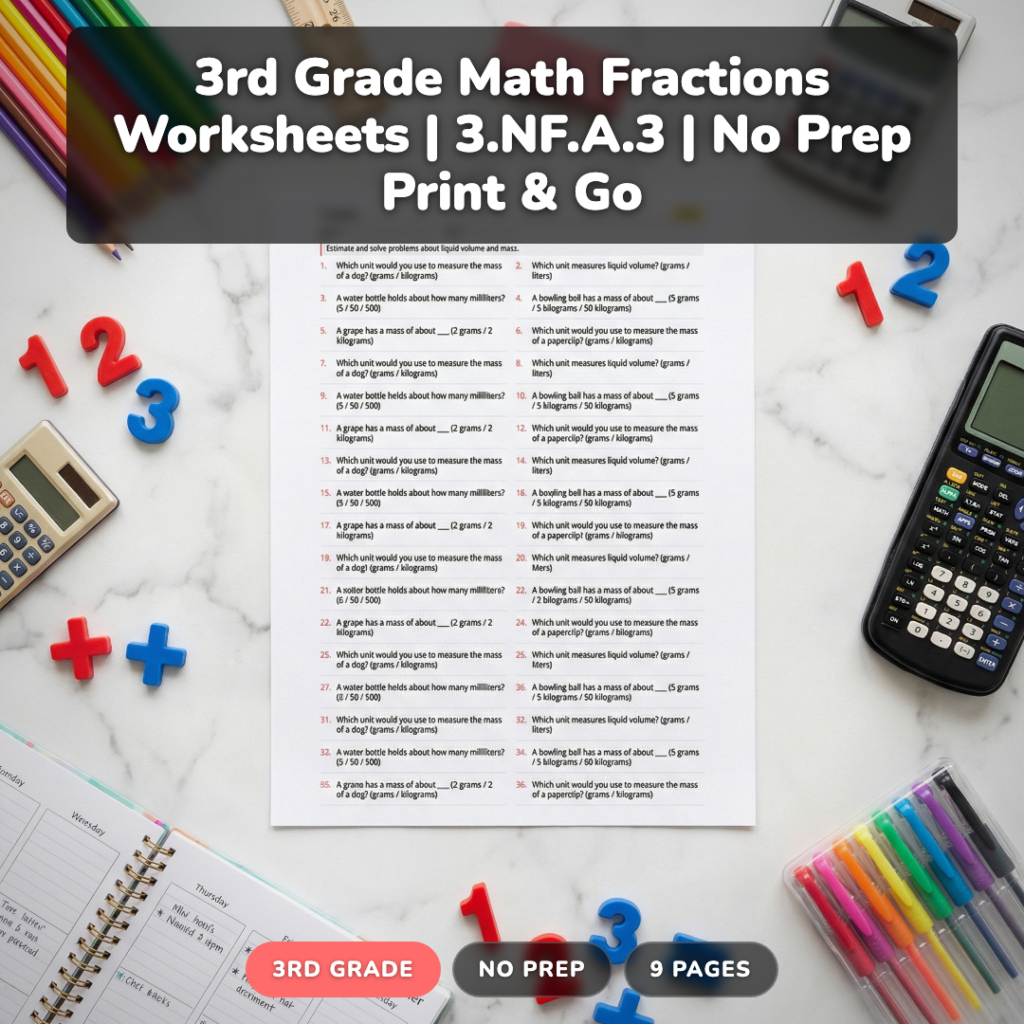
After teaching fraction equivalence for years, I created a comprehensive resource that eliminates your prep work while providing the exact practice students need. This differentiated pack includes 132 carefully crafted problems across three distinct levels.
The Practice level (37 problems) focuses on visual models with clear fraction strips and circles, perfect for students building foundational understanding. The On-Level section (50 problems) balances visual and abstract representations, aligning perfectly with grade-level expectations. The Challenge level (45 problems) pushes thinking with complex equivalent fraction families and real-world applications.
What sets this apart? Every problem includes multiple pathways to the answer, so students can use their preferred strategy whether that’s fraction strips, number lines, or visual models.
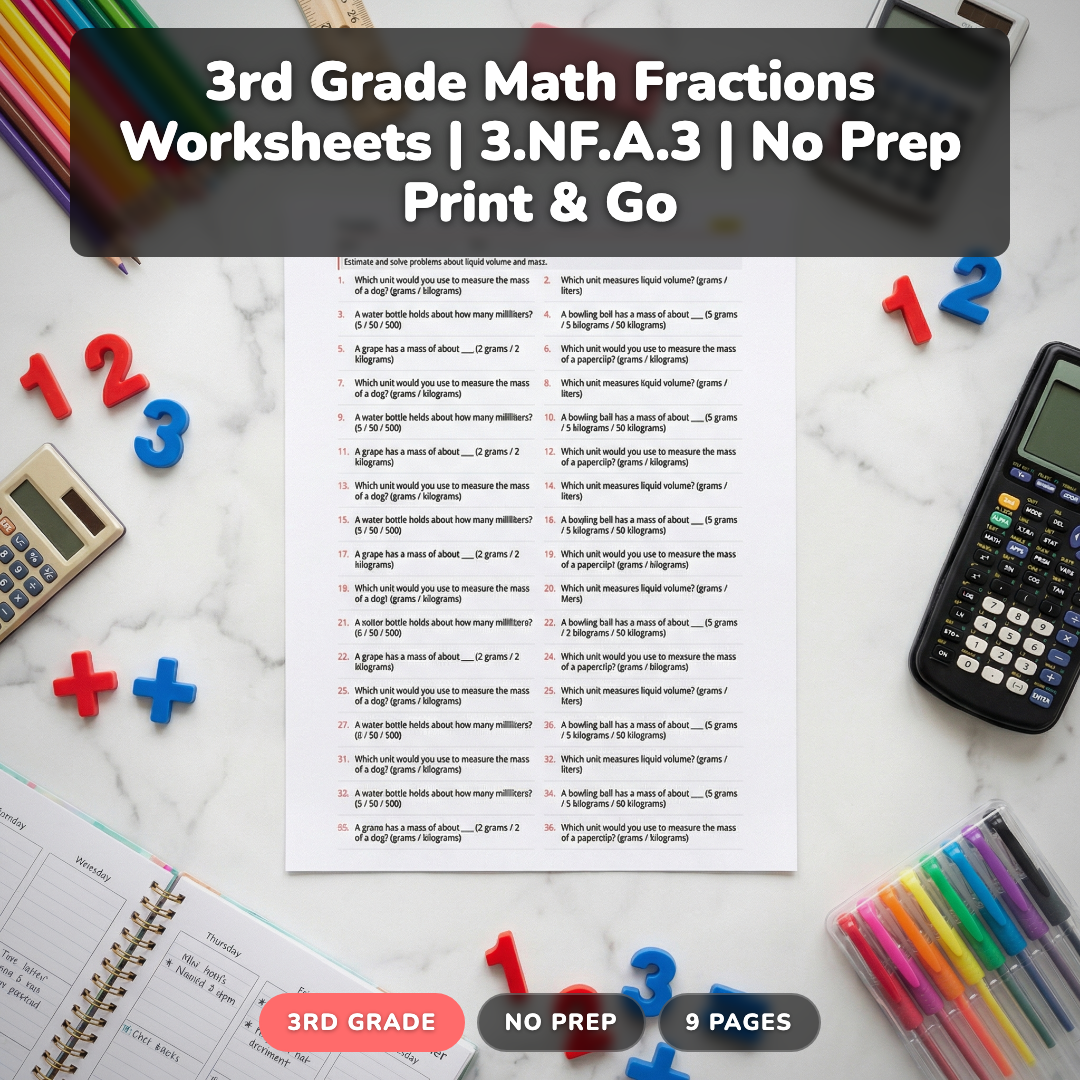
Nine pages of targeted practice with answer keys included — no more hunting for equivalent fraction problems that match your students’ needs.
Grab a Free Fraction Equivalence Sampler to Try
Want to see the quality before you commit? I’ll send you a free 3-page sampler with problems from each difficulty level, plus my go-to fraction equivalence anchor chart template. Perfect for testing these strategies with your students.
Frequently Asked Questions About Teaching Fraction Equivalence
When should I introduce fraction equivalence in 3rd grade?
Introduce equivalence after students understand unit fractions (1/2, 1/3, 1/4) but before fraction addition. Most teachers find success introducing it in January or February, allowing 6-8 weeks for mastery before state testing.
What’s the biggest mistake teachers make with fraction equivalence?
Rushing to abstract symbols without sufficient concrete experience. Students need 2-3 weeks with manipulatives and visual models before working with numbers alone. Skip this foundation and they’ll struggle with fraction operations later.
How do I help students who still think 1/4 is bigger than 1/2?
Use identical objects divided differently — two identical candy bars, one cut into halves, one into fourths. Let them choose which piece they want. The concrete experience overrides their whole number misconceptions.
Should I teach the cross-multiplication method for checking equivalence?
Not in 3rd grade. CCSS.Math.Content.3.NF.A.3 emphasizes reasoning about size, not algorithms. Save cross-multiplication for 5th grade when students have stronger fraction foundations and can understand why it works.
How many equivalent fraction pairs should 3rd graders know?
Focus on benchmark fractions: 1/2 = 2/4 = 3/6 = 4/8, plus 1/3 = 2/6 and 3/4 = 6/8. Mastery of these core relationships matters more than memorizing extensive lists.
Teaching fraction equivalence successfully comes down to giving students enough concrete experiences before moving to abstract thinking. Start with manipulatives, build understanding through multiple representations, and watch your students develop the fraction sense they’ll need for years to come.
What’s your favorite strategy for helping students visualize equivalent fractions? Drop your email above to grab that free sampler and try these approaches with your class.