If your third graders look confused when you mention finding the area of a rectangle, you’re not alone. Area is one of those concepts that seems straightforward to adults but can feel completely abstract to 8 and 9-year-olds who are still building their understanding of multiplication and spatial reasoning.
You’ll walk away from this post with five research-backed strategies that help students truly understand area through hands-on exploration, visual models, and step-by-step practice. Plus, you’ll get specific tips for differentiating instruction so every student in your classroom can master this crucial skill.
Key Takeaway
Students learn area best when they can physically tile rectangles before moving to the multiplication formula.
Why Area Matters in Third Grade
Area measurement sits at the intersection of geometry, multiplication, and real-world problem solving. According to the Common Core State Standards, CCSS.Math.Content.3.MD.C.7a requires students to find the area of rectangles by tiling and connect this to multiplication. This standard typically appears in the spring after students have developed fluency with multiplication facts through 10.
Research from the National Council of Teachers of Mathematics shows that students who master area concepts through concrete manipulation perform 23% better on standardized geometry assessments. The key is helping students see that area measures how much space fills a shape, not just memorizing length times width.
This skill connects directly to fourth-grade area and perimeter work and lays the foundation for understanding fractions as parts of area models. Students need multiple opportunities to see, touch, and build rectangles before the abstract formula makes sense.
Looking for a ready-to-go resource? I put together a differentiated area practice pack that covers everything below — but first, the teaching strategies that make it work.
Common Area Misconceptions in 3rd Grade
Understanding where students typically struggle helps you address confusion before it becomes entrenched. Here are the four most common misconceptions I see every year:
Common Misconception: Students count the perimeter instead of the area.
Why it happens: They focus on the outline they can see rather than the space inside.
Quick fix: Use different colored tiles for the border versus the inside space.
Common Misconception: Students think a 3×4 rectangle has a different area than a 4×3 rectangle.
Why it happens: They don’t understand that multiplication is commutative.
Quick fix: Build both rectangles with tiles and count together to show they have the same total.
Common Misconception: Students add length plus width instead of multiplying.
Why it happens: They confuse area with perimeter formulas.
Quick fix: Always start with tiling before introducing any formulas.
Common Misconception: Students think bigger numbers always mean bigger area.
Why it happens: They focus on individual dimensions rather than the relationship between them.
Quick fix: Compare a 2×8 rectangle (area 16) with a 4×5 rectangle (area 20) using tiles.
5 Research-Backed Strategies for Teaching Area
Strategy 1: Physical Tiling with Square Units
This foundational strategy helps students see that area measures the number of unit squares that cover a rectangle. Students physically place square tiles or cut paper squares to fill rectangles completely.
What you need:
- 1-inch square tiles or paper squares
- Rectangle outlines on paper
- Recording sheets
Steps:
- Give students a 3×4 rectangle outline and square tiles
- Ask them to cover the rectangle completely with no gaps or overlaps
- Have them count the total number of squares used
- Record the count as the area in square units
- Repeat with different sized rectangles
Strategy 2: Array Connection to Area
Since students already understand arrays from multiplication, connecting area to arrays builds on prior knowledge. Students see that a rectangle’s area equals the total objects in an array arrangement.
What you need:
- Small manipulatives (beans, counters, etc.)
- Grid paper
- Chart paper for recording
Steps:
- Show students how to arrange 12 objects in a 3×4 array
- Draw a rectangle around the array on grid paper
- Count the total objects (12) and explain this is the area
- Try the same objects in a 2×6 array and compare areas
- Help students see that different arrays can have the same total
Strategy 3: Grid Paper Visualization
Grid paper helps students transition from concrete tiles to visual representation. They can see unit squares without handling individual pieces, making the connection to multiplication clearer.
What you need:
- 1-centimeter grid paper
- Colored pencils or crayons
- Rulers
Steps:
- Students draw rectangles on grid paper using specific dimensions
- They color in all the unit squares inside the rectangle
- Count the colored squares to find the area
- Write the dimensions and area for each rectangle
- Look for patterns between dimensions and total squares
Strategy 4: Real-World Area Exploration
Connecting area to students’ lives makes the concept meaningful and memorable. Students measure actual rectangular spaces and calculate their areas using appropriate units.
What you need:
- Measuring tools (rulers, yardsticks)
- Recording sheets
- Sticky notes or tape for marking
Steps:
- Identify rectangular surfaces in the classroom (desk tops, book covers, etc.)
- Students measure length and width in appropriate units
- Calculate area by multiplying dimensions
- Verify by estimating how many unit squares would fit
- Compare areas of different objects
Strategy 5: Area Building Challenge
This engaging activity reverses the typical process — students receive a target area and must build rectangles that match it. This deepens understanding of the relationship between dimensions and area.
What you need:
- Square tiles or grid paper
- Area challenge cards
- Recording sheets for different solutions
Steps:
- Give students a target area (like 24 square units)
- Challenge them to find all possible rectangles with that area
- Students build each rectangle and record its dimensions
- Discuss which rectangles are the same (3×8 and 8×3)
- Compare the different shapes that have identical areas
How to Differentiate Area for All Learners
For Students Who Need Extra Support
Begin with smaller rectangles (2×2 through 4×5) and provide physical tiles for every problem. Use graph paper with thicker lines to make unit squares more visible. Focus on the counting aspect before introducing multiplication language. Provide multiplication charts and allow students to use repeated addition if multiplication facts aren’t automatic yet.
For On-Level Students
Students work with rectangles up to 8×10 and transition between concrete tiles and visual representations on grid paper. They should master the connection between tiling and multiplication as stated in CCSS.Math.Content.3.MD.C.7a. Provide mixed practice with both drawing rectangles and calculating areas from given dimensions.
For Students Ready for a Challenge
Introduce rectangles with larger dimensions and explore area word problems involving real-world contexts. Students can investigate which rectangles have the same area but different perimeters, connecting to fourth-grade concepts. Challenge them to find the rectangle with the smallest perimeter for a given area, introducing optimization thinking.
A Ready-to-Use Area Resource for Your Classroom
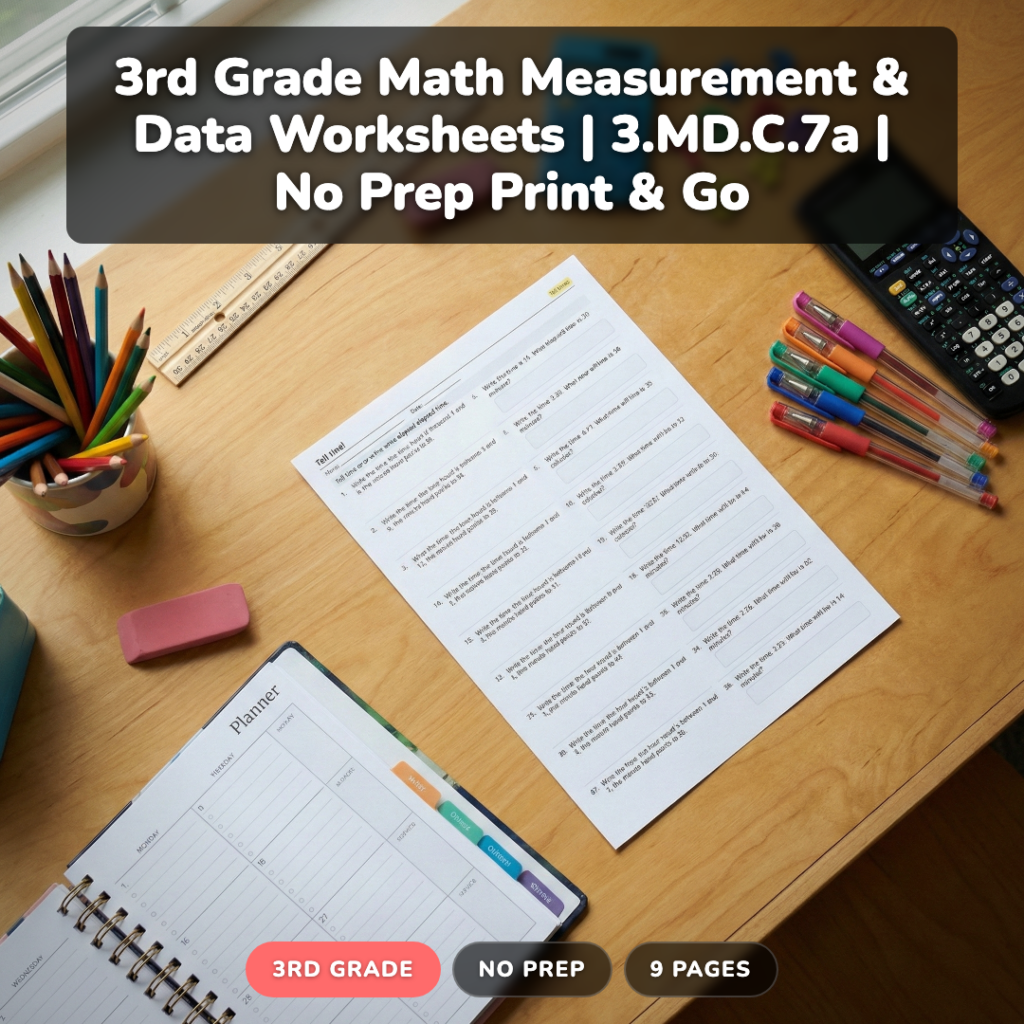
After trying these strategies with my students for several years, I created a comprehensive area practice pack that saves you hours of prep time. This 9-page resource includes 132 differentiated problems across three levels: Practice (37 problems), On-Level (50 problems), and Challenge (45 problems).
What makes this resource different is the careful progression from concrete tiling activities to abstract multiplication problems. Each level includes visual supports, and the answer keys show multiple solution methods so you can guide student thinking effectively. The problems align perfectly with CCSS.Math.Content.3.MD.C.7a and include both square-unit counting and multiplication approaches.
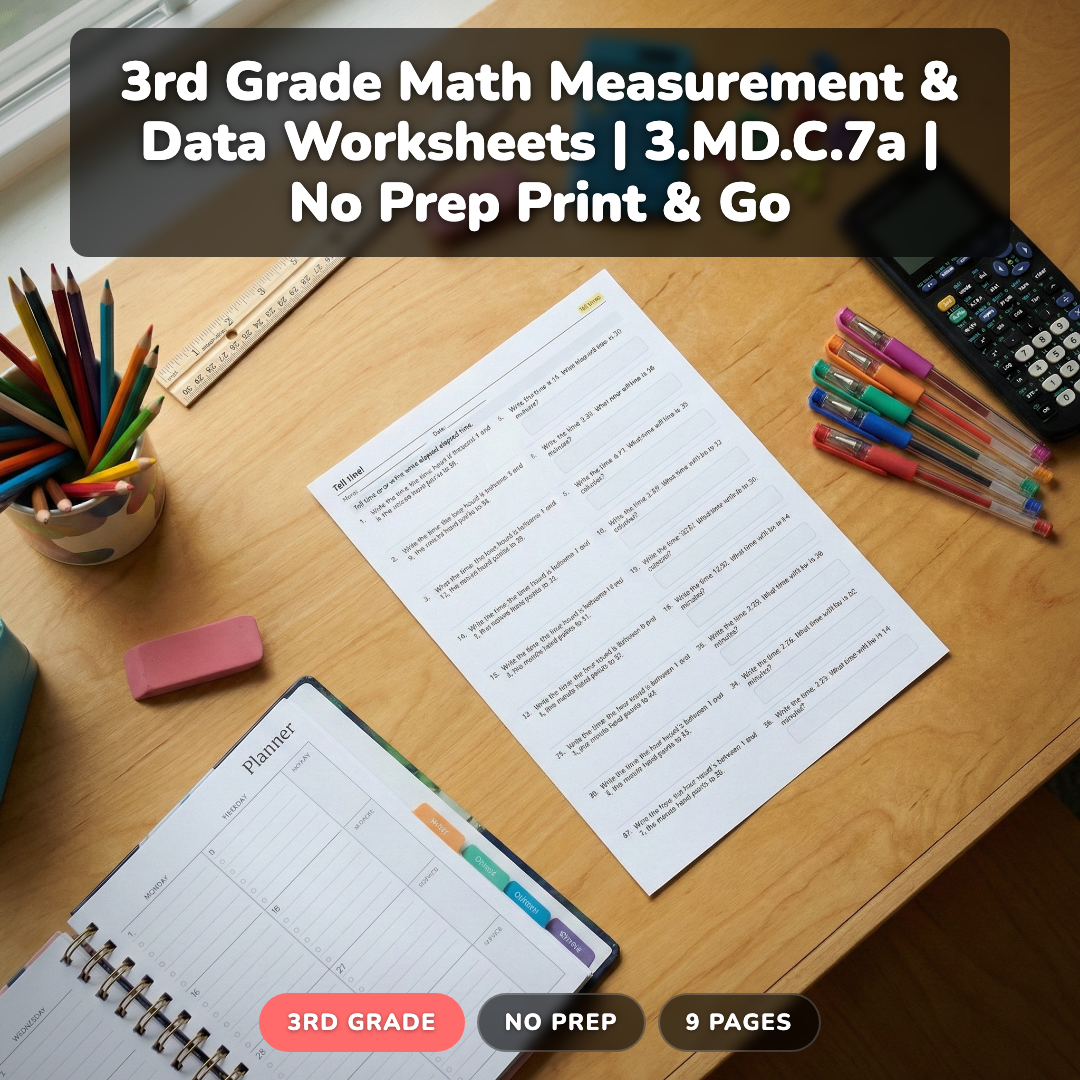
The pack includes everything you need for a full week of differentiated area instruction, from guided practice to independent work. Students get multiple opportunities to tile, calculate, and apply their understanding.
Grab a Free Area Practice Sheet to Try
Want to see how these strategies work in practice? I’ll send you a free sample worksheet that includes tiling activities and area calculations at multiple levels. Perfect for trying out these approaches with your students!
Frequently Asked Questions About Teaching Area
When should I introduce the area formula to third graders?
Introduce length × width only after students have extensive experience with tiling rectangles and can explain why multiplication works. Most students need 3-4 weeks of concrete practice before the formula makes sense. Always connect back to the visual model when teaching the formula.
How do I help students distinguish between area and perimeter?
Use different colored materials — tiles for area (filling the inside) and yarn or string for perimeter (going around the outside). Have students physically trace the perimeter with their finger, then point to the area space. Practice both concepts with the same rectangle to highlight the difference.
What if students struggle with multiplication facts needed for area?
Allow students to use repeated addition, arrays, or multiplication charts while learning area concepts. The goal is understanding area, not automatic recall of facts. As multiplication fluency develops, area calculations will become easier, but don’t let fact struggles prevent conceptual understanding.
Should third graders work with non-rectangular shapes for area?
Stick to rectangles for initial instruction as required by CCSS.Math.Content.3.MD.C.7a. Once students master rectangular area through tiling and multiplication, you can explore irregular shapes by breaking them into rectangles, but this isn’t a third-grade expectation.
How can I make area practice more engaging for reluctant learners?
Use real-world contexts like designing classroom gardens, planning playground spaces, or calculating carpet needed for reading corners. Partner activities and area-building challenges add social interaction. Incorporate technology with virtual manipulatives or area apps for variety.
Building Strong Area Understanding
Remember that area understanding develops gradually through hands-on exploration, visual representation, and meaningful practice. Start with concrete experiences, help students see the connection to multiplication, and provide plenty of opportunities to apply their learning in real contexts.
What’s your favorite way to help students visualize area? I’d love to hear what works in your classroom! Don’t forget to grab your free area practice sheet above to try these strategies with your students.